

Desert Online General Trading LLC
Dubai, United Arab Emirates
Desert Online General Trading LLC
Dubai, United Arab Emirates

🔧 Elevate Your Projects with Precision!
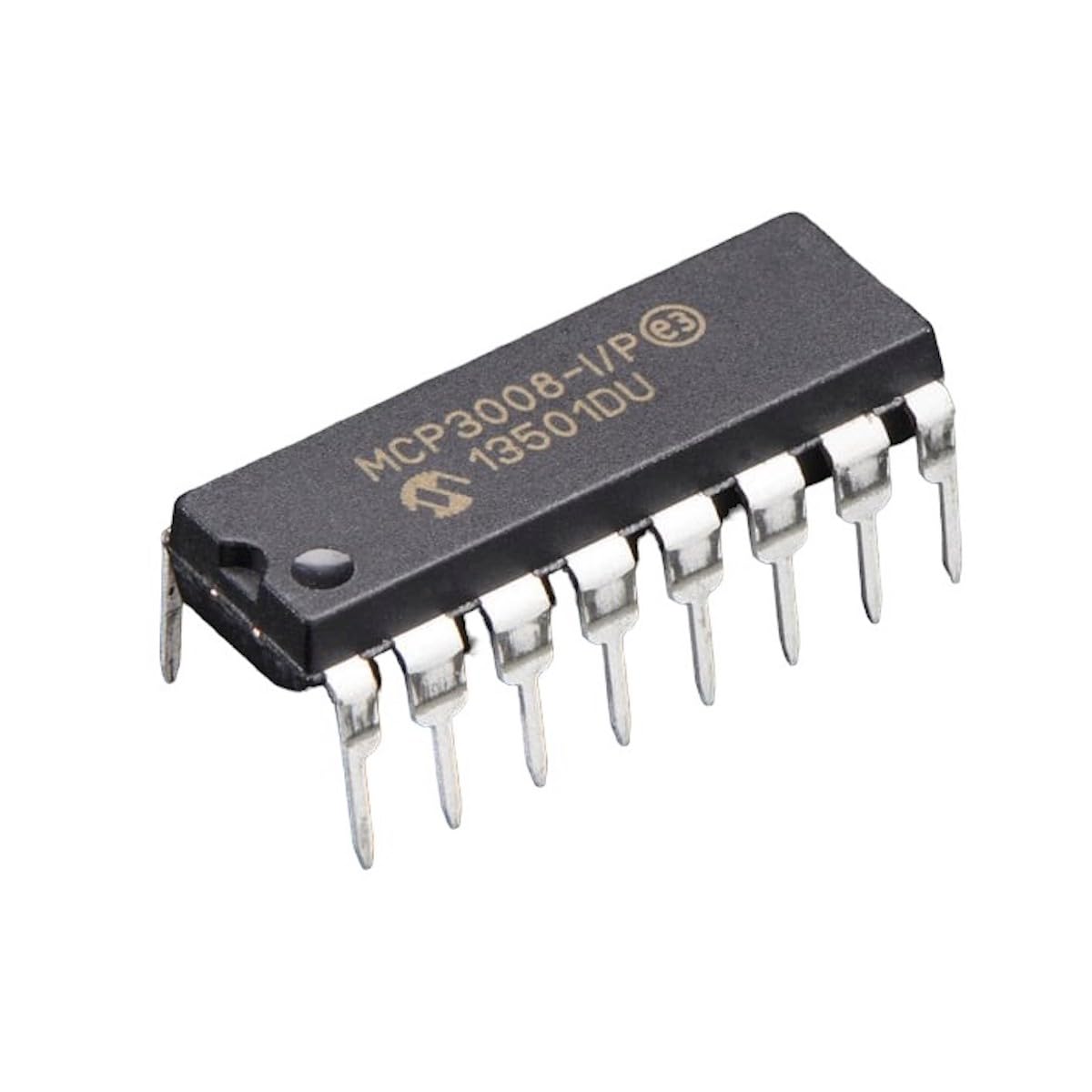
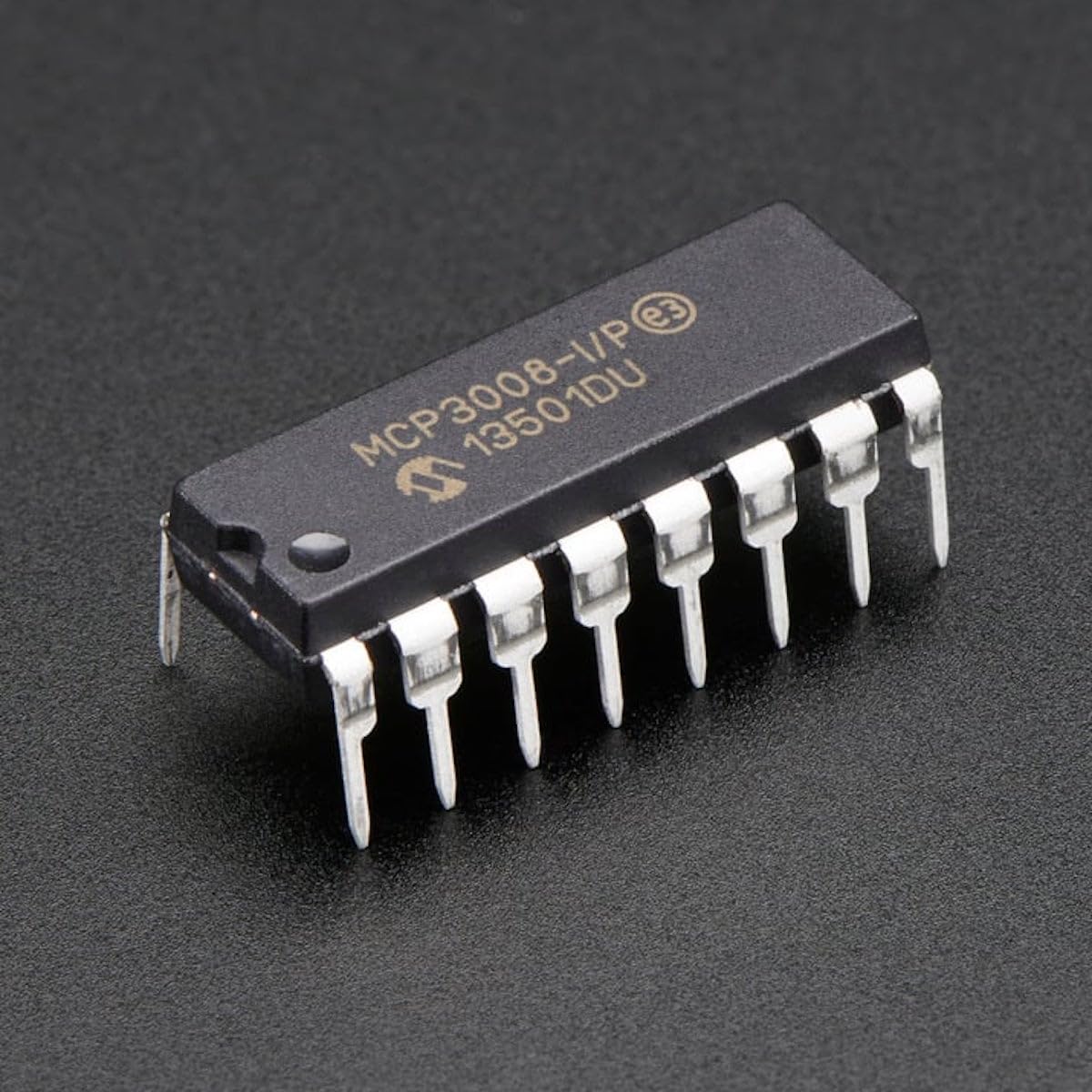
The Adafruit MCP3008 is an 8-channel analog-to-digital converter featuring a SPI interface, designed for seamless integration with microcontrollers. With 12-bit resolution, it ensures high accuracy in data conversion, making it an essential component for any tech-savvy DIY enthusiast.
L**M
Worked with no problems
I needed this for my Raspberry Pi since as many of you may know, the Raspberry Pi cannot receive analog signals. Implementing this into my system was quite easy and it works flawlessly. There is a lot of documentation and videos online to help you out. It came in a big Amazon white envelope and inside was a little grey plastic baggy with the ADC in it. Decent packaging for it, in my opinion.
J**D
Good quality 10 bit ADC for a WIFI project
This is a great 10 bit ADC chip and works quite well with some good SPI code. I have used this to extend the capability of an ESP8266 to have an analog input from the 8 channels this chip has. I don't need anymore precision above 0-1023 so this is a good solid chip for this purpose. I would recommend downloading a spec sheet and following the OEM's recommendations. Also terminating input pins ( I use 470 ohms) to pull the input low for any open connections is recommended.
L**R
Device works as advertised.
I was able to easily integrate this ADC with a Raspberry Pi 3B+. No problems or issues - conversion works as documented in the device datasheet.
L**A
Worked with Raspberry Pi and Photoresistors
I am a university student and used this for a group computer science project. We were able to quantify the amount of light read by eight photoresistors using this chip and a Raspberry Pi. Good value for the money.
I**D
you can do so much with this little thing
I used this with a soil moisture sensor to monitor the water content of my plant so I knew when it was time to water it. I plan on integrating this system with a pump and water supply as well so I don't have to worry about my plants dying from negligence.I have never worked with this before but it was easy enough to get running. I just had to find the right python library for this thing that worked well with a raspberry pi. I'm using the Adafruit CircuitPython library. If you google "adafruit_mcp3xxx.mcp3008" you should find it. I set it up to check the water level every 15 minutes so I could get a baseline for full wet and how much it goes down over a day. It just kept all the data in a csv so I could check it later.I could never achieve a "true zero" with this by default but that may have been the library I used. I ended up just coding in a true zero by looking at what the sensor reported when it was totally dry and what it reported when it was fully immersed in water. Fully dry it reported 55,000 and soaking wet it reported 34,000, strange spread huh? Basically I just take whatever number it is giving me and subtract 34,000 to get to my zero point. Hopefully this made sense. I only cared about how wet the soil was so this worked for me.I wish it had a zero point but it is possible I am doing something wrong. I am not a python professional I am still learning. It worked and I massaged it to get the data I wanted so that is really all that matters. I've included a picture of my setup, the MCP3008 chip is buried in that jumble of wires. This chip helped bring this project to life.
A**R
Great deal and fast shipping
Checks all the boxes.
C**Z
Expensive but Works and is not broken on arrival
The item came in perfect condition. The seller really took his time to package the item and make sure the chip got to me in perfect condition. Def A++ works as suggested
C**G
Works great!
It works both for 3.3V and 5V. It is Ardiuno UNO (5V) or Due/Raspberry Pi (3.3V) friendly.
ترست بايلوت
منذ أسبوعين
منذ 5 أيام
منذ يومين
منذ شهرين