We remain fully operational. Our teams are working around the clock to ensure your deliveries continue safely.

قم بتنزيل التطبيق


معلومات عنا
حقوق الطبع والنشر © 2024 Desertcart Holdings Limited
قم بتنزيل التطبيق
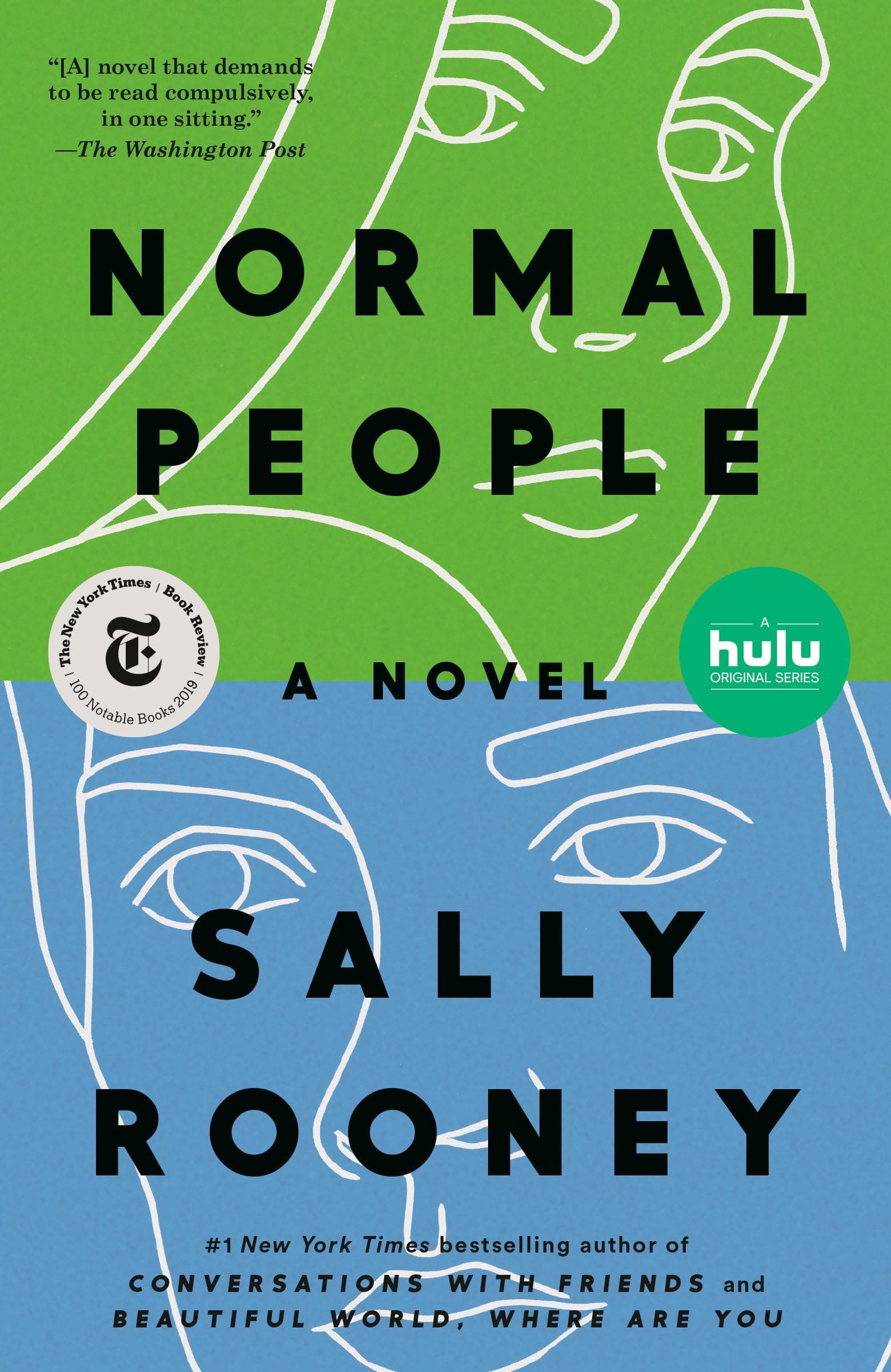
Normal People: A Novel [Rooney, Sally] on desertcart.com. *FREE* shipping on qualifying offers. Normal People: A Novel Review: A masterfully-written novel about young love in the 21st Century - Do you ever consider the profound impact significant others have on your life? Decades ago, when our son was toddlerish, my husband and I took him into the country for a weekend. We rented a tiny, Eskom-free stone cottage in a dark valley. One night, with the boy asleep, we sat outside, dazzled by the night sky, and drank a bottle of wine. We’d been a couple for more than a decade by then and somehow began talking about how being together had shaped us as individuals and influenced our life decisions. It was a gentle, but remarkably illuminating discussion for both of us and about both of us. It's a conversation I regularly replay to myself to remember how lucky I am. I thought a great deal about that night as I read Sally Rooney’s novel, Normal People last week. Normal People tells the story about Marianne and Connell’s relationship, which begins when they’re at school in a small town in West Ireland and continues – on and off – for another four years while they’re at college in Dublin. It’s a tale with so many layers that, while my experience of reading it bordered on compulsive, I find it difficult to analyse – suffice to say that it’s not about the plot; it’s about the characters and their inner lives, and the writing. Rooney, who is 27-years-old, is widely feted as the next best thing, “one of the most exciting voices to emerge in an already crackerjack new generation of Irish writers”, and a “Salinger for the Snapchat generation”. I don’t dispute the praise. Her writing is extraordinarily elegant. Confident and uncluttered, it conveys an immediacy and ingenuousness that drew me in and held me from beginning to end, which came too soon. The story, I felt – shocked to discover I'd reached the final full stop – was unfinished, there were loose ends to tuck away. But, once I recovered, I realised the way it ends is part of its magic. Real relationships are forever evolving, eternally incomplete, and so it figures that a novel about relationships will be too. Normal People is told from both Marianne’s and Connell’s points of view. It reminded me how, no matter how well you think you know a person, your perceptions and understanding of what they say and mean can be skewed. The novel also shows how our identity, self-esteem and who we become as adults are bound to our upbringing – indefinitely. Marianne is from a wealthy, but unloving and dysfunctional family. Connell is from a poor, but loving family. It largely shapes who they are and how they relate to the world. The novel also examines the impact of bullying – both on victims and perpetrators. Ironically, I might not find the book easy to analyse, but I could go on forever, waffling about the many layers in Normal People. I daren’t though because then you might not feel compelled to read the book yourself, which would be a pity. A huge pity. Here’s a tiny sample of the writing to demonstrate what a humungous pity it would be: “Helen has given Connell a new way to live. It’s as if an impossibly heavy lid has been lifted off his emotional life and suddenly he can breathe fresh air. It is physically possible to type and send a message reading: I love you! It had never seemed possible before, not remotely, but in fact it’s easy. Of course if someone saw the messages he would be embarrassed, but he knows now that this is a normal kind of embarrassment, an almost protective impulse towards a particularly good part of life. He can sit down to dinner with Helen’s parents, he can accompany her to her friends’ parties, he can tolerate the smiling and the exchange of repetitive conversation. He can squeeze her hand while people ask him questions about his future. When she touches him spontaneously, applying a little pressure to his arm, or even reaching to brush a piece of lint off his collar, he feels a rush of pride, and hopes that people are watching them. To be known as her boyfriend plants him firmly in the social world, establishes him as an acceptable person, someone with a particular status, someone whose conversational silences are thoughtful rather than socially awkward." I’m not sure I feel changed after reading Normal People, but I do feel upgraded. And reminded about how life is a series of relationships, and how a few of them help shape who we are and how we live our lives. And that thinking about that and acknowledging those who positively influence us is important. And yes, Sally Rooney has a fan in me. My current read is her first novel, Conversations with Friends. Review: Unexpectedly Moving - Here is one instance in which having seen the series before reading the book was NOT a conflict. The Hulu series almost completely honored the content and format of the book. The advantage of the book was understanding the thoughts going through the characters' minds in their moments of silent examination of one another. I really enjoyed the series, and I enjoyed the book even more. As is nearly always the case, the book offers more depth to the characters, but I think the casting was perfect and it was gratifying to see a book and a series so in line with one another. Anyway, this is a review about the book, not the show. I've seen some unflattering reviews that say the book is meaningless and fluffy drivel, and that the characters are flat and dull. I wholeheartedly disagree. I think that the characters and the story successfully convey what it means to feel isolated and different. They're not lively and bubbly because the book is all about being abnormal and unable to fit in. The whole point is that they are people who don't fall into many of the facets of standard social norms and therefore they cling to each other and keep going back to each other throughout the years. Rooney covers topics of mental, physical and sexual abuse with discretion and respect, and never once makes it exploitative for the sake of conflict and building tension. I love that she doesn't use the standard form of dialogue with breaks and quotation marks. I've seen some complaints about that stylistic choice, but I think it was the perfect choice for a book about people who are so much in their own heads and unable to properly convey themselves to anyone but each other. I've also seen some complaints about Rooney's prose, or lack thereof. I'm flabbergasted by that. There are some bits that are nearly poetic in their beauty, and some bits that so perfectly capture the human condition and the frail psyche of the depressed and downtrodden. It was not a perfect book, but it's one that I would confidently recommend and likely one that I will read again.



| Best Sellers Rank | #3,145 in Books ( See Top 100 in Books ) #36 in Coming of Age Fiction (Books) #39 in Psychological Fiction (Books) #124 in Literary Fiction (Books) |
| Customer Reviews | 4.1 4.1 out of 5 stars (134,612) |
| Dimensions | 5.13 x 0.59 x 7.88 inches |
| Edition | Reprint |
| ISBN-10 | 1984822187 |
| ISBN-13 | 978-1984822185 |
| Item Weight | 2.31 pounds |
| Language | English |
| Print length | 304 pages |
| Publication date | February 18, 2020 |
| Publisher | Crown |
P**Y
A masterfully-written novel about young love in the 21st Century
Do you ever consider the profound impact significant others have on your life? Decades ago, when our son was toddlerish, my husband and I took him into the country for a weekend. We rented a tiny, Eskom-free stone cottage in a dark valley. One night, with the boy asleep, we sat outside, dazzled by the night sky, and drank a bottle of wine. We’d been a couple for more than a decade by then and somehow began talking about how being together had shaped us as individuals and influenced our life decisions. It was a gentle, but remarkably illuminating discussion for both of us and about both of us. It's a conversation I regularly replay to myself to remember how lucky I am. I thought a great deal about that night as I read Sally Rooney’s novel, Normal People last week. Normal People tells the story about Marianne and Connell’s relationship, which begins when they’re at school in a small town in West Ireland and continues – on and off – for another four years while they’re at college in Dublin. It’s a tale with so many layers that, while my experience of reading it bordered on compulsive, I find it difficult to analyse – suffice to say that it’s not about the plot; it’s about the characters and their inner lives, and the writing. Rooney, who is 27-years-old, is widely feted as the next best thing, “one of the most exciting voices to emerge in an already crackerjack new generation of Irish writers”, and a “Salinger for the Snapchat generation”. I don’t dispute the praise. Her writing is extraordinarily elegant. Confident and uncluttered, it conveys an immediacy and ingenuousness that drew me in and held me from beginning to end, which came too soon. The story, I felt – shocked to discover I'd reached the final full stop – was unfinished, there were loose ends to tuck away. But, once I recovered, I realised the way it ends is part of its magic. Real relationships are forever evolving, eternally incomplete, and so it figures that a novel about relationships will be too. Normal People is told from both Marianne’s and Connell’s points of view. It reminded me how, no matter how well you think you know a person, your perceptions and understanding of what they say and mean can be skewed. The novel also shows how our identity, self-esteem and who we become as adults are bound to our upbringing – indefinitely. Marianne is from a wealthy, but unloving and dysfunctional family. Connell is from a poor, but loving family. It largely shapes who they are and how they relate to the world. The novel also examines the impact of bullying – both on victims and perpetrators. Ironically, I might not find the book easy to analyse, but I could go on forever, waffling about the many layers in Normal People. I daren’t though because then you might not feel compelled to read the book yourself, which would be a pity. A huge pity. Here’s a tiny sample of the writing to demonstrate what a humungous pity it would be: “Helen has given Connell a new way to live. It’s as if an impossibly heavy lid has been lifted off his emotional life and suddenly he can breathe fresh air. It is physically possible to type and send a message reading: I love you! It had never seemed possible before, not remotely, but in fact it’s easy. Of course if someone saw the messages he would be embarrassed, but he knows now that this is a normal kind of embarrassment, an almost protective impulse towards a particularly good part of life. He can sit down to dinner with Helen’s parents, he can accompany her to her friends’ parties, he can tolerate the smiling and the exchange of repetitive conversation. He can squeeze her hand while people ask him questions about his future. When she touches him spontaneously, applying a little pressure to his arm, or even reaching to brush a piece of lint off his collar, he feels a rush of pride, and hopes that people are watching them. To be known as her boyfriend plants him firmly in the social world, establishes him as an acceptable person, someone with a particular status, someone whose conversational silences are thoughtful rather than socially awkward." I’m not sure I feel changed after reading Normal People, but I do feel upgraded. And reminded about how life is a series of relationships, and how a few of them help shape who we are and how we live our lives. And that thinking about that and acknowledging those who positively influence us is important. And yes, Sally Rooney has a fan in me. My current read is her first novel, Conversations with Friends.
T**.
Unexpectedly Moving
Here is one instance in which having seen the series before reading the book was NOT a conflict. The Hulu series almost completely honored the content and format of the book. The advantage of the book was understanding the thoughts going through the characters' minds in their moments of silent examination of one another. I really enjoyed the series, and I enjoyed the book even more. As is nearly always the case, the book offers more depth to the characters, but I think the casting was perfect and it was gratifying to see a book and a series so in line with one another. Anyway, this is a review about the book, not the show. I've seen some unflattering reviews that say the book is meaningless and fluffy drivel, and that the characters are flat and dull. I wholeheartedly disagree. I think that the characters and the story successfully convey what it means to feel isolated and different. They're not lively and bubbly because the book is all about being abnormal and unable to fit in. The whole point is that they are people who don't fall into many of the facets of standard social norms and therefore they cling to each other and keep going back to each other throughout the years. Rooney covers topics of mental, physical and sexual abuse with discretion and respect, and never once makes it exploitative for the sake of conflict and building tension. I love that she doesn't use the standard form of dialogue with breaks and quotation marks. I've seen some complaints about that stylistic choice, but I think it was the perfect choice for a book about people who are so much in their own heads and unable to properly convey themselves to anyone but each other. I've also seen some complaints about Rooney's prose, or lack thereof. I'm flabbergasted by that. There are some bits that are nearly poetic in their beauty, and some bits that so perfectly capture the human condition and the frail psyche of the depressed and downtrodden. It was not a perfect book, but it's one that I would confidently recommend and likely one that I will read again.
V**A
I almost read this book in one-go and I'm not a huge reader. Their relationship is so fragile yet so strong throughout the probably one of the most difficult time: the transition of high school to college year. It felt like I was in it, standing and seeing this couple struggle and grow. Can't wait to see the tv show on bbc now.
A**E
The book was in good shape when it arrived. The rating does not represent a rating of the story.
E**A
Este libro ha sido una recomendación de un persona que admiro mucho y me parece una encantadora novela de amor. Te da la sensación de volver a vivir el amor de juventud. Magnífico libro para leer durante vacaciones.
E**A
Inte läst än och för er som inte vet så finns det inga " eller - för dialoger så ni är förberedda på det
B**N
The book arrived clean and carefully packaged. I’ve started reading it. The series is exactly the same as the book.
ترست بايلوت
منذ أسبوعين
منذ 3 أسابيع