Desertcart purchases this item on your behalf and handles shipping, customs, and support to EGYPT.
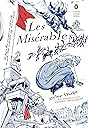
The first new Penguin Classics translation in forty years of Victor Hugo’s masterpiece, the subject of The Novel of the Century by David Bellos—published in a stunning Deluxe edition. Winner of the French-American Foundation & Florence Gould Foundation’s 29th Annual Translation Prize in Fiction. The subject of the world’s longest-running musical and the award-winning film, Les Misérables is a genuine literary treasure. Victor Hugo’s tale of injustice, heroism, and love follows the fortunes of Jean Valjean, an escaped convict determined to put his criminal past behind him, and has been a perennial favorite since it first appeared over 150 years ago. This exciting new translation with Jillian Tamaki’s brilliant cover art will be a gift both to readers who have already fallen for its timeless story and to new readers discovering it for the first time. For more than seventy years, Penguin has been the leading publisher of classic literature in the English-speaking world. With more than 1,700 titles, Penguin Classics represents a global bookshelf of the best works throughout history and across genres and disciplines. Readers trust the series to provide authoritative texts enhanced by introductions and notes by distinguished scholars and contemporary authors, as well as up-to-date translations by award-winning translators. Review: The redeeming power of kindness - This is an extraordinary book, a story of awe-inspiring proportions. It's "Liberty Leading the People", it's "La Marseillaise", it's the Panthéon; it's huge, it's stirring, it's monumental. I knew the story in outline and thought this would diminish the experience, yet every scene is so overflowing with life I was completely absorbed. To attempt something so ambitious and realize it so fully - one can only applaud. Hugo's central theme is the redeeming power of kindness, be it in the guise of love, compassion or mercy. It's a theme that lends itself to emotionally resonant moments, and across 1300 pages Hugo delivers too many to count. The first part alone (Fantine) could stand by itself as one of the great short novels, but it's just part 1 of 5. It's not until around halfway through part 4 that Hugo returns to that high plane of emotional intensity but, when he does, he delivers a finale for the ages. The tragedy is immense; the sacrifice, the resilience, the devotion are likewise immense. Hugo writes with vast intimacy: he gives us a story tightly focused on a small set of core characters, very close-up for long stretches but punctuated by dizzying moments of zooming out to reflect on the broader historical significance of events. In these moments everything is laden with moral and cosmic weight - it's about how to live, it's about human dignity, it's about morality vs temptation, it's about the causes of progress - with the result that the story, when he zooms back in again, feels like social realism and folk legend at the same time. The most natural comparison is with Tolstoy, who has a similar blend of mega-canvas social realism and fierce moralism. Tolstoy's style is more matter-of-fact and mundane, less sentimental, arguably truer to life, but also less intense, less exciting. Hugo is a Romantic with a capital R and composes novels like symphonies, scenes building slowly to impassioned crescendos. If your heart responds to that kind of conducting you'll struggle to find a more moving book than this. Regarding the Penguin Classics edition: Christine Donougher's translation reads wonderfully but Penguin has messed up the notes. Because they are not numbered in any way, just linked to pages, they are very confusing, with many places where cross-referencing is needed but missing. I did not make much use of them. In a book this long, you have to number the notes! Review: Humanity - Great classic about humanity and love. If you ever wanted to go into deep research about meaning of life, this book is as good a guide as any. The secret of life is ….love, kindness, humbleness , forgiveness…
| Best Sellers Rank | 2,494,301 in Books ( See Top 100 in Books ) 217 in Fiction Classics (Books) 775 in Literary Fiction (Books) 837 in Historical Fiction (Books) |
| Customer Reviews | 4.5 out of 5 stars 1,370 Reviews |
J**H
The redeeming power of kindness
This is an extraordinary book, a story of awe-inspiring proportions. It's "Liberty Leading the People", it's "La Marseillaise", it's the Panthéon; it's huge, it's stirring, it's monumental. I knew the story in outline and thought this would diminish the experience, yet every scene is so overflowing with life I was completely absorbed. To attempt something so ambitious and realize it so fully - one can only applaud. Hugo's central theme is the redeeming power of kindness, be it in the guise of love, compassion or mercy. It's a theme that lends itself to emotionally resonant moments, and across 1300 pages Hugo delivers too many to count. The first part alone (Fantine) could stand by itself as one of the great short novels, but it's just part 1 of 5. It's not until around halfway through part 4 that Hugo returns to that high plane of emotional intensity but, when he does, he delivers a finale for the ages. The tragedy is immense; the sacrifice, the resilience, the devotion are likewise immense. Hugo writes with vast intimacy: he gives us a story tightly focused on a small set of core characters, very close-up for long stretches but punctuated by dizzying moments of zooming out to reflect on the broader historical significance of events. In these moments everything is laden with moral and cosmic weight - it's about how to live, it's about human dignity, it's about morality vs temptation, it's about the causes of progress - with the result that the story, when he zooms back in again, feels like social realism and folk legend at the same time. The most natural comparison is with Tolstoy, who has a similar blend of mega-canvas social realism and fierce moralism. Tolstoy's style is more matter-of-fact and mundane, less sentimental, arguably truer to life, but also less intense, less exciting. Hugo is a Romantic with a capital R and composes novels like symphonies, scenes building slowly to impassioned crescendos. If your heart responds to that kind of conducting you'll struggle to find a more moving book than this. Regarding the Penguin Classics edition: Christine Donougher's translation reads wonderfully but Penguin has messed up the notes. Because they are not numbered in any way, just linked to pages, they are very confusing, with many places where cross-referencing is needed but missing. I did not make much use of them. In a book this long, you have to number the notes!
A**R
Humanity
Great classic about humanity and love. If you ever wanted to go into deep research about meaning of life, this book is as good a guide as any. The secret of life is ….love, kindness, humbleness , forgiveness…
S**P
Engaging translation of a classic story
I read the Kindle edition of the Donougher translation and it was a great translation to serve as my first time reading Les Mis. I'd only seen the BBC TV adaptation previously so was looking for something that would allow me to experience the book without being too heavy going, but also not abridged. It was a good choice, with modernised phrasing and a style that worked well.
S**I
Christine Donougher translation
Amazon have a habit of combining reviews from various versions of a product. This review relates to the unabridged Christine Donougher translation by Penguin. I've not read another translation of Les Miserables (or as this version is named 'The Wretched') and frankly I don't think I've got the time as it's such a mammoth length. Therefore, I wanted to make sure as much as I could that the copy I was going to read was going to be the right one for me. I'm glad I chose the Christine Donougher translation as it is simply outstanding. I can't conceive of the effort that must have been put into this version along with all its explanatory references and notes. Importantly for me, it's easily read on my phone with a Kindle app. I don't want to carry around a book of this size around with me on the bus or have to keep flicking pages around to explore a reference. As for the story, well I'm sure you know what to expect... As for the version, I highly recommend this translation particularly on an electronic device (although I've now also got a hard copy copy for my mother-in-law which made me realise quite how long this book is...). Thank you Christine and Penguin for enabling me to read this classic without hassle.
M**F
Classic love story
Truly a classic love story set in a volatile France of the early 1900s. The history is brought into the story , along with other related themes, such as the use of slang, in an informative and interesting way. There is much humour too. A word too for Christine Donougher, the translator and editor. Her work is exceptional in her understanding of Hugo and the context of this book with comprehensive notes.
A**1
A classic worth investing time in!
Before there was the musical there was the novel... The story of a man (Jean Valjean) who stole only to feed his starving family, forced to endure 19 years hard labour as a prisoner and comes out bitter & angry towards the world. That is until he meets a Bishop, the first person to show him sympathy, charity, kindness & compassion setting him on a life goal to redeem himself & help others whilst at the same time trying to fight off his past in the form of a police inspector (Javert) determined to return him to prison for breaking the conditions of his parole. Almost Dickensian in style, Hugo's protagonist represents the ordinary man whose life has changed by social injustice, resentment, religion, & atonement. Spanning decades at over 2000 pages long, Les Miserables may sound like a chore but it is well worth a read. At first impression it can seem as though Hugo pointlessly digresses from the plot, often writing chapter after chapter at 100 page lengths on events such as the battle of Waterloo, social background of the time, minor characters, etc. However once you get into it you see exactly how these chapters link into the main plot & help paint the scene. The 2013 translation by Christine Donougher does not use modern words found in other editions, keeping in tradition with its age yet is easy to read for a modern reader. Donougher is my personal favourite of the many translations (I've read a few!). Give it a go!
P**N
An epic tale.
A vey difficult book to put down after the first few chapters, although this tome may seem rather daunting in length it draws the reader into a most studied & detailed account of life in France & Paris during the period after the first phase of the French Revolution and a classic tale of a man stealing food through the sheer necessity to feed his loved ones then having to endure nearly two decades of incarceration , we despair for him & desire that he should find some balance in the remainder of his life with a modicum of happiness & contentment , and he quickly becomes our hero, added to this Hugo intersperses the narrative with weighty reflections of the human spirit & resolve & determination , married with drama , adventure & superbly drawn characters the translation provides for an easy read despite its length .. please take time to read this wonderful book
M**E
Longest book ever!
I did it! Finally! This book is the biggest I have ever read and probably ever will do. I read somewhere that 900 pages of the 1500 Are the personal ramblings of the authors opinions on society and having read this book I fully agree with that statement. Did I enjoy the actual story? I did! I got really drawn into the characters and the plot I thought was really engaging. Did the authors ramblings and incredibly in-depth descriptions ruin it for me? Yes and no, some of them I enjoyed and some bored me to tears, but I'm glad I've read it all the same.
L**A
Perfect delivery & Gorgeous special edition
The items delivered in great shape and very safe packaging. Very pleased with the delivery!
R**L
A must buy!
Go for it 👍
J**O
Excelente
De excelente calidad.
E**傑
A brilliant translation by Christine Donougher. Shed buckets and buckets of tears in the finale.
At the time of my review, this was the newest English translation of Hugo's masterpiece offered by Penguin publishing that absolutely compelled me to indulge in my favourite piece of literature a second time told anew. For novices to Hugo's gigantic work it is quite daunting for those who tire of long tales. In addition, confronted with any new book, we wonder whether the book is worthy of our time investment and efforts to cross check with detailed annotations and footnotes. Certainly more difficult these days given the enormous plethora of distractions competing for our attention in our modern living, the smartphone being the chief culprit. But seriously, if we do dare embark on this life changing experience (characters in the book and also the reader's) by reading Les Miserables, the correct question we must first ask ourselves is whether we are worthy and knowledgeable enough to turn the gilded pages of Victor Hugo's masterpiece that drips with words of gold in every page. Much to my astonishment after concluding my second read with buckets of tears (I am sentimental but am moved only by giant geniuses like Hugo) it dawned on me that I really have not read it at all 30 years ago. But I remember clearly that I turned to Hugo chiefly to escape my wretchedness (pun intended) in the 2.5 years compulsory military service. Given my youth then, I had not chalked up enough life's hard experiences yet to have full empathy for much of the suffering and the depth of french history especially the french revolution to grasp all the nuances Hugo would have wanted his readers to appreciate. Today, with >30 years of life's heavy baggage accumulated, I am less unworthy and more adequate a reader because I have imbibed so much more of Hugo's spectacular offering of humanity at its worst and best. There are diamonds in every page of his over 1500 pages novel (English version, the French is >1900 pages). I wish I could read Hugo's work in French, but like all illiterates in French, we appreciate the great work of translations. To say the least, Les Misérables translated by Christine Donougher is a brilliant new, faithful and unabridged version I believe ( leap of faith since I haven't read it in French) of Victor Hugo's thrilling masterpiece, with an introduction by Robert Tombs. The annotations and footnotes are exceptionally brilliant. Cross checking them all as one reads along is essential to know the historical characters and the circumstantial events revolving the story with the French revolution being the chief most tumultuous and had the most far reaching impact on social divide and inequality. It led to the overthrow of Monarchy and establishment of the Republic. The citizen was born with a new hope in a society based on Liberté, égalité, fraternité. Hugo left no stone upturned, no plant not described, no object of the barricade unmentioned when he described the French landscape of past. Such was Hugo's meticulous style but welcomed minutia on details, none more so than his detailed description of the Paris sewer system. So convincing was Hugo in portraying the subterranean maze as a treacherous stinking route of escape that it was an impossible escape and rescue mission for any human. Thus heightening the immense task undertaken by our hero in carrying an unconscious full grown man to emerge alive at the end after navigating 4 miles of slimy putrid ditches in pitch darkness most of the journey. In comparison, Shawshank would have been a walk in the park. And our hero didn't even like the man he was rescuing because he knew his sole happiness in life would be taken away by this unconscious young man. But he did it because he was superhuman and an angel. My first read nearly 30 years ago was a translation by another fabulous woman, Isabella Hapgood, before kindle and digital books were in existence. Going to the annotations then was a chore and was often neglected which inevitably hampered my level of appreciation for the book. Despite that, my first read shook me to the core by the breadth and depth of Hugo's masterpiece on the wretched human condition and the hand of God in redeeming His elects, Jean Valjean chief amongst many in the book. Desiring a second enjoyment, I researched and sampled the various translations on offer after a 30 years gap, this time round on digital by kindle. For translations I always go to the reliable and more expensive Penguin publishers first before looking at other publishers. Les Misérables with the unique English title "The Wretched", convinced me to be the best after some comparisons of the first chapter of various translations. A Penguin yet again. The audacity of translating the title "Les Miserables" to "The Wretched" was ingenious and original to set itself apart from the other translations. As a genuine connoisseur of literature of the finest kind that I consider myself, I cannot emphasise enough to all non French speaking readers on the careful choice of the best translation and to spare no expenses for the best experience one must have. Victor Hugo's "Les Miserables" is the finest of them all. Its the top notch Beluga caviar and it is the finest of the finest brandy ever distilled. As you would pay top dollar to enjoy them so too should you for the pride and joy of classic literature, the world (Hugo in this case) has to offer to the universe. Hugo's fine work must undoubtedly be also the pride and joy of God since it showcases His will on mankind. God has already shown in the story of Job, the finest men can be inflicted with life's greatest catastrophes and grief, and in the gospels that the most perfect man must walk the hardest road. Hugo's premise in Les Miserables was exactly that providence is responsible for the wretchedness in our lives. Providence can also lift the wretchedness from the most wretched and turn them into the greatest salt and light of the world. There are many wretched characters in Hugo's les miserables. Once you have read them, you can play the game of picking the most wretched of them all. The drama of "road to Damascus" was played out several times in the book. Like the Jew persecutor, Saul transformed into fiery apostle Paul, so too was a hardened ex convict touched by the hand of God and was transformed into a loving angel to the world of wretched souls that crossed his path.
R**Y
5/5 for the novel, 2/5 for the kindle edition
The editing of the kindle edition is broken. Only left-alignment works, making the rows unqeual. I hate reading like that. The right-alignment does not work. I even wrote the publisher, but to no avail.
Trustpilot
2 weeks ago
3 weeks ago