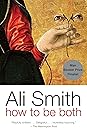
How to be both: A novel
Product ID: 18970378
Desertcart purchases this item on your behalf and handles shipping, customs, and support to EGYPT.
MAN BOOKER PRIZE FINALIST • A novel all about art's versatility, borrowing from painting’s fresco technique to make an original literary double-take. "Cements Smith’s reputation as one of the finest and most innovative of our contemporary writers. By some divine alchemy, she is both funny and moving; she combines intellectual rigor with whimsy" — The Los Angeles Review of Books One of the New York Times ’s 100 Best Books of the 21st Century How to be both is a fast-moving genre-bending conversation between forms, times, truths and fictions. There’s a Renaissance artist of the 1460s. There’s the child of a child of the 1960s. Two tales of love and injustice twist into a singular yarn where time gets timeless, structural gets playful, knowing gets mysterious, fictional gets real—and all life’s givens get given a second chance. Passionate, compassionate, vitally inventive and scrupulously playful, Ali Smith’s novels are like nothing else. Review: The Hand That Draws the Hand - Ali Smith has produced the literary equivalent of that Escher print of a hand drawing the hand that is drawing it. In art terms, her novel would be a diptych: two panels of equal size, with different subjects, but intended to be seen side by side. In her case, two stories from different centuries that comment on each other, reflect each other, and (in that Escher twist) at times even write each other. The first half is in the voice of a 15th-century Italian painter returned to earth watching a teenager looking at one of the artist's works in a gallery. The artist follows the youth through the city, and observes what seem like the symptoms of obsession. In between, we hear snatches of the painter's own story, growing up as the child of a stonemason, training as an artist, and achieving artistic but ill-paid success painting frescoes for a palace in Ferrara. The second half is told in the third person, and is the modern story of the teenager in the gallery, whom we learn is called George. George's mother has recently died. But a month or two before she did, she took George to Ferrara to see the artist's painting. It transpires that little is known about the painter, other than approximations of birth and death, and one of the things that George's mother and George do is to make up a life to go with the name, a fiction that resonates with the autobiographical information we have learned in the first half, but does not entirely match it. The novel ends just as George begins the behavior the artist observed at the start of the novel. A hand drawing a hand…. No description of the novel can do as well as the short paragraph on the back cover, a reticent gem that nonetheless says almost everything that is important. Write at greater length and you come up against the fact that Smith keeps her ideas so close to her chest that it is almost impossible to describe the book without spoilers. For instance, I was able to identify the painter before the end of the first half (it helps to have once taught art history) -- but Smith holds back the name until the last few pages of the entire book, so I shall also. Looking back with my present knowledge, though, I see how skillful the author was in incorporating the known facts, together with a lot that might reasonably be surmised; she clearly knows her history. But a lot must be invented, and one of her inventions is a doozy that turns out to be the thematic pivot of the entire novel. Oh dear, I realize that I must have made this sound like some dry intellectual puzzle, but not so. For Smith has given her painter an exuberant individual voice, with its own fractured syntax, idiosyncratic punctuation, and even typography (the whole book is printed with ragged right margins). It begins and ends in a poem about a snail, spiraling its way across the page, and the 150 pages in between are a poem in prose. Here is a complete paragraph as an example: "It is a feeling thing, to be a painter of things : cause every thing, even an imagined or gone thing or creature or person has essence : paint a rose or a coin or a duck or a brick and you'll feel it as sure as if a coin had a mouth and told you what it was like to be a coin, as if a rose told you first-hand what petals are, their softness and wetness held in a pellicle of colour thinner and more feeling than an eyelid, as if a duck told you about the combined wet and underdry of its feathers, a brick about the rough kiss of its skin." I did not need to get far before I was convinced I was reading a six-or-seven-star masterpiece. Unfortunately, the second half did not consistently sustain it. Perhaps it was the lack of the first-person perspective. Perhaps Smith left herself with so many themes to pull together that she could not quite find her focus. Perhaps it is that we are seeing George at a particularly awkward stage, lost, grieving, and not a little bratty. Even verging on autistic. But that feeling does pass, and there are some marvelous passages in this half too. Let me offer one more paragraph, about those Ferrara frescoes which contain, among many other details, a picture of a man wringing the neck of a duck. The voice here, repetitious but truly thinking, is that of the sixteen-year-old: "It is like everything is in layers. Things happen right at the front of the pictures and at the same time they continue happening, both separately and connectedly, behind, and behind that, and again behind that, like you can see, in perspective, for miles. Then there are the separate details, like that man with the duck. The picture makes you look at both -- the close-up happenings and the bigger picture. Looking at the man with the duck is like seeing how everyday and how almost comic cruelty is. The cruelty happens in among everything else happening. It is an amazing way to show how ordinary cruelty really is." Not accidentally, this passage contains the word "both," one of many "boths" that recur throughout the book, most of which I cannot comment on without spoilers. But this "both," the coexistence of happiness and cruelty, and of the details within the bigger picture, certainly hits some of the themes that make this ambitious but deceptively casual novel a near-masterpiece. Review: enjoy it very much - Both: male and female; dead and alive; watched and watcher. This is a gentle, lyrical novel featuring two central characters, a Renaissance painter and a grief-stricken English teenager. They occupy their own narrative strands, which, though separate, are interconnected, and which can be read in an order chosen by the reader (I lack imagination, so I just started at the beginning). I'm fairly set in my ways and crotchety when it comes to tinkering with the format of the novel, but this was skillfully done and I can't say it upset me too much. Time is given a fluidity, both within the individual narratives and across them, which doesn't feel gimmicky but is appropriate to the themes and subject-matter. The prose is stream-of-consciousness at times, but it's usually fairly clear what's going on, so the vagueness doesn't intrude on the experience of the reader (or at least that's how I found it). I don't often go for this kind of thing, but I was engrossed and did, in the end, enjoy it very much.

| Best Sellers Rank | #142,716 in Books ( See Top 100 in Books ) #1,492 in Historical British & Irish Literature #4,412 in Literary Fiction (Books) #6,916 in Historical Fiction (Books) |
| Customer Reviews | 3.7 out of 5 stars 1,491 Reviews |
R**E
The Hand That Draws the Hand
Ali Smith has produced the literary equivalent of that Escher print of a hand drawing the hand that is drawing it. In art terms, her novel would be a diptych: two panels of equal size, with different subjects, but intended to be seen side by side. In her case, two stories from different centuries that comment on each other, reflect each other, and (in that Escher twist) at times even write each other. The first half is in the voice of a 15th-century Italian painter returned to earth watching a teenager looking at one of the artist's works in a gallery. The artist follows the youth through the city, and observes what seem like the symptoms of obsession. In between, we hear snatches of the painter's own story, growing up as the child of a stonemason, training as an artist, and achieving artistic but ill-paid success painting frescoes for a palace in Ferrara. The second half is told in the third person, and is the modern story of the teenager in the gallery, whom we learn is called George. George's mother has recently died. But a month or two before she did, she took George to Ferrara to see the artist's painting. It transpires that little is known about the painter, other than approximations of birth and death, and one of the things that George's mother and George do is to make up a life to go with the name, a fiction that resonates with the autobiographical information we have learned in the first half, but does not entirely match it. The novel ends just as George begins the behavior the artist observed at the start of the novel. A hand drawing a hand…. No description of the novel can do as well as the short paragraph on the back cover, a reticent gem that nonetheless says almost everything that is important. Write at greater length and you come up against the fact that Smith keeps her ideas so close to her chest that it is almost impossible to describe the book without spoilers. For instance, I was able to identify the painter before the end of the first half (it helps to have once taught art history) -- but Smith holds back the name until the last few pages of the entire book, so I shall also. Looking back with my present knowledge, though, I see how skillful the author was in incorporating the known facts, together with a lot that might reasonably be surmised; she clearly knows her history. But a lot must be invented, and one of her inventions is a doozy that turns out to be the thematic pivot of the entire novel. Oh dear, I realize that I must have made this sound like some dry intellectual puzzle, but not so. For Smith has given her painter an exuberant individual voice, with its own fractured syntax, idiosyncratic punctuation, and even typography (the whole book is printed with ragged right margins). It begins and ends in a poem about a snail, spiraling its way across the page, and the 150 pages in between are a poem in prose. Here is a complete paragraph as an example: "It is a feeling thing, to be a painter of things : cause every thing, even an imagined or gone thing or creature or person has essence : paint a rose or a coin or a duck or a brick and you'll feel it as sure as if a coin had a mouth and told you what it was like to be a coin, as if a rose told you first-hand what petals are, their softness and wetness held in a pellicle of colour thinner and more feeling than an eyelid, as if a duck told you about the combined wet and underdry of its feathers, a brick about the rough kiss of its skin." I did not need to get far before I was convinced I was reading a six-or-seven-star masterpiece. Unfortunately, the second half did not consistently sustain it. Perhaps it was the lack of the first-person perspective. Perhaps Smith left herself with so many themes to pull together that she could not quite find her focus. Perhaps it is that we are seeing George at a particularly awkward stage, lost, grieving, and not a little bratty. Even verging on autistic. But that feeling does pass, and there are some marvelous passages in this half too. Let me offer one more paragraph, about those Ferrara frescoes which contain, among many other details, a picture of a man wringing the neck of a duck. The voice here, repetitious but truly thinking, is that of the sixteen-year-old: "It is like everything is in layers. Things happen right at the front of the pictures and at the same time they continue happening, both separately and connectedly, behind, and behind that, and again behind that, like you can see, in perspective, for miles. Then there are the separate details, like that man with the duck. The picture makes you look at both -- the close-up happenings and the bigger picture. Looking at the man with the duck is like seeing how everyday and how almost comic cruelty is. The cruelty happens in among everything else happening. It is an amazing way to show how ordinary cruelty really is." Not accidentally, this passage contains the word "both," one of many "boths" that recur throughout the book, most of which I cannot comment on without spoilers. But this "both," the coexistence of happiness and cruelty, and of the details within the bigger picture, certainly hits some of the themes that make this ambitious but deceptively casual novel a near-masterpiece.
H**Y
enjoy it very much
Both: male and female; dead and alive; watched and watcher. This is a gentle, lyrical novel featuring two central characters, a Renaissance painter and a grief-stricken English teenager. They occupy their own narrative strands, which, though separate, are interconnected, and which can be read in an order chosen by the reader (I lack imagination, so I just started at the beginning). I'm fairly set in my ways and crotchety when it comes to tinkering with the format of the novel, but this was skillfully done and I can't say it upset me too much. Time is given a fluidity, both within the individual narratives and across them, which doesn't feel gimmicky but is appropriate to the themes and subject-matter. The prose is stream-of-consciousness at times, but it's usually fairly clear what's going on, so the vagueness doesn't intrude on the experience of the reader (or at least that's how I found it). I don't often go for this kind of thing, but I was engrossed and did, in the end, enjoy it very much.
P**R
Some of the CDs arrived damaged. Won’t play.
I would not buy from this vendor again. The first and second CD were fine but the third one won’t play. Damage was not caused by me. Book is very good or at least the first two CDs were interesting. Trying to deal with Amazon customer service is beyond frustrating so this is my only venue to complain.
A**I
Gorgeous Concept
Just so you know, I was Eyes, Camera. What a clever book! First of all, it is in two sections. One is the story of a gender bending Renaissance painter. The other is a story of a modern teenage girl mourning the death of her mother. I read it as an ebook, so I had a true choice. Apparently some copies of the physical book start with one story; other copies start with the other. That’s only a superficial summary, though, of a gorgeous book. I call it gorgeous because this motif of duality is intrinsically woven into just about every aspect of the novel. It’s about words vs. actions, exterior vs. interior, appearance vs. actuality. I kept bumping up against these aspects of being two-sided, of being both, throughout the entirety of the book. It may sound contrived, but it was really subtly executed. I’m sure there are many aspects of the dual nature of life that I didn’t pick up on in my first reading. I read the Renaissance painter section first. Initially, I found it confusing and addled. I didn’t think I would like it at all. I’m not very patient with books that sacrifice plot to structural cleverness. By the end of the first dozen pages, though, I was drawn into the world of Francesco (Francescha) and her relationships with her family and art. I found the language of this section much more beautiful and poetic than the wording and phrasing of the other story. That’s not to say the other story was bad; I just enjoyed this one better. What I found most interesting was this story was based on a real Renaissance painter and her real artwork. I love historical fiction based in reality. The second story (for me) was the story of George (Georgia) a young British girl whose mother has died. She becomes interested in Francesco’s work because the last trip she and her mother took together were to view a fresco in Italy that Francesco worked on. To me, this story was a bit more tepid and less moving. As I look at the reviews, though, I see that most readers tend to identify more with whatever story they read first. This book made me want to start looking more deeply at Renaissance art. I highly recommend it.
S**E
Awful, do not waste your money on this book!
I can't even write a review on this book because I didn't read any more than 10% of it. It was so hard for me to get into, the writing was all over the place and just didn't make sense. My book club picked this for our January meeting and 5 of the 10 of us thought the same thing...book was hard to get into and difficult to read. Save yourself the $11, I wish I could get refunded for this book as it was truly that bad.
K**R
To me the book was a waste of time but I have friends who were enthralled ...
The style of writing starts off charming and fresh but quickly becomes burdensome and overly loquacious. To me the book was a waste of time but I have friends who were enthralled by the story telling. I can see how the book can be admired and the duel nature of the story is inviting. My proclivities tend toward styles other than this but its draw to persons with differing literary preferences is not hard to understand.
M**O
Present and past
A lovely, intelligent book, lyrically written but challenging in spots. It's really two books, one in the present, about a young English woman who loses her mother unexpectedly and has to deal with the loss, growing up, her alcoholic dad and annoying younger brother, and her confused affection for another young woman at her school. She remembers her mom's surprise trip to Italy to see a 15thC fresco and how they interacted, how she might have loved her mom more or been kinder to her, and how she felt upon seeing the fresco. The second book (SPOILER ALERT) is narrated by the ghost of the 15thC artist who painted the fresco, who sees the English family as they admire his work, and who shadows the young woman as she struggles to come to grips with her grief and her love. The artist struggles to recall his own life and upbringing and how he came to paint the fresco. At least three of the characters--the young woman, her mother, and the artist--struggle to grasp and accept their own sexuality, with mostly successful results. I am sure the book's title is at least in part a reference to sexual duality, as well as a meditation on the constant present. The first book is written in a fairly standard style, but without typical punctuation for direct quotation. The second book is far more experimental in style, with long, unpunctuated, disjointed, stream-of-consciousness thoughts by the artist.
L**R
Of double lives and double helixes
If you begin with the 15th-century tale, “Eyes,” you will be greeted with a swirl of words that you eventually learn are apparently those of the ghost of the painter Franceso(a) della Cossa, who has painted a wall in an Italian town and wasn’t properly paid. The painter-spectre goes on in a stream of spookconsciousness, weaving the story of the wall painting with the observations of a contemporary teenaged girl, Georg(e)(ia), who is visiting the site of the painted wall with her mother and younger brother. What fun there is in this part (quite a bit, actually) stems from the shade’s attempts to make sense of modern electronics, as well as some gender bending (if that sort of thing still amuses you, go for it). And you’ll gain knowledge of life in early Renaissance Italy. All the while, you’ll learn how one paints a wall. The e-book version gives you the choice of starting there, or instead choosing the other tale, “Camera,” which is George’s. Shortly after their visit to the artwork, George’s mother died, and she’s trying to get over her grief. This story is told in the third-person and far more clearly (I doubt if you’ll have to do any flipping back here, as you may well want to do in the painter’s tale.) Anyhow, it’s really, really special, as it weaves back and forth in time as once-lively and witty Georgia gets through her grieving. As you go through it, you’ll recall some of the scenes and some of the comments made in “Eyes” by the painter. Interestingly, the two tales seem to reflect their eras: the Renaissance tale swirly, witty, larger than life. The modern tale dryer, flatter, ironic more than somewhat. They meld together nicely. Of the two tales, "Camera" is more successful. There's not a false note in it. Perhaps the author as a teen was as amazing as is her George. "Eyes," of course, is an imagined past, and lot of what's in it comes from research, not life. The artifice shows through more. (And how could it not? It's a tale told by a ghost, after all.) It is my understanding that half the copies of the physical books start with one story, half with the other. If you have purchased a copy that starts with “Camera,” however, I would definitely recommend that you start with “Eyes” anyhow. It really seems to make more sense that way. At least to me. Notes and asides: The Kindle version’s AI counts the story twice, because if you load “Eyes” first, then you get “Camera,” and then you get the whole thing in reverse order. And amazingly, each tale ends precisely at the true halfway point, which the AI thinks is the 25% point. When I noticed that, I thought for certain that if Georgia were reading this book that would no doubt amuse her.
H**L
古典的で現代的、リアリズムで私小説、How to be both
他のレビュー(Liliane Ruyters)と同じことをやってしまいました。つまり、KindleでFrancescoのパートから読み始め、最初はすぐに投げ出したくなったが、途中から引き込まれ、Georgeのパートに入る。Georgeのパートが終わったら、また同じGeorgeのパートが始まる。これは実験的な小説で、最初は全く同じStoryが途中から分岐して行くのかと思ったら、最後まで同じ。そのままFrancescoのパートを読むが、一度読んだはずなのに、クライマックスに進むような感動がわいてくる。 実は、この作者の語り口と英語に慣れるのに時間がかかり、2度読むことで文章が理解できた部分もたくさんあった。しかし、それだけでなく、2つの物語がDNAのたとえのとおり照合しあっていて、2回目になって多くの謎のような部分が解きほぐされていったのも事実である。それが快感であった。 2回読んだことは私にとっては貴重な経験だったが、Kindleの不具合のせいとも言える。Kindleでは、購入した本を開くと、表紙や目次を飛ばして本文の最初が開き、そこから読んでしまう。2回目の半分を読んだところで、これは2回目だと気づき、表紙から順に見てみると、最初にこの本の構成、読み方のInstructionがあることにやっと気がついた。紙の本であれば、きちんとこれを読み、2度目は読まなかったかも知れない。が、1回しか読まなかったら、4星か3星になっていたかもしれない。 なので、このレビューは一部の読者のためにはならないかも知れない。
C**N
Do not miss this masterpiece!
An amazing book!!!!!!!!! It will carry you away. It is fresh, innovative, intriguing, moving, ironic, smart, in other words an absolute must-read!
A**I
2 tales in one book
This a most enjoyable read, not always easy, but cleverly written making it a page turner. You want to know how the author will bring it together at the end.
B**K
Good novel
Well written, thoroughly enjoyable. First half is about the Renaissance artist Francesco del Cossa, whose spirit returns to visit a teenaged girl living in contemporary Cambridge; there's a lot about del Cossa's life, especially his (her?) art & rivalries with other painters, which is all really well done. The second half covers the life of the girl, George, that del Cossa visits. This part felt a bit more conventional (the precocious child/eccentric parent motif; see e.g. The Last Samurai by Helen Dewitt) as she deals with the death of her mother, a budding relationship and so on -- but over all a very good novel. --Brooke Clark, author of Urbanities
M**T
perferct
very perfect book with sylvie vartan on picture . The most girl of the yéyé ears ! we wan't more exposition for this book !
Trustpilot
2 days ago
1 month ago