Mini Farming
Product ID: 228003
Buy anything from 5,000+ international stores. One checkout price. No surprise fees. Join 2M+ shoppers on Desertcart.
Desertcart purchases this item on your behalf and handles shipping, customs, and support to EGYPT.
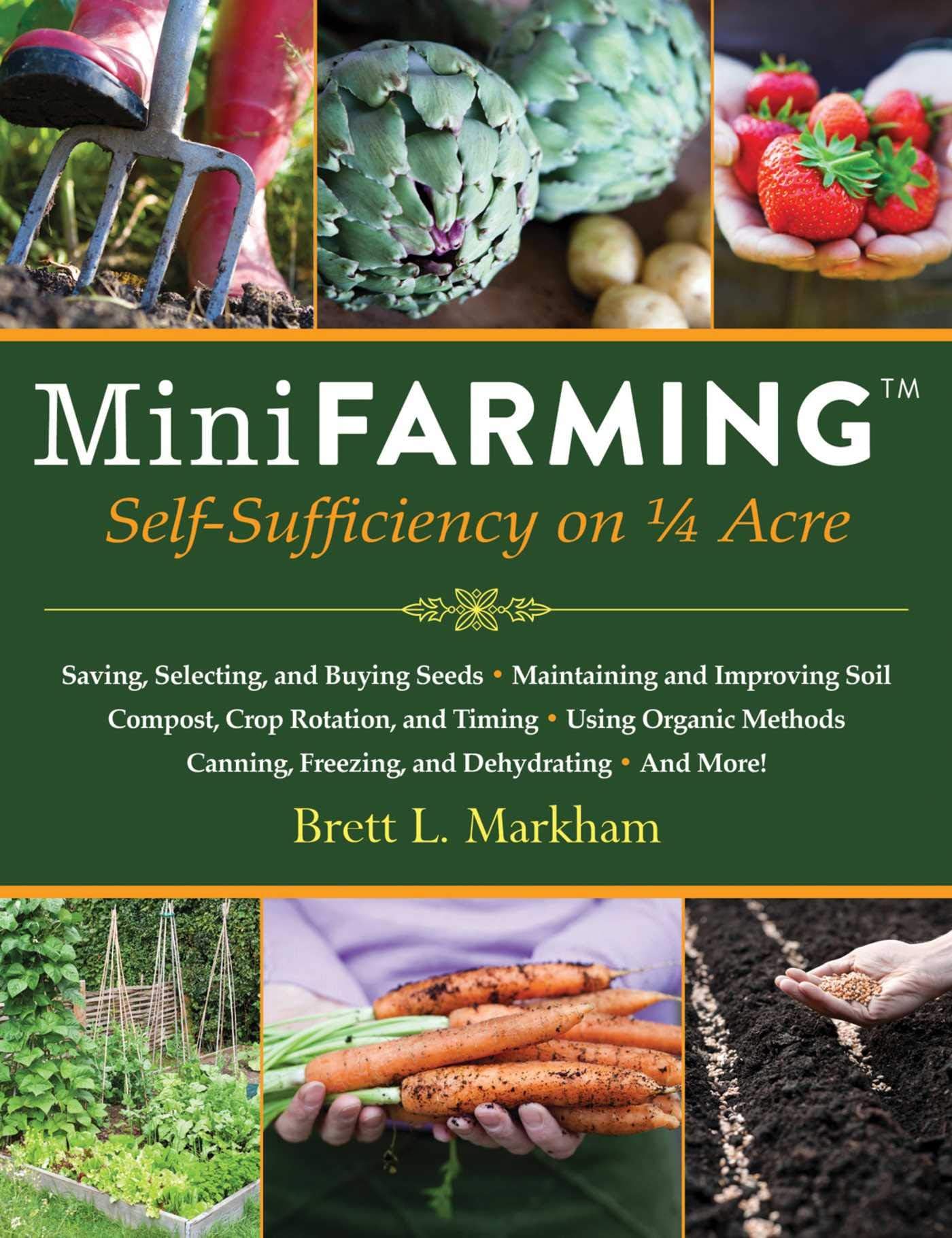
Mini Farming: Self-Sufficiency on 1/4 Acre [Markham, Brett L.] on desertcart.com. *FREE* shipping on qualifying offers. Mini Farming: Self-Sufficiency on 1/4 Acre Review: One of the best on gardening, mini-farming, food self-sufficiency - I just read this book and I am very impressed. It compares favorably both to classics of intensive gardening and to classics on self sufficiency. Less complicated than How to Grow More Vegetables and Fruits: (And... Review: Excellent, well-organized guide on moving from casual gardener to self-sufficient gardener - While I've maintained small gardens and potted plants for years, for 5+ years I've casually kept a 1,000 square foot garden. I've mostly winged it... sometimes impressively, other times with dismally. But, never consistent year over year results. I picked up this book to take my gardening to the next level and broaden my horizons. In short, I'm very satisfied with the insights and guidance I've gleaned from this book. I'd go so far as to say that while you don't need a background in gardening to benefit from this book, this book is a perfect fit for people in my situation. Here are the pros and cons from my perspective. Pros: - The content of each chapter is very well organized, with concepts building onto one another very neatly. - The broader subject matter of the chapters takes one through the process of planning, preparing, selecting, timing, managing, etc. most everything one would need to successfully grow a garden. - This book strikes a good balance between giving you the key information you need for any one aspect of self-sufficient gardening, but not inundating you with too much detail. (In other words, this book threads the needle on delivering a lot of helpful information, while still feeling like an easy read.) - I've seen other reviews for this book that complain that the author 'rips off' others' ideas and re-packages them for profit. I read quite a bit and have over the years seen serious examples of what these other reviewers are claiming. But, in the case of this book, while the author informs on alternative (and even competing models) for gardening, the author always informs the user on what, in his experience, has or has NOT worked from various models; how he has modified some of those ideas to work in his growing climate; and where he completely parts ways from others' techniques and espouses his own approach (including very clear instruction on how to use his modified or totally unique processes). - Finally, where possible, the author provides the equivalent of 'modified workouts' for those 'less fit' (MY WORDS, NOT HIS) in their gardening abilities. In other words, the author provides sufficient detail on what might be the most efficient and beneficial approach to say irrigation or composting, but then across the various subjects covered in the book, he provides a less expensive/quicker/initially easier alternative for those lacking the time, resources, space, skills, etc. to fully implement the best possible approach for one aspect or another of gardening. For example, as I'll be looking to expand my garden this next spring, I fully intend to utilize some of the quicker soil prep techniques offered up in this book for use in a pinch while I build up my long-term composting and soil amendment routines. Cons: - While some of the chapters really cover all the bases for the targeted subject matter (i.e. plant spacing, soil prep, etc.). Others give you just enough to run with but leave you wanting more. A good example of this would be Chapter 7 ("Time and Yield"). While the author gives a good and broad overview of timing techniques (i.e. succession planting, timed planting, interplanting etc.), for such an important subject matter, I was disappointed by just how short this chapter was. I live in Michigan, with a shorter growing season. I see this topic as critical for people in shorter growing zones like mine, and apart from a quick overview of each of the techniques used to maximize productivity, and a handful of real-world examples of plant groups that work well for things like succession planting (taking into consideration their hardiness in colder climates), this chapter really leaves readers wanting. - While this book is beautifully illustrated, there's no doubting that the abundance of pretty pictures of garden produce, chickens, tools, etc. serve as fill to make the book feel a bit more substantial in size than it need be. I don't want to over play this point, as A LOT of the illustrations (pictures/graphics/tables) are pertinent to the content of the book (and in any event, some amount of artwork is always nice to have), BUT... I think you could produce this book, still with plenty of beautiful illustrations, and reduce it from its current 227 pages (including the index and notes pages) down to 175 pages.


| Best Sellers Rank | #6,022 in Books ( See Top 100 in Books ) #1 in Sustainable Agriculture (Books) #4 in Organic & Sustainable Gardening & Horticulture #6 in Garden Design (Books) |
| Customer Reviews | 4.6 out of 5 stars 6,885 Reviews |
M**B
One of the best on gardening, mini-farming, food self-sufficiency
I just read this book and I am very impressed. It compares favorably both to classics of intensive gardening and to classics on self sufficiency. Less complicated than How to Grow More Vegetables and Fruits: (And...
M**L
Excellent, well-organized guide on moving from casual gardener to self-sufficient gardener
While I've maintained small gardens and potted plants for years, for 5+ years I've casually kept a 1,000 square foot garden. I've mostly winged it... sometimes impressively, other times with dismally. But, never consistent year over year results. I picked up this book to take my gardening to the next level and broaden my horizons. In short, I'm very satisfied with the insights and guidance I've gleaned from this book. I'd go so far as to say that while you don't need a background in gardening to benefit from this book, this book is a perfect fit for people in my situation. Here are the pros and cons from my perspective. Pros: - The content of each chapter is very well organized, with concepts building onto one another very neatly. - The broader subject matter of the chapters takes one through the process of planning, preparing, selecting, timing, managing, etc. most everything one would need to successfully grow a garden. - This book strikes a good balance between giving you the key information you need for any one aspect of self-sufficient gardening, but not inundating you with too much detail. (In other words, this book threads the needle on delivering a lot of helpful information, while still feeling like an easy read.) - I've seen other reviews for this book that complain that the author 'rips off' others' ideas and re-packages them for profit. I read quite a bit and have over the years seen serious examples of what these other reviewers are claiming. But, in the case of this book, while the author informs on alternative (and even competing models) for gardening, the author always informs the user on what, in his experience, has or has NOT worked from various models; how he has modified some of those ideas to work in his growing climate; and where he completely parts ways from others' techniques and espouses his own approach (including very clear instruction on how to use his modified or totally unique processes). - Finally, where possible, the author provides the equivalent of 'modified workouts' for those 'less fit' (MY WORDS, NOT HIS) in their gardening abilities. In other words, the author provides sufficient detail on what might be the most efficient and beneficial approach to say irrigation or composting, but then across the various subjects covered in the book, he provides a less expensive/quicker/initially easier alternative for those lacking the time, resources, space, skills, etc. to fully implement the best possible approach for one aspect or another of gardening. For example, as I'll be looking to expand my garden this next spring, I fully intend to utilize some of the quicker soil prep techniques offered up in this book for use in a pinch while I build up my long-term composting and soil amendment routines. Cons: - While some of the chapters really cover all the bases for the targeted subject matter (i.e. plant spacing, soil prep, etc.). Others give you just enough to run with but leave you wanting more. A good example of this would be Chapter 7 ("Time and Yield"). While the author gives a good and broad overview of timing techniques (i.e. succession planting, timed planting, interplanting etc.), for such an important subject matter, I was disappointed by just how short this chapter was. I live in Michigan, with a shorter growing season. I see this topic as critical for people in shorter growing zones like mine, and apart from a quick overview of each of the techniques used to maximize productivity, and a handful of real-world examples of plant groups that work well for things like succession planting (taking into consideration their hardiness in colder climates), this chapter really leaves readers wanting. - While this book is beautifully illustrated, there's no doubting that the abundance of pretty pictures of garden produce, chickens, tools, etc. serve as fill to make the book feel a bit more substantial in size than it need be. I don't want to over play this point, as A LOT of the illustrations (pictures/graphics/tables) are pertinent to the content of the book (and in any event, some amount of artwork is always nice to have), BUT... I think you could produce this book, still with plenty of beautiful illustrations, and reduce it from its current 227 pages (including the index and notes pages) down to 175 pages.
D**R
This is a definite must have book if you want to explore the possibility of becoming a self-sufficient farmer ...
When I ordered this book I was expecting something more in line with simple crop farming, but was pleasantly surprised to find an all around guide to small farming. On one level the contents reminded me of what I might find in the magazine, Countryside & Small Stock Journal . Farming can mean more than simply throwing a few seeds in the ground or creating raised beds. This book is about the ability to live off the grid and create a self-sustaining lifestyle for your family. There is a wide array of basic information in this book, but if I were going to seriously attempt a mini farm, I'd add a few other books along with it. For example, I'd add Stocking Up, an essential canning book that I've had on my shelves for years. I love the guidance this book has to offer, but a bit more in specific areas will be of enormous help to anyone who wants to seriously attempt to live beyond the sidewalks. This is a definite must have book if you want to explore the possibility of becoming a self-sufficient farmer. There is everything in here from dehydrating vegetables, intensive gardening, growing crops for sales, to raising chickens for eggs or meat. It's definitely not an in depth encyclopedic tome, but it is a great start and will help people make up their minds as to how they'd like to farm and what they'd like to raise. Not perfect, but definitely a book you should consider.
W**Y
A Great Book To Read
I have always wanted to build a small-scale raised bed garden in the area next to my house to grow a lot of my own vegetables. There is a wealth of knowledge available on the web, but a lot of it is fragmented or only posted in order to sell some product.... This book was great! It was very detailed and it answered a lot of the questions I had. This book is good for someone who wants to know what all may be involved in starting your own mini-farm, how much work is needed, equipment recommendations, what you can expect in the beginning as well as how to sustain your mini-farm for years to come. This book is what I would expect if I went to a expert mini-farmer and asked them to write a book that would give me an idea of what being a mini-farmer was like and what it involved. I thoroughly enjoyed reading this book. It has large text and thick pages and is well written. Every once in a while the author gets a little deep into facts or figures, but sometimes it helped me understand a particular aspect in greater detail. I have always wanted to keep chickens and have my own fresh eggs. After reading this book and seeing what was involved, I decided I might not want to get into all that... This book doesn't tell you everything you need to know to raise chickens, but it was enough to get a good idea about how much work it could possibly be. Not saying I'll never try, just know I'm not going to try and tackle starting a mini-farm and raising chickens all in the same year. Oh, and if you ever wanted to know how to slaughter your own chickens, the author goes into great detail... I don't know what else you would need to know... He even gives you plans for building your own chicken plucker. After reading this book I don't think I can go out and start a perfect mini-farm, but I do have a better grasp of when and where to start, and what all will be involved. This book is great if you are the type of person who is a planner and wants to lay everything out before you try and tackle a large task. If you are thinking about planting your own garden for your family or even to sell to make some money on the side, I highly recommend this book. I liked this book some much I ordered: Maximizing Your Mini Farm: Self-Sufficiency on 1/4 Acre Maximizing Your Mini Farm: Self-Sufficiency on 1/4 Acre
A**E
AMONG THE VERY * BEST * GARDENING BOOKS!
This book is a gardener's gem. I hesitated buying it only because of the low price! Don't judge a book by its cost. This lovely volume is worth a lot more. It is straight to the point in a pleasant, readable fashion. I was raised on a small farm. Yet I was truly surprised at how much I learned! He covers so much of what I've grown up doing, and still doing for over 50 years. He mentions two books, both classics; both of which I've incorporated into my own growing. He compares these books and suggests what works and doesn't and why. The book is fast and succinct, with a bounty of information. I marveled at how he got it all in there!! It reads quickly too. Of course he is an engineer, and the book was recommended by a best-friend, also an engineer. :-} This is probably why the information on irrigation, timers and simple watering formulas is easy to learn, painless to recall. Double-digging is beautifully explained. His charts are straight-forward and quick to comprehend. (not all charts are created equal!). The spacing tip is a precious gem. He presents information without blatant bias. And the material on horse manure is worth a lot of the composting I've done. Thanks to Brett, I've decided not to use it again. This book arrived the same day as a carefully researched treatise on aquaponics. While aquaponics may be the ultimate food-growing solution, it was a relief to realize my heart is (and always will be) in the dirt. To paraphrase, "fresh air, sunshine, healthy exercise'; Dirt growing has many benefits besides fresh food. I will embark on aquaponics, yet continue my passion of mini-farming. Two suggestions, more information on transmutable diseases from chickens, especially their manure borne pathogens. (Yes I could research this myself. but now I'm spoiled). And please, please keep writing. I look forward to your next one!
C**N
Outstanding book for any gardener
I will have to admit when it comes to these type of books I generally see myself as a book browser. Rarely do I find a book that holds my attention to the end but I just finished this book this morning from end to end! I started marking things of interest and good info for others that look at it after me and it is packed with great information, detailed illustrations, resource suggestions etc. now in my late 50s I can say I have been gardening for a pretty long time but an old dog can always learn new tricks or ways of thinking about things and what is nice about this book is it is not overwhelming. Applying the methods to mini farming even if you have more than 1/4 acre just means you will be able to better grow rotate and manage your food production. It also has great details on pests and diseases. All in all I don’t usually write many reviews but I stopped immediately this morning and wrote this one because the book is just well put together. Oh I almost forgot they have some good information on raising chickens as well which I have started doing recently. Most of all have fun with it gardening and farming is supposed to be rewarding in more ways than just food output. I find plucking weeds and such a therapeutic exercise and good distraction in such a chaotic world we find ourselves in these days.
G**A
Great book
Bought this for my brother because he lives farming it smelt really good like spices and the book was actually thick great for the price
K**R
Love Love LOVE this book!!
Update 9.5 years later (August 2012): I STILL Love this book and so do many other people! I continue to give this book as a gift to any friend who expresses a desire to be more self-sufficient and it has helped multiple families do just that. Update 9 years later (2019): I STILL love this book and continue to gift it to others. I saw some of the prominent reviews which hated the book were from 2017 so I don't know why they are at the top of the list. They also contain inaccurate info. For instance, the one that says every chapter is the author saying where he stole the idea from and where to go read the original content. There are photos of multiple pages of the book in the product description so you can read for yourself and see that is not true. And I would also like to point out, it's gardening! Are there that many original ideas for something humans have done for millennia? So every author that reviewer mentions is also giving readers knowledge obtained from someone else. Every person I have gifted this book to loves it and learns from it. I've been gardening 10 years now and still learn (or re-learn) now things when I browse through this book. LOVE IT!!! Original post from November 2012: I bought this book with slight misgivings simply because all the reviews were so positive and I'm a skeptic. I was thrilled to get the book and learn my fears were baseless. I cannot believe the amount of helpful information in it! It's laid out beautifully, the tips are practical and useful, the photos are gorgeous, and he tells you stuff you didn't even think to think about but totally need to know! I know I'm gushing, but as a newer gardener with a lot to learn who wants to be a GREAT gardener, this book is phenomenal. I'm buying it for my friend for xmas and have recommended it to everyone I know who wants to grow a garden but was always too overwhelmed to do so.
Trustpilot
2 weeks ago
2 weeks ago