
قم بتنزيل التطبيق


معلومات عنا
حقوق الطبع والنشر © 2024 Desertcart Holdings Limited
قم بتنزيل التطبيق
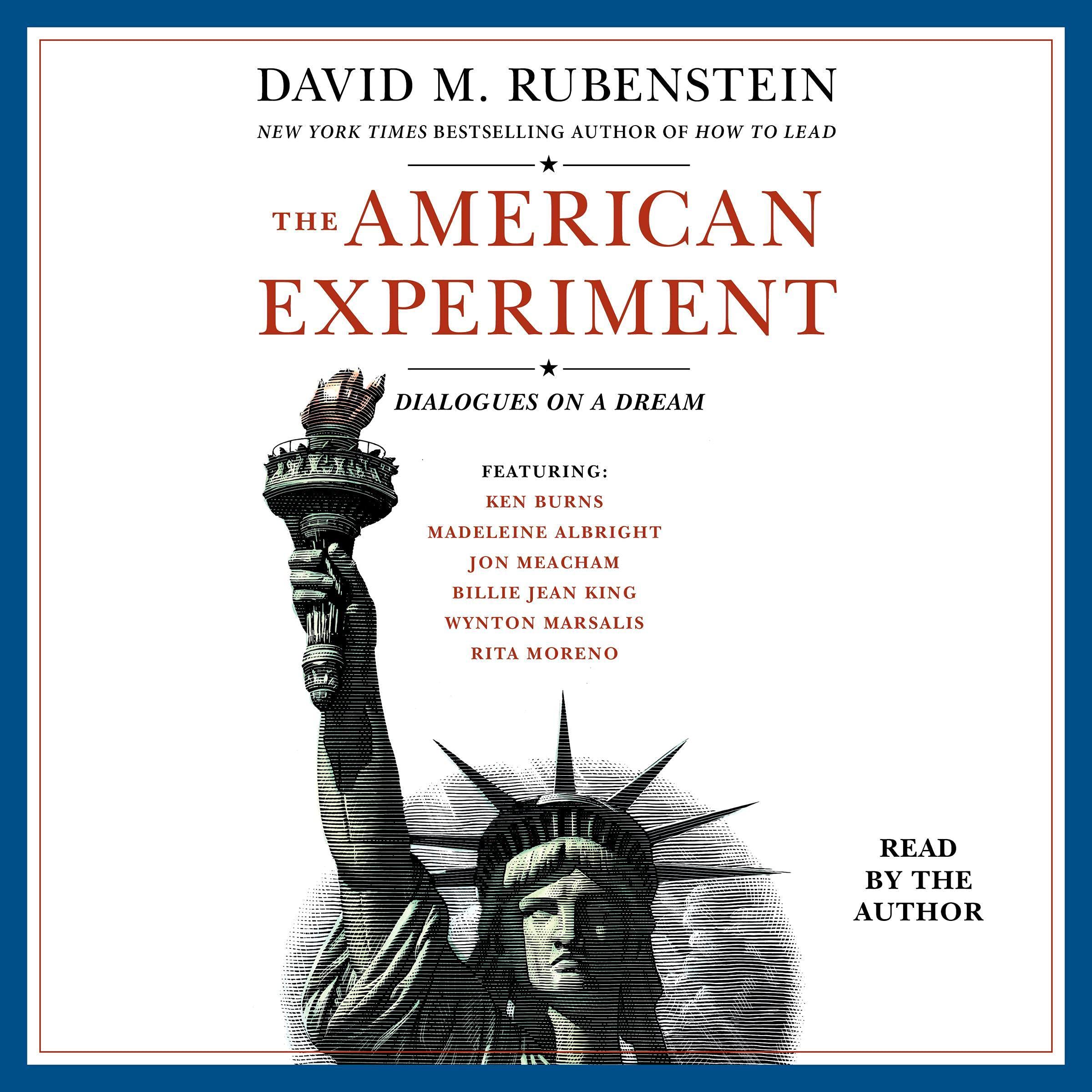
desertcart.com: The American Experiment: Dialogues on a Dream (Audible Audio Edition): David M. Rubenstein, David M. Rubenstein, Ken Burns, Madeleine Albright, Jon Meacham, Billie Jean King, Wynton Marsalis, Rita Moreno, Simon & Schuster Audio: Books Review: History - I'm not yet ready with reading the entire book. This book is interesting and the author speaks about facts I never knew about the country and his history! Really great book! I suggested anyone to read it if they are great fan of the country! Review: Educational - I have learned a lot with this book. I have achieved an understanding of American history, experience and how some decisions and some figures have impacted who we are and how some of our laws have evolved
G**B
History
I'm not yet ready with reading the entire book. This book is interesting and the author speaks about facts I never knew about the country and his history! Really great book! I suggested anyone to read it if they are great fan of the country!
A**A
Educational
I have learned a lot with this book. I have achieved an understanding of American history, experience and how some decisions and some figures have impacted who we are and how some of our laws have evolved
B**.
David Rubenstein is a wonderful interviewer
This CD is well done and very interesting and informative.
P**R
A whole new way to look at America
the notion by the author of interviewing a group of great hinders and doers at the highest level, gives us a new way to see our country in a promising light in spite of the mistakes we made.
M**B
Amazing! Never enjoyed a book of interviews before
Learned so much from each of the subject interviews. Appreciated the bios as well. Even the appendices were worth reading.
T**S
Important
Mandatory reading for all Amerit
W**R
A reader’s dream of a book!
This outstanding book is presumably the American Dream (going to the top of their class) as it’s been experienced by 27 notable interviewees. For a good overview of the book, check out the “Look inside.” However, the “Look inside” is not available for Kindle, so check out the hardcover “Look inside.” Regardless, to possibly save you some time, here are the 27 interviewees in alphabetical order by last name, along with their interview topic. -Madeleine Albright on the American immigrant -Danielle Allen on the Declaration of Independence -John Barry on pandemics and public health -David Blight on Frederick Douglass -Mark Bradford on the Visual Arts -Catherine Brekus on Religious Freedom -Douglas Brinkley on the Race to the Moon -Ken Burns on war -Francis Collins on the Human Genome Project -Philip J. Deloria on Native American History -Lilian Faderman on the Gay Rights -Henry Louis Gates, Jr on Reconstruction -Drew Gilpin Faust on Death and the Civil War -Donald E. Graham on the First Amendment -Walter Isaacson on innovation -Jack Jacobs on Military Service -Billie Jean King on sports -Jill Lepore on the promise of America -Wynton Marsalis on music -Jon Meacham on John Lewis and Civil Rights -David McCullough on the Wright Brothers -John Meacham on civil rights -Rita Moreno on film -Cal Ripken, Jr. on Baseball -Sonia Sotomayor on Civics and Civics Education -Bhu Srinivasan on 400 Years of American Capitalism -Elaine Weiss on suffrage -Jia Lynn Yang on Immigration The book starts off with Rubenstein’s introduction. Of note is his discussion of America’s 13 Key “Genes”(qualities that make America work): 1. Democracy 2. Voting 3. Equality 4. Freedom of Speech 5. Freedom of Religion 6. Rule of Law 7. Separation of Powers 8. Civilian control of the military 9. Capitalism & entrepreneurship 10. Immigration 11. Diversity 12. Culture 13. American Dream (essentially to better one’s life often without a limit). The book follows with its alliterative six sections of interviews: 1. Promise & Principle 2. Suffering & Sorrow 3. Restoration & Repair 4. Invention & Ingenuity 5. Creation & Culture 6. Becoming & Belonging. As in Rubenstein’s previous books, this book’s 27 interviews are punctuated by his probing questions bringing out fascinating responses by interviewees. One learns much about their lives, guiding principles, character, winning strategies to excel in their fields, and other enlightening and entertaining thoughts. For example, one strategy by Jack Jacobs on military service: “When you’re in a situation like that [in Vietnam] where you don’t know exactly where the enemy is, you have to apply yourself in the following way. You don’t attack with your main body, because you lose all the optionality if you’re engaged. You send the smallest possible unit forward to contact the enemy, and then you can maneuver around.” Another strategy was mentioned by Jon Meacham regarding John Lewis and Civil Rights: “I think [James] Lawson may be the most important living American about whom not enough people know. Lawson was a Methodist minister. He was a conscientious objector during Korea. He went to jail for refusing to be drafted into the conflict. He went to India, he met with Gandhi’s lieutenants. Gandhi was dead by then, but Lawson saw that the tactics of nonviolence that had worked so well in India could be applied to the segregated order in the South. He had come back to the United States and ran into Martin Luther King….” An interesting counterpoint to the proposed strategy of the Civil War North just buying the slaves from the South was the fact that, per interviewee Srinivasan, all the American railroads at the time cost about $750 million to build. To buy all the slaves would likely have cost between a prohibitive $3 to $4 billion. These are just a very small sample of the hundreds of educational gems found in the book, with numerous examples given about how character and “doing the right thing” saved the day. The book ends with Supreme Court Justice Sonia Sotomayor and her correlation between civics education and civility, both of which have been in decline since the focus on STEM to vault America ahead of Russia’s space effort beginning with Sputnik in 1957. Included in the justice’s comments is a recommendation to check out the iCivics organization (website online), which former Supreme Court Justice Sandra Day O’Connor helped start. Bottom-line, this is another outstanding book in the tradition of David Rubenstein’s illuminating interviews. Of possible interest, a book on strategy that includes "American Experiment's" author, David Rubenstein: Strategic Advantage: How to Win in War, Business, and Life and a book on the importance of character to see one's strategy succeed: George Washington's Liberty Key: Mount Vernon's Bastille Key – the Mystery and Magic of Its Body, Mind, and Soul , a best-seller at George Washington’s Mount Vernon.
S**H
Anti-American rewrite of history
The author comes across as anti-American. Through his questionable journey to becoming a billionaire he doesn’t seem to “get it” that all the opportunities and riches presented to him and his friends of all colors and backgrounds come because of this great country. But then again, he hasn’t spent much time with lower class Americans not involved in foreign relations, the world economic forum, Bloomberg, the state department, etc. etc. Too many decisions to make on their behalf to care what happens to them. He clearly thinks of himself as “brilliant” and I’m sure he is by some standards, but many can see right through his attempts at making himself look like a philanthropist and a patriot while looking at America and Americans with disdain and working towards America’s destruction.
K**L
Quality print, nice content.
X**X
Nice interdisciplinary presentation of the United States, historically and to this day. Interview style makes it dynamic and casual though highly informative.
ترست بايلوت
منذ 4 أيام
منذ أسبوع
منذ شهر
منذ 3 أسابيع