We remain fully operational. Our teams are working around the clock to ensure your deliveries continue safely.

قم بتنزيل التطبيق


معلومات عنا
حقوق الطبع والنشر © 2024 Desertcart Holdings Limited
قم بتنزيل التطبيق
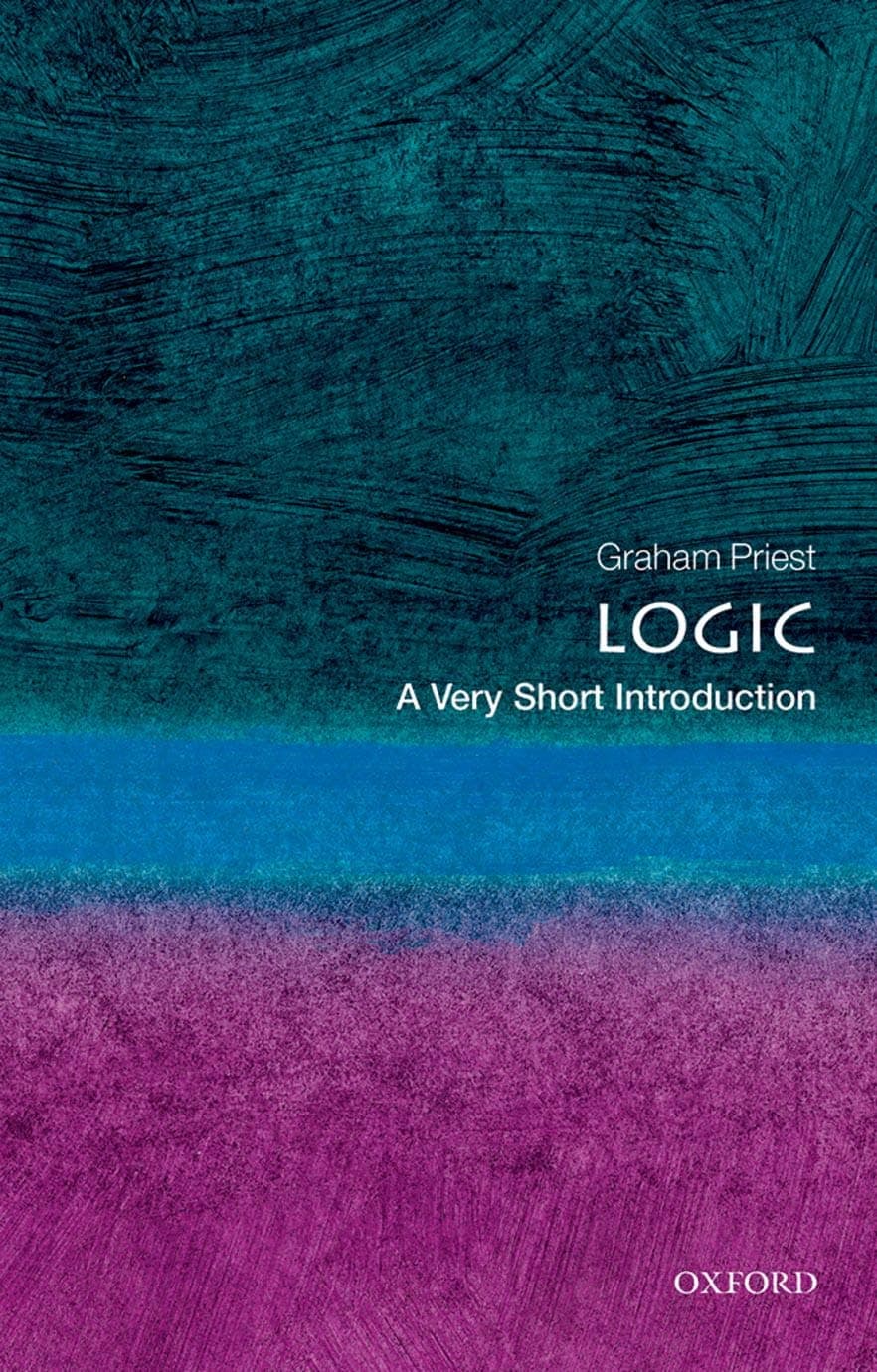
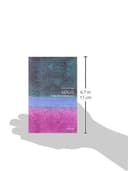
desertcart.com: Logic: A Very Short Introduction: 9780192893208: Priest, Graham: Books Review: Navigating the Labyrinth of Logic: A Critical Review of Graham Priest's Essential Guide - As a professional reviewer, I have had the privilege of exploring a multitude of literary works, but few have had the profound impact that "Logic: A Very Short Introduction" has had on me. Penned by Graham Priest, this book is a treasure trove of knowledge, a beacon of clarity in the often murky waters of logical reasoning. The book is not merely an introduction to logic, as the title might suggest, but a comprehensive guide that delves into the intricacies of logical notation, paradoxes, and the principles of reasoning. It is a testament to Priest's prowess as a writer and a teacher that he manages to condense such complex topics into a compact, accessible format. Pros: + Comprehensive yet Concise: The book is a comprehensive guide to logic, covering a wide range of topics from logical notation to paradoxes. Despite its breadth, Priest maintains a level of conciseness that makes the book digestible and not overwhelming. + Clarity of Explanation: Priest's writing style is clear and engaging. He explains complex concepts in a way that is easy to understand, making the book a valuable resource for both beginners and those with a background in logic. + Practical Application: The book not only teaches logic but also demonstrates its application in real-world scenarios. This practical approach enhances understanding and makes the learning experience more rewarding. + Accessible Format: The book's electronic format makes it easily accessible from any device, anywhere. This convenience is a significant advantage for those who wish to refer back to the book regularly. Cons: - Limited Worked Examples: While the book does a commendable job explaining concepts, it could benefit from more worked examples. These practical applications of theory can enhance understanding and provide a more hands-on learning experience. - Overuse of Symbols: The book introduces a plethora of logician's symbols, which can be overwhelming for some readers. A more gradual introduction of these symbols, with regular reminders of their meaning, could improve the learning experience. - Potential for Confusion: The book's references to logical paradoxes and problems from Alice in Wonderland, while creative, may confuse some readers. A more straightforward approach might be more effective in conveying the concepts. - Lack of Exercises: The book could benefit from including exercises for readers to practice the concepts learned. This interactive element could enhance understanding and retention of information. In conclusion, "Logic: A Very Short Introduction" is a valuable resource for anyone seeking to understand the world of logic. Despite its minor shortcomings, the book's comprehensive coverage, clear explanations, and practical approach make it a must-read. It is a testament to the transformative power of knowledge, a book that can change lives, as it did mine. As I continue my journey in the realm of logic, I find myself returning to this book, revisiting its chapters, and each time, I discover something new. It is, in my opinion, not just a book but a companion in the quest for knowledge. Review: Excellent, Concise, and Comprehensive. - Logic Review This book changed my life. It was like knowledge medicine. It helped me eliminate a lot of what I don't want and acquire more of what I want. I'll comment on how I discovered the book and what was helpful in reading it.' A review, a positive review, was what helped me get this book. Reviews have been a huge toxic source of accumulating clutter and junk. A good review of something bad. This was not the case. This was a great review of something invaluable. In that review, the person suggested to reread sections and normally I just try to get through material as quickly as possibly for the reward finishing it. However, with this book I realized it was extremely well-written, I liked the author, and most importantly I had saught to have knowledge of and to understand the content for a very long time, many years, but had never had a good resource, the focus and/or the time. I had the time, I had the focus, and this book was the resource to learn logic and it's remarkable in that. Some closing points. The length. This book is almost like a reference it has so much information it it. Yes it is pitted or depicted as merely an introduction, but it's more than that and more useful than a reference. It has all the useless "bloat" writing eliminated from it. I would never have udnerstood logical notation (and am still very much a novice in understanding that notation but rereading parts of this book will assist in increasing understanding of notation and savviness with notation). I'm on chapter 11 currently andit's one of the few books I encountered where I can FOCUS and READ it and think about it and it was rewarding to do so. So many other books are just disgusting fart-bloat-hype, where the author thinks of something catchy and the author puts that on a cover or subtitle and peopel buy it. If you think about that non-logic stuff (non-math, non-computer science stuff), I get angry. An example is the "Four Agreeements". Horrible book and anyone who likes that book is not a friend. "Four Agreements" is generalized "tenets" written for the illogical status quo, pop culture, throng herd masses; it's useless drivel. The anti-thesis to that book is this book, a highly useful book of logic! All the four agreements can be refuted (you have to make assumptions at times for logical reasons). This book helped me move forward in my life. I achieved minimalism goals; it helped me accomplish things more efficiently. I am glad this book wasn't sold/marketed as a "User Manual for the Mind" because that would have been hoakey and would have brought the wrong (non-logical, pop culture, rubbish) audience, but it does help you use your mind more sharply. This book did help me learn somethign I love: logic. I will be rereading parts of it. The length is perfect. It's not some big technical book that's impossible to read. But it's very thorough and comprenensive. I could easily see how each chapter coudl be a book in itself but it's written so well and so clearly that is unnecessary and each chapter has tons of information (and moves comprehensively and doesn't need supplementary books, too). It covers all the notation mainly. I can alwasy refer back to that and I have it in electronic format so I can access it from anywhere, from any device. If this was longer with more explanations and examples and exercises I wouldn't have gotten throuhg it and I wouldn't have learned the logic and logical notation. I am very interested in revisiting parts of the book and because it's so concise, that will be enjoyable; this would not be the case of it were excessively long. I am in the process of writing a book where I provide protection for logical fallacies (which will be released on desertcart.com and/or my site(s)) and this is congruent with that learning and writing. The brevity and the thoroughness makes it desireable to read, want to finish it, and possible to finish it. Other books would have been too long annd thus not helfpul. This book was helpful. Not merely a reference - comprehensive and thorough - but concise enough to be used as a reference. Short and great explanations. No other way to learn logic. I will reread sections and refer back to this; it may be the only book on logic I may ever need and def will likey be my main (if only, because it's so complete) on this field that has become so meaningful: logic!
| Best Sellers Rank | #1,562,280 in Books ( See Top 100 in Books ) #1 in Logic (Books) #18 in Mathematical Logic #21 in Philosophy of Logic & Language |
| Customer Reviews | 4.4 4.4 out of 5 stars (505) |
| Dimensions | 6.7 x 0.5 x 4.3 inches |
| Edition | New Ed |
| ISBN-10 | 0192893203 |
| ISBN-13 | 978-0192893208 |
| Item Weight | 4.8 ounces |
| Language | English |
| Part of series | Very Short Introductions |
| Print length | 128 pages |
| Publication date | January 18, 2001 |
| Publisher | Oxford University Press |
I**N
Navigating the Labyrinth of Logic: A Critical Review of Graham Priest's Essential Guide
As a professional reviewer, I have had the privilege of exploring a multitude of literary works, but few have had the profound impact that "Logic: A Very Short Introduction" has had on me. Penned by Graham Priest, this book is a treasure trove of knowledge, a beacon of clarity in the often murky waters of logical reasoning. The book is not merely an introduction to logic, as the title might suggest, but a comprehensive guide that delves into the intricacies of logical notation, paradoxes, and the principles of reasoning. It is a testament to Priest's prowess as a writer and a teacher that he manages to condense such complex topics into a compact, accessible format. Pros: + Comprehensive yet Concise: The book is a comprehensive guide to logic, covering a wide range of topics from logical notation to paradoxes. Despite its breadth, Priest maintains a level of conciseness that makes the book digestible and not overwhelming. + Clarity of Explanation: Priest's writing style is clear and engaging. He explains complex concepts in a way that is easy to understand, making the book a valuable resource for both beginners and those with a background in logic. + Practical Application: The book not only teaches logic but also demonstrates its application in real-world scenarios. This practical approach enhances understanding and makes the learning experience more rewarding. + Accessible Format: The book's electronic format makes it easily accessible from any device, anywhere. This convenience is a significant advantage for those who wish to refer back to the book regularly. Cons: - Limited Worked Examples: While the book does a commendable job explaining concepts, it could benefit from more worked examples. These practical applications of theory can enhance understanding and provide a more hands-on learning experience. - Overuse of Symbols: The book introduces a plethora of logician's symbols, which can be overwhelming for some readers. A more gradual introduction of these symbols, with regular reminders of their meaning, could improve the learning experience. - Potential for Confusion: The book's references to logical paradoxes and problems from Alice in Wonderland, while creative, may confuse some readers. A more straightforward approach might be more effective in conveying the concepts. - Lack of Exercises: The book could benefit from including exercises for readers to practice the concepts learned. This interactive element could enhance understanding and retention of information. In conclusion, "Logic: A Very Short Introduction" is a valuable resource for anyone seeking to understand the world of logic. Despite its minor shortcomings, the book's comprehensive coverage, clear explanations, and practical approach make it a must-read. It is a testament to the transformative power of knowledge, a book that can change lives, as it did mine. As I continue my journey in the realm of logic, I find myself returning to this book, revisiting its chapters, and each time, I discover something new. It is, in my opinion, not just a book but a companion in the quest for knowledge.
J**Z
Excellent, Concise, and Comprehensive.
Logic Review This book changed my life. It was like knowledge medicine. It helped me eliminate a lot of what I don't want and acquire more of what I want. I'll comment on how I discovered the book and what was helpful in reading it.' A review, a positive review, was what helped me get this book. Reviews have been a huge toxic source of accumulating clutter and junk. A good review of something bad. This was not the case. This was a great review of something invaluable. In that review, the person suggested to reread sections and normally I just try to get through material as quickly as possibly for the reward finishing it. However, with this book I realized it was extremely well-written, I liked the author, and most importantly I had saught to have knowledge of and to understand the content for a very long time, many years, but had never had a good resource, the focus and/or the time. I had the time, I had the focus, and this book was the resource to learn logic and it's remarkable in that. Some closing points. The length. This book is almost like a reference it has so much information it it. Yes it is pitted or depicted as merely an introduction, but it's more than that and more useful than a reference. It has all the useless "bloat" writing eliminated from it. I would never have udnerstood logical notation (and am still very much a novice in understanding that notation but rereading parts of this book will assist in increasing understanding of notation and savviness with notation). I'm on chapter 11 currently andit's one of the few books I encountered where I can FOCUS and READ it and think about it and it was rewarding to do so. So many other books are just disgusting fart-bloat-hype, where the author thinks of something catchy and the author puts that on a cover or subtitle and peopel buy it. If you think about that non-logic stuff (non-math, non-computer science stuff), I get angry. An example is the "Four Agreeements". Horrible book and anyone who likes that book is not a friend. "Four Agreements" is generalized "tenets" written for the illogical status quo, pop culture, throng herd masses; it's useless drivel. The anti-thesis to that book is this book, a highly useful book of logic! All the four agreements can be refuted (you have to make assumptions at times for logical reasons). This book helped me move forward in my life. I achieved minimalism goals; it helped me accomplish things more efficiently. I am glad this book wasn't sold/marketed as a "User Manual for the Mind" because that would have been hoakey and would have brought the wrong (non-logical, pop culture, rubbish) audience, but it does help you use your mind more sharply. This book did help me learn somethign I love: logic. I will be rereading parts of it. The length is perfect. It's not some big technical book that's impossible to read. But it's very thorough and comprenensive. I could easily see how each chapter coudl be a book in itself but it's written so well and so clearly that is unnecessary and each chapter has tons of information (and moves comprehensively and doesn't need supplementary books, too). It covers all the notation mainly. I can alwasy refer back to that and I have it in electronic format so I can access it from anywhere, from any device. If this was longer with more explanations and examples and exercises I wouldn't have gotten throuhg it and I wouldn't have learned the logic and logical notation. I am very interested in revisiting parts of the book and because it's so concise, that will be enjoyable; this would not be the case of it were excessively long. I am in the process of writing a book where I provide protection for logical fallacies (which will be released on amazon.com and/or my site(s)) and this is congruent with that learning and writing. The brevity and the thoroughness makes it desireable to read, want to finish it, and possible to finish it. Other books would have been too long annd thus not helfpul. This book was helpful. Not merely a reference - comprehensive and thorough - but concise enough to be used as a reference. Short and great explanations. No other way to learn logic. I will reread sections and refer back to this; it may be the only book on logic I may ever need and def will likey be my main (if only, because it's so complete) on this field that has become so meaningful: logic!
I**N
excellent intro
Graham Priest is obviously a good teacher, for he is a clear and helpful writer, and this a highly useful and insightful little volume. I had never formally studied logic, but needed a good clear account of two topics in particular: modus ponens and conditionals, and the slippery slope. I got them right here. For me his two chapters on these topics were the functional highlights, for they gave me the exact background knowledge I was after. But the book also provided me with good strengthener sections on material I already felt comfortable with: the liar paradox, Russell's paradox, probability, etc. One thing that annoyed me slightly was the plethora of logician's symbols. He introduces them appropriately, but then proceeds to just deploy them afterwards without further reminders and help. So I felt I had to be turning back, searching: now what was that square box symbol? Or have my thumb inserted at p.115 so I could be constantly flicking to the list of them at the back. But overall, a worthy purchase. Very helpful.
K**Y
A perfect book
It's absolutely incredible. How is it possible to teach a great amount of knowledge and understanding in a so short and accurate way. Moreover the approach of logic is so friendly that you can read it with pleasure from a to z. Chapters 14 and 15 are very hard to understand because the text is very summarized. Each word is important. I had to read it many times and use other books to make sure I understood. This book is both very condensed and very deep. You really need to reread it. I really like this style of books where every word is precious.
A**R
1日でも読破できます。とても分かりやすく初心書でも理解できる論理学入門です。ただ、あまり深い話ではありません。最後の方に、次ぎにどの本を読めば良いかも書いてあるので、入り口を知るためにとても役に立つ本でしょう。
T**K
This book is really good, if you are interested in logic. Otherwise you have to read it slowly or some chapters even twice. All chapters are very short, sometime you feel it could have been explained in detail. I enjoyed it. Author provides examples which are easy to understand for beginners.
S**R
da hat sich der Autor echt die Mühe gemacht, verständlich zu schreiben und wesentliches herauszuheben,Ich würde es und werde es logisch interessierten wärmstens ans Herz legen.
P**O
È un testo denso, solo apparentemente agevole. Richiedi molta ponderazione per seguire il percorso dell'autore, dialeteista e noneista. Consigliato specie per chi ha una certa preparazione in campo logico, e inclina verso le posizioni dell'autore. Consegna puntuale.
J**E
Short and sweet. I especially liked the presentation of the Halting problem and Gödel's theorems.
ترست بايلوت
منذ يوم واحد
منذ شهر