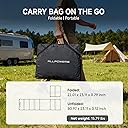
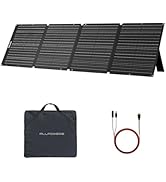
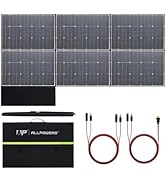
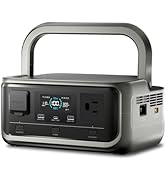
Panels, especially folding ones, never meet my expectations as far as output, until I realized REAL WORLD output and RATED POWER are two different things. This applies to ALL PV (Solar) PANELS not just All Power. More below but first the overall impression. ALL POWER comes with a good variety of useful accessories and the design is good, quality is very good for price. I got it for $239. That is a good price compared to other brands that may cost $400-$800. Are the other brands better? IDK? You would expect more for the price, but not necessarily. The fold out kickstands works well. I like how they have a pocked for the panel output cables and accessories YES the power cables leads are short which is fine with me, so the cables can store in pocket.... They use high quality cable and connectors. I have extension power cables so my devices are in the sade... panel in sun. RATED POWER - The big variable besides sunlight hitting the panel, no shade even just a corner kills output, aiming the panel at sun, how hot the panel, is what is the panel connected to. What are you trying to power (Load/Drain). Typically it is a battery you are charging to provide power to the devices you want to power. More accurately it is a BATTERY CHARGER or battery controller you connect the panel to. Sometimes those are a discreate device, other times integrated in a POWER STATION with the battery. Not all controllers love DC power direct from a PV (Photovoltaic) Solar Panel. Some battery charging controllers are optimized for one solar panels but may not be optimal for another brand of solar panel. Does not mean the panel is bad, just mis-matched. Spoiler Alert, ALL POWER does meet it's rating 200W, but for my actual usage I could only extract about 125W for my application. This is normal. I compared All Power to two 100W high end ridged panels (big and heavy) in parallel, they do the same thing in my application. Although the ridged panels consistently had about 10% to 12% more Real World output. Not a big deal. The point being both panels did not make 200W in my application... but both tested to their rated 200W. RATED POWER... How to measure. In strong full sunlight mid day w/ panels angled right at sun, using a volt meter check open voltage. This is with no device connected. You will see 20V give or take. Then check shorted amps, with an Amp meter able to measure at least 12 Amps DC (you can do this in series with meter leads or clamp on DC Amp Meter). I measured 20V open and 10.18Amps Short. (NOTE WHEN YOU SHORT THE + and - YOU WILL GET A SPARK. IT IS OK). ALL POWER, 203.4 Watts under the conditions it was tested under... However when connected to REAL WORLD load the actual power it is normal to get less Wattage due to mismatch with controller and that solar panel design. I DO NOT KNOW if $800 panel similarly rated will do much better. I would hope so, but who knows. My application is a 500W POWER STATION to run a 12V Frig/Freeze when camping. The Frig in moderate outside temps can run 24 hours on the Power station, about 24Watts an hour. The charge controller in my power station LIKES 24V, and limits charging to 125 watts (to protect the internal batteries). Voltage can be from 12v to 30v but anything under 20 volts the charging drops off. I tried to charge the power station off car's 12v jack (13-14v) and it was pathetic. So it is not all the Solar panels fault. Most panels open circuit make 20 volts, but under load the volts drop to 14-17 volts... this is normal and some charging controllers don't like lower voltages. *That is why I use a boost converter to charge my Power Station from Solar panels.* TIP I USE A BOOST (bucking type) Converter to get voltage to 24V regardless of input voltage (output from panels). The panels are going to be well below their OPEN voltage, often in 15v-17v range. Better more advanced (expensive) power stations may be more flexible. So my charger sees 24 volts and at what ever the current (Amps) are and charges most efficiently. If there are clouds and panel drops too low the booster drops out and you are no longer charging. It really is great in that with low morning or late afternoon light it continues to charge without dropping off as it does when panels are directly connected to Pwr Station. My Renogy 2x 100W panels behave in a similar way with this power station as the All Power panel. Some combination of power station and panels do better than others. SIDE BY SIDE COMPARISON WITH ALL POWER (portable folding) and TWO Ridged 100W Renogy panels in parallel. The Renogy panels were better, typically 12% give or take, about 9 to 12 watts more. This is to be expected being ridged panels. But ALL POWER surprised me and did better than I thought. I had other 200W folding panels and they could only muster 80W... All power was doing 117W. NOTE One advantage of having two 100W panels (Renogy) is you can put them in series and double voltage and cut Amps in half saving "IR" loss. The HIGHER VOLTS the LOWER AMPS for same POWER (watts). This means less loss over extension cable. I have long extensions (V x Amps = Watts). This is why the power grid bring power to your home is very high volts like 100,000 volts, but AC. I have another converter or BUCK converter to take the 38volts from the Renogy panels in series and drop down to 24 Watts (ideal volts for my Pwr Station controller). My power station is limited to 30V max. I can not run the two panels in series directly. So I have a BOOST converter and a BUCK (or drop down) converter. Note you can run to ALL POWERS in parallel and get more power (double). SIZE MATTERS... Clearly stored the ALL POWER is a winner. It is about 25" x 20" folded and fairly thin. However unfolded it is 25" x 80" = 2000 sq-in or 13.8 sq-ft it is large.... The ridged Renogy 100W panels size are 41"x 20" = 820 sq-in each, 1640 sq-in for two, or 11.4 sq-ft. However when the two Renogy panels are stored in their cardboard shipping box, it is awkward and heavy to move. The Renogy panels are about 1.5 inch thick, so two in packing box is about 5" deep. The thickness of the All Power panels are thin. However not too thin they are too floppy. The All Power I think is about 10 lbs less than th ridged Renogy. Add a handle, less weight, thin compact the All Power is easy to move around.. However folded out the ALL POWER IS BIG... The KICK Stand is nice. In wind take care it does not blow down or away. People expect to ALWAYS to get rated power no matter what. That is of course not possible. In fact it is unlikely you will ever get more than 50%-70% unless everything is optimal. Besides the mismatch between battery charger I explored above, obviously sunlight can be filtered (cloudy), panels not ideally aimed at sun, hot temperatures, all produce less power than rated. However if testing the panels under standard testing criteria, they produce rated power, current, volts. However real world is not test conditions. ALL PANELS DO THE SAME THING. I need to generate about 500 watts per day to keep my good sized portable 12V DC refrigerator/freezer running by charging the battery station fully before sunset. I can expect to make that over a 8-10 hr sunny day easy and then some. Overnight, say 12 hours my Frig uses about 250 watts. I need to keep the Rrig running and charging battery (250W + 250W = 500W) throughout the day before nightfall. 200Watt panels that make 120W to 140W real world with no clouds is plenty. However if cloudy more panel may make the difference. I tried to lay them flat on roof luggage rack. It was marginal. Angling them makes a huge difference. Also on marginal day bigger or more capacity panels helps a lot. I found a sweet spot for my camping Frig, but you never can have too much power. I would do well to get more panels and1000W power stations but price and weight goes up significantly. Right now I am good enough and still have room to spare for charging phones. HOT DAYS AND 12V FRIG. Last time I was camping a full week it was mid 90's, I was using much more power (Frig running much longer due to not getting to set temp during peak temp of day). I had to run the Regurgitator at 38F verses 32F so it ran a little less. Drinks are still cold at 38F, especially when it is in the high 90's. Also even though set at 38F it is colder at bottom of Frig is close to 32F. Guess where the beer went?