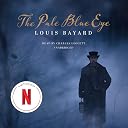

Soon to be a Netflix film starring Christian Bale, Harry Melling, and Gillian Anderson “Shockingly clever and devoutly unsentimental . . . reads like a lost classic. Bayard reinvigorates historical fiction.” ( New York Times Book Review ) “Seemlessly blends Poe into an engrossing whodunit worthy of its inspiration. ” ( USA Today ) An ingenious tale of murder and revenge at West Point, featuring a retired detective and a young cadet named Edgar Allan Poe—from the author of Courting Mr. Lincoln . When the body of a suicide victim disappears at West Point Military Academy in 1831, only to be discovered hours later missing its heart, the Academy calls on retired detective Gus Landor to investigate. Landor is something of a legend among his peers, noted for an uncanny, Holmesian ability to read people. When Edgar Allan Poe, a new cadet, comes forth with his own cryptic conclusion—that the man Landor is looking for is a poet—Landor is intrigued and enlists Poe as his assistant. Working together, Landor and Poe narrow down the suspects, all the while dealing with their own personal demons. Review: Thoroughly Satisfying - What a fine writer Louis Bayard is, and what a wonderful novel he has written. It succeeds equally well as literature, mystery, history and entertainment. And the ending! What a hoot. If you're seeking a quick, superficial blast of escapist fiction, THE PALE BLUE EYE is probably not for you. You should be prepared, and looking forward, to reading every word of this book at a leisurely pace. It's not a Dan Brown-type quickie that you can skim in a hurry and rush to the final solving of the mystery. Nor would you want to, because the writing is so evocative and sensual. Our narrator, a hard-boiled detective, knows that God (and the devil) is in the details, and so does Bayard. I don't provide plot points in my reviews; it detracts from the reader's moment-to-moment fun of discovery. So I'll just say that it's set in 1830 at West Point Academy, and that it incorporates facts and real people from that time and place, including the American writer Edgar Allen Poe as a young cadet (which he actually was). Other than that, it's an imaginative mystery bolstered by poetic, astute and clever writing that rings true to the time period. The descriptions are three-dimensional, and the conversations and characterizations are humanly ambivalent, comedic and profound. Bayard does great things with the dual narrative form, and his voice of young Poe is ripe, florid, funny and compassionate. It's not at all required that you be familiar with Poe or his work; however, Poe fans will love the way Bayard brings the man and his words to life. Bayard even manages to sneak in that famous Poe-ism, "tintinnabulation." THE PALE BLUE EYE has inspired me to go back to Poe's work and reread it fresh. From the first page to the very last, THE PALE BLUE EYE is an intellectual, aesthetic and emotional treat. And now that I know the mindblowing conclusion, I plan to reread it. This is something I rarely do, but there's enough beautiful writing here to warrant a second round. Whether or not you're a fan of the mystery genre, I recommend THE PALE BLUE EYE, because it is much more than your standard mystery yarn. Plain and simple, it's a great book. Review: Fantastic Book with Terrible Ending - I was mesmerized by this novel. Great characters, suspenseful plot and atmosphere, and very affecting prose. However, when I got to the end and the guilty were identified, I was greatly disappointed. The outcome of this superb story was silly, convoluted and quite unbelievable. I'm sure the author is capable of writing a great ending to a story, but this most certainly wasn't it. I hope his other books fare better.
A**R
Thoroughly Satisfying
What a fine writer Louis Bayard is, and what a wonderful novel he has written. It succeeds equally well as literature, mystery, history and entertainment. And the ending! What a hoot. If you're seeking a quick, superficial blast of escapist fiction, THE PALE BLUE EYE is probably not for you. You should be prepared, and looking forward, to reading every word of this book at a leisurely pace. It's not a Dan Brown-type quickie that you can skim in a hurry and rush to the final solving of the mystery. Nor would you want to, because the writing is so evocative and sensual. Our narrator, a hard-boiled detective, knows that God (and the devil) is in the details, and so does Bayard. I don't provide plot points in my reviews; it detracts from the reader's moment-to-moment fun of discovery. So I'll just say that it's set in 1830 at West Point Academy, and that it incorporates facts and real people from that time and place, including the American writer Edgar Allen Poe as a young cadet (which he actually was). Other than that, it's an imaginative mystery bolstered by poetic, astute and clever writing that rings true to the time period. The descriptions are three-dimensional, and the conversations and characterizations are humanly ambivalent, comedic and profound. Bayard does great things with the dual narrative form, and his voice of young Poe is ripe, florid, funny and compassionate. It's not at all required that you be familiar with Poe or his work; however, Poe fans will love the way Bayard brings the man and his words to life. Bayard even manages to sneak in that famous Poe-ism, "tintinnabulation." THE PALE BLUE EYE has inspired me to go back to Poe's work and reread it fresh. From the first page to the very last, THE PALE BLUE EYE is an intellectual, aesthetic and emotional treat. And now that I know the mindblowing conclusion, I plan to reread it. This is something I rarely do, but there's enough beautiful writing here to warrant a second round. Whether or not you're a fan of the mystery genre, I recommend THE PALE BLUE EYE, because it is much more than your standard mystery yarn. Plain and simple, it's a great book.
J**R
Fantastic Book with Terrible Ending
I was mesmerized by this novel. Great characters, suspenseful plot and atmosphere, and very affecting prose. However, when I got to the end and the guilty were identified, I was greatly disappointed. The outcome of this superb story was silly, convoluted and quite unbelievable. I'm sure the author is capable of writing a great ending to a story, but this most certainly wasn't it. I hope his other books fare better.
J**T
Cadets, Murders, and Poems, Oh My!
Update (13 Nov 2017) - Another read of this one - I think my 4th - and still an easy 5 stars and still my 2nd favorite book of all time...every time I read it I pick up on something new - this time it was the vivid sense of time and place - it takes place from October through December and the autumn chill and winter ice is palpable...I also noticed again the other settings, apart from West Point, esp. the famous Benny Havens tavern and also Cozzens hotel and how well they were used in the story. Just excellent. Update (7/23/15): The fiction I've read in 2015 has been a bit uneven in its quality - so I went to an author I knew would please and re-read "Pale Blue Eye" (I've read his "Mr. Timothy 3 or 4 times and will probably re-read his "School of Night" soon). I didn't delve too much into specifics in my first review below from a few years back. His characterization of Poe is just terrific: eccentric, lugubrious, and poetic (of course) - a brief exchange passage gives a flavor of the balance between narrator Gus Landor's straightforwardness and Poe's extravagance: We could wend in any direction, argue any point...What was the handsomest color on a brunette? Me: red. Poe: aubergine. (He would never had said "purple.") (p. 229) The pithiness is balanced by the macabre in a setting that would please Poe himself. The setting of West Point and environs in the autumn and early winter is ideal - the description of cadet life is in keeping w/ what I've read about the early history of the institution (in books such as the excellent "Best School in the World" or "Class of 1846") - the mystery is appealing and the ending is equal parts heartbreaking, tragic, satisfying, and mysterious itself. Mr Timothy remains my favorite book - not just of Bayard's, but of all I've read...Pale Blue Eye comes in a close second. I'm sure I'll read it again. Original Review: I picked up and read Bayard's "Mr. Timothy" because the cover caught my eye and the quick summary on the back piqued my interest. It was terrific. I didn't need a great cover or a quick summary to prompt me to read "Pale Blue Eye" as Mr. Timothy left me wanting more - much more - from Louis Bayard...and he did not disappoint! What a wonderful book this is!
G**S
Hitchcock Meets Poe
Kudos to Louis Bayard for this unique and cleverly crafted murder mystery set in the early days of The US Military Academy at West Point, an unlikely setting, but not as unusual as the casting of Cadet Fourth Class Edgar Allan Poe in a lead role. Poe indeed attended West Point - albeit briefly - a historical fact which the talented Bayard uses to full advantage in spinning a tale that apes Poe's macabre, eerie, surrealist style, while at the same time capturing intrigue and enigma that could pass for Arthur Conan Doyle. When a cadet is found hanged - an apparent suicide. But as if that is not enough, the corpse is posthumously desecrated with the removal of the young man's heart. West Point Superintendent Colonel Sylvanus Thayer, fearing political fallout for the fledging institution, calls in Augustus Landor, local resident and former New York City police detective of some renown, to investigate, hoping to keep the situation under control before Army bureaucrats descend. The wily Landor meets and is impressed with an intellectual and keenly observant young cadet - Poe of course - and reluctantly is granted permission to have Poe clandestinely assist in the investigation. It is a task Poe relishes and rises to with aplomb, setting for the stage for a Gothic tale of uncommon depth, where the opposing images of the New York's Hudson Valley's majestic splendor and unrelenting desolation provide the perfect backdrop to Bayard's chameleon prose. But there is so much more to "The Pale Blue Eye" than the author's clever spins on Poe, Doyle, and Washington Irving. This is an extensively researched labor of love with well-drawn characters, an atmosphere as moody as the reclusive Poe, and an illuminating slice of American culture in 1830. But most of all, it is simply a terrific story - one that takes twists and turns along the way, and just when you think you've got it figured out, turns around and jars you out of any self-congratulating complacency like West Point's reveille on those cold and damp winter mornings of the Hudson heights. Unlike Matthew Pearl's excellent but wordy "The Poe Shadow", "The Pale Blue Eye" moves quickly, dodging and weaving through deepening depravity to a climax as shocking and unexpected as anything Hitchcock has rendered. If I had a complaint, it is Bayard's subtle but condescending view of the cadets and administration of West Point - an unnecessary and unfair slight to the fine men (and women) of this venerable institution - but only a minor distraction not sufficient to curb my enthusiasm for this refreshingly original yarn. In short, one of those rare books that will keep you turning the pages way past the time you know you should be asleep - a true triumph of fiction in a historical setting. Well done, Mr. Bayard!
Z**P
Mostly Brilliant
I won't go into plot details. Most of the other reviews have already done that. I will say that this guy Louis Bayard is one terrific writer. In comparing this book, for example, to Matthew Pearl's also brilliant "The Poe Shadow," I find Bayard to be every bit as capable at crafting period details, celebrity recreations, turns of phrase, and stunning narrative as Mr. Pearl. Yet Bayard is the more lively, imaginative, entertaining and readable author. I also felt that Bayard fashioned a convincing Edgar Allan Poe and many of the scenes involving him evoked the novel's most touching moments. Bayard did him justice as a man, though maybe not quite as a writer. Having said these positive things, I must also confess that my assessment of Bayard's book is that the group of reviewers who gave it two stars for being partially hokey and the group that gave it four or even five stars for being generally brilliant... were both right. The problem is that neither group takes both good and bad aspects into consideration in judging the book as a whole: it is a brilliant work of fiction that, particularly at one point, seems to suddenly collapse into pulpy teenage fiction, then rights itself. You may temporarily feel betrayed as a reader by that sudden collapse. Or you may feel permanently betrayed by it. To me, the overall experience of the book was a good one and I will definitely be buying Bayard's other mystery, "Mr. Timothy."
T**L
Stoney Lonesome
This work somehow escaped me when first published. I served on the faculty at West Point as an Army officer and professor of psychology for sixteen years, and my long-ago West Point mystery SHADES OF GRAY (Viking, 1987), though set in the 1980's, drew its rationale from events in 1830--Bayard's West Point. It was good to see the author did his homework. I always considered Ethan Allen Hitchcock a good subject for storytelling--as did he, I suspect, as in his later years he spent time studying spiritualism. Sylvanus Thayer, stern as he was, sympathized with Poe to the extent of subsidizing publication of his early poetry. And the infamous Stoney Lonesome, a bare hilltop looming over West Point, was my home for three years. The quarters there had been built, or thrown together, on the cheap in the Sixties, and the plumbing never quite worked. I could sharpshoot details: Cozzens' Hotel was still 40 years in the future when Poe last stood reveille, for example, and the lady who wrote hymns at Gouverneur Kemble's party in Cold Spring--apparently Anna Warner, who penned "Jesus Loves Me"--was a young girl at the time. But Bayard captures the fragility of an institution barely hanging on to rocky cliffs over the cold Hudson, a symbol of dismay to many politicians (including David Crockett of Tennessee) philosophically inclined to mistrust a standing army and especially the Sullas and Caesars of a military elite (though quite a few cadets arriving in those days had to be taught to use a knife and fork). The windy phrases and sometimes overwrought prose bother some reviewers, but this is a first-person narrative by an educated gentleman in1830. This was the style as the Enlightenment finally yielded to Romanticism. More modern prose would simply have seemed off-key. Finally: the twist at the end. As I read it, I rebelled. But as I re-read it, it seemed to fit. We had to see the story through Landor's eyes, not Poe's. And the skeleton of Landor's agony is seen dimly through the pale, pellucid skin of his narrative. Obviously, some of it stuck to my fingers. Read the story. You will see what I mean.
B**Y
INCREDIBLE .... A MODERN DAY CLASSIC !!
I must say that this book is one of the best I have ever read. Other reviews give the basics of the thrilling plot, but I want to concentrate on the author Louis Bayard. This novel puts other top sellers of today to shame. The writing is lyrical and flows with pure beauty. It manages to bring the characters to life with a depth that is very rare and tell a story that is suspenseful with twists and turns that will have your head spinning while bringing the beauty of the written word to life at the same time. I have been a huge fan of Mr. Bayard since his early works like FOOL'S ERRAND. There has always been something special about his work - his intelligence, his true love of his characters and the display of the obvious good heart he possesses. This is a complex author who is immensely gifted. THE PALE BLUE EYE takes place in thew 1800's and the writing is equal to that of the true classics. I have never been so glued to a novel for the pure sake of its beauty. I was very sad when I finished this book. The characters had become a part of my life and for a while it was as if I attended the West Point Academy. The use of Edgar Allen Poe as a character works amazingly well. Do yourself a favor and read this special book. Something so intelligent and entertaining is hard to come by. I thank Louis Bayard for enriching my life and giving me another world to escape to for a while. I honestly believe this book is one that will always be a part of me.
A**E
Highly recommend
Absolutely fabulous story. Well written and interesting. I did not know that Edgar Allan Poe had attended West Point for a short period of time. He's an integral part of the story. I don't want to say too much and give away the story. Buy the book You won't regret it.
C**Y
Atmospheric and well plotted
My first time reading this author's work but the excellent detailing of each character, combined with the sinister murder mystery that needs to be solved, ensures that it won't be the last.
D**K
The Pale Blue Eye
Brilliantly atmospheric read!
D**E
I love it
Quick delivery from Usa to Italy. I love this story
E**Z
Great
A thriller with a gothic element to it
J**Y
A fantastic read but...
Having watched and enjoyed the film I sent for the book. It's so well written and tells an intriguing story but I can only give 4 stars for the paperback edition because the print is so small and therefore it's quite tiring to read.
Trustpilot
3 days ago
1 week ago