![Hunger [DVD] [2008]](https://m.media-amazon.com/images/I/61PODobGjKL._AC_SL3840_.jpg)
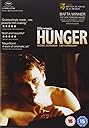
Hunger [DVD] [2008]
Product ID: 48437724
Desertcart purchases this item on your behalf and handles shipping, customs, and support to EGYPT.
It’s a bold film that can seat two people opposite each other for nearly 20 minutes, just having a conversation. Hunger is that movie. What’s particularly impressive is just how enthralling the scene is, and how it makes cinematic gold out of something seemingly so straightforward. Yet straightforward is something that director Steve McQueen’s debut behind the camera absolutely isn’t. Hunger is the story of the IRA hunger strike at the Maze Prison in 1981, and it quickly pulls little punches in getting across the conditions in the prison, and the inmates’ dissatisfaction. Hunger treads a very careful political line throughout its running time, and what emerges is a surprisingly open drama, powered by an excellent performance from Michael Fassbender as Bobby Sands. As Sands embarks on his infamous hunger strike, Fassbender mesmerises in the role, leading up to the aforementioned, gripping, single conversation that’s the highlight of the film. Mark him down as a major talent to watch. Alongside Fassbender, director Steve McQueen does really quite sterling work with Hunger . It can’t have been an easy film to direct by any measure, yet he turns in a harrowing piece of cinema that leaves the judgements to the viewer. It’s challenging film making and--despite a little stumbling as it enters its final act--it’s some piece of cinema too. -- Jon Foster Steve McQueen directs this unflinching dramatisation of the last weeks in the life of Bobby Sands, the Provisional IRA member who led the 1981 Irish hunger strike in the political wing of Belfast's Maze Prison. Ten prisoners starved themselves to death in protest at being denied official political prisoner status by Margaret Thatcher's government. Michael Fassbender plays Sands, whose passionate commitment to the cause for which he has been imprisoned and in the righteousness of dying for his political beliefs is portrayed in a central scene where he discusses the morality of the hunger strike with a visiting priest (Liam Cunningham). The film premiered at the 2008 Cannes Film Festival, where it was given an 'Un Certain Regard' screening. Review: Breathtaking - This incredible film literally took my breath away. Harsh,beautiful, mesmerising and intelligent. I was a student when Bobby Sands died and I remember such a wild mix of emotions. Awe that a man had such strength of will that he would willingly and knowingly starve himself to death to make a point, disgust,outrage and confusion. Of course the situation was far more complex (as are most things to do with the Troubles) than I understood at the time and this film doesn't in any way seek to explain, justify or apologise for any of the things that happened. The strain on prison guards is just as apparent as that on the prisoners. Don't watch this if you are looking for answers- you won't find them here. The key scene, the conversation between Sands and a priest sympathetic to the republican cause, is one of the finest pieces of understated acting I have ever witnessed. It is by turns funny, poignant, angry and resigned as both men struggle to understand the impasse that their divergent views have brought them to. I had a lump in my throat when Liam Cunningham says, while the camera is focused on Michael Fassbender's already gaunt face "I don't think I'll be seeing you again Bobby" If you want to understand the Troubles read a book, watch a documentary, talk to an Irishman. If you want a deceptively simple film with two extraordinary performances in Fassbender and Cunningham, a truly visually artistic tour de force then you have to watch this. It will make you think. It will make you feel. It will haunt you. Review: Very good... - This is a very good, somewhat harrowing but true depiction of the hunger strikers of 1981. It flows quickly and also hits hard, not giving the audience much time to take a breath. My only criticism of the movie was that it only lasts around 1 and a half hours.
| Contributor | Andrew Litvin, Brian Milligan, Des McAleer, Edmund Coulthard, Enda Walsh, Frank McCusker, Geoff Gatt, Helen Madden, Iain Canning, Jan Younghusband, Laine Megaw, Lalor Roddy, Laura Hastings-Smith, Liam Cunningham, Liam McMahon, Michael Fassbender, Rory Mullen, Steve McQueen, Stuart Graham Contributor Andrew Litvin, Brian Milligan, Des McAleer, Edmund Coulthard, Enda Walsh, Frank McCusker, Geoff Gatt, Helen Madden, Iain Canning, Jan Younghusband, Laine Megaw, Lalor Roddy, Laura Hastings-Smith, Liam Cunningham, Liam McMahon, Michael Fassbender, Rory Mullen, Steve McQueen, Stuart Graham See more |
| Customer Reviews | 4.3 out of 5 stars 513 Reviews |
| Format | PAL, Widescreen |
| Genre | Drama |
| Global Trade Identification Number | 05060002836293 |
| Language | English |
| Manufacturer | Studiocanal |
| Number of discs | 1 |
| Runtime | 1 hour and 36 minutes |
| Studio | Fox |
L**K
Breathtaking
This incredible film literally took my breath away. Harsh,beautiful, mesmerising and intelligent. I was a student when Bobby Sands died and I remember such a wild mix of emotions. Awe that a man had such strength of will that he would willingly and knowingly starve himself to death to make a point, disgust,outrage and confusion. Of course the situation was far more complex (as are most things to do with the Troubles) than I understood at the time and this film doesn't in any way seek to explain, justify or apologise for any of the things that happened. The strain on prison guards is just as apparent as that on the prisoners. Don't watch this if you are looking for answers- you won't find them here. The key scene, the conversation between Sands and a priest sympathetic to the republican cause, is one of the finest pieces of understated acting I have ever witnessed. It is by turns funny, poignant, angry and resigned as both men struggle to understand the impasse that their divergent views have brought them to. I had a lump in my throat when Liam Cunningham says, while the camera is focused on Michael Fassbender's already gaunt face "I don't think I'll be seeing you again Bobby" If you want to understand the Troubles read a book, watch a documentary, talk to an Irishman. If you want a deceptively simple film with two extraordinary performances in Fassbender and Cunningham, a truly visually artistic tour de force then you have to watch this. It will make you think. It will make you feel. It will haunt you.
G**A
Very good...
This is a very good, somewhat harrowing but true depiction of the hunger strikers of 1981. It flows quickly and also hits hard, not giving the audience much time to take a breath. My only criticism of the movie was that it only lasts around 1 and a half hours.
B**S
Steve McQUeen
This movie is an 'arthouse' movie. If you want to be entertained by a simple, follow-the-breadcrumbs movie then go watch something like 'Bad Boys'. Speaking of bad boys, some of the Northern Irish chaps who died during the hunger strike were bad boys. Director Steve McQueen does not reveal the nasty side of these 'political prisoners' or 'martyrs' as they are known in some parts of Ireland. McQueen shows us the prisoners prospective via Bobby Sands. The director does not reveal the side/ story of the prisoner officers, and he really cannot do all that in less than two hours of motion pictures. Overall this is the best movie i have seen in a long time. Having just recently watched Apocalypse Now (again) recently, I realsised some movies are so real and true that they affect me almost profoundly, and remain in my mind for days afterwards. 'Hunger' is one such movie. It is a heart-breaking story, told in a brilliant way. Steve McQueen has directed a movie that tears up the Filmmakers rule book, and he has created a new (bleak) form of film making / storytelling. For example, in the first 20 minutes of 'Hunger' there is little or no dialogue and yet we still get an insight into various characters - the Prison Guard who looks like 'Sir' Fred Goodwin. Another example of the director tearing up the filmmakers rulebook is a scene whereby Fassbender (Bobby Sands) talks to a Priest during a long take whereby the camera does not move. Excellent movie.
J**N
Fascinating cinema, but not feint-hearted
A very educational, frank look at the Irish no-wash protests and hunger strikes of the early 1980s. Haunting visions of men defecating and smearing their feculence up the walls, prison corridors flooded with urine, piles of left-over rancid meals in the corner of the cells and maggots writhing around in the filth make the first half of this film incredibly stomach-churning. All this is interlaced with scenes of police brutality, to create an incredibly powerful feeling of utter despair and hopelessness. The second half of the film concentrates on Bobby Sand's famous hunger strike, for which Michael Fassbender lost a dangerous amount of weight, and genuinely looks as though he's in permanent agony. This is not a film for the feint hearted.
C**N
Hunger - brief review
The Plot It's 1981, HM Maze Prison, Northern Ireland. The IRA inmates refuse to wear prison clothing and start a protest to attain political prisoner status. When this fails, Bobby Sands (Michael Fassbender) begins a hunger strike to draw attention to the prisoner's plight. The Verdict When making films about IRA and the Irish troubles, film-makers have always had a difficult balance. Too sympathetic to the IRA, you make them out to be freedom fighters. Too harsh, you portray them as one-dimensional terrorists. Turner prize winner Steve McQueen manages this balance perfectly, with a stand-out performance from Michael Fassbender as Sands. Bleak and horrifically realistic, McQueen goes places other film-makers wouldn't dream of.
W**O
Watch it if you can.
This film is a "no punches pulled" re-enactment of the issues surrounding the death by starvation of Bobby Sands, which I remember following in the news during the premiership of Margaret Thatcher. The film provides enough material about the treatment of IRA prisoners in "H Block" during the period to explain,I think, clearly, Sands' motives for going on hunger strike. The experience of his strike is not easy-viewing but probably accurately represents the stages he would have gone through as he starved. I would recommend the film highly, if you have an interest in the period but it's not a film which could be regarded as "entertaing" or "fun" in any way. It is absorbing and, I think, deserves to be watched and taken seriously, as a mark of respect for Sands, and those who followed him, and as an important bit of reality checking for those who think the British were decent gaolers, just trying to protect their people. There is evidence in this film of a much less clear rationale.
G**C
Fassbender is great
I have to say Fassbender plays a blinder in this movie. It stays true to the events but is a bit slow.
M**S
The second Hunger Strike
A thought provoking film which lingers in the mind, Hunger is an accurate portrayal of the conditions in the H-Blocks of the Maze Prison for those holding out for political prisoner status. The sounds and sights are exactly those given in videos of the same on YouTube, when journalists and film crews were first given access to those on the Dirty Protest. McQueen is a maker of powerful films, and the scene in which he depicts the conversation between Bobby Sands and the priest is sparingly shot, yet mesmerising, in addition giving an insight into Sands' boyhood memories.
A**E
Gran Película
Gran película, aunque no es para todos los gustos
Y**I
映画は元の表現で見るべし
日本版はボカシ処理されていたので海外版を購入。 IRAの政治犯たちは収容されている刑務所でイギリスから提供された 服は着用しないで抵抗の態度を示す。 主人公はイギリスへの抵抗と世界に彼らの主張を示すためハンガーストライキを 決行する。 日本版はボカシを入れることで彼らの主張にもボカシを入れる結果になった。
R**O
Peliculón
Fassbender no es sólo un guapito de cara. Aquí hace un papel durísimo y creíble. La conversación con el cura en un único plano de más de 10 minutos pone los pelos de punta y la transformación del actor, interpretativa y físicamente (adelgazó hasta los 58kg), es brutal. Es una buena película, como Shame, impactante, que no deja indiferente y que invita a reflexionar. Para los que no dominamos el inglés, tiene subtítulos.
M**N
Wenn der Geist über den Körper triumphiert ...
... kann dies schwer erträglich, aber nicht weniger beeindruckend sein. Es sind vor allem die Körper, die im Film im Vordergrund stehen. Bereits die erste Szene zeigt, wie körperliche Verwundungen prägen, aber zusammenspielen mit geistigen Anstrengungen: Ein Mann taucht seine Hände in Wasser, um Linderung für seine aufgeschürften Fingerknöchel zu erlangen. Er nimmt wortlos sein Frühstück ein, prüft Auto und Straße sehr genau, bevor er losfährt und erreicht schließlich den Umkleideraum der Gefängniswärter. Erst viel später erfährt der Zuschauer, warum diese Knöchel verwundet sind und warum dieser Mann so schweigsam und so besorgt ist. Nach ca. 35 Minuten kommt die eigentlich Hauptfigur, Bobby Sands, zum ersten Mal ins Bild und hat dann seine zentrale Szene: ein ca. 20 Minuten dauerndes Gespräch mit einem katholischen Priester. Überwiegend aufgenommen in nur einer einzigen Einstellung, die Figuren werden von hinten beleuchtet, so dass der Zuschauer lange nur Silhouetten sieht - eben nur Körper in einem kargen Raum. Das Gespräch teilt den Film in zwei fast gleich große Teile: Im ersten stehen die Körper in der Konfrontation, in der Gewalt und in ihrer Nacktheit im Vordergrund. Die Weigerung der IRA-Kämpfer Gefängniskleidung anzuziehen, sich zu waschen und das Beschmieren der Zellen mit eigenem Kot wird von den Wärtern mit Bestrafungs- und Zwangsreinigungsaktionen beantwortet - beides ist gleichermaßen schwer erträglich. Dieser erste Teil des Films ist von einem verstörenden Wechsel zwischen extremer Gewalt und großer Ruhe bestimmt. In der zweiten Hälfte wird der im Gespräch angekündigte Hungerstreik am Beispiel Bobby Sands gezeigt. Der Körper zeigt nun den stillen Protest, verfällt, wird liebevoll gepflegt und gewinnt am Ende etwas nahezu sakrales. Obwohl sich kaum noch etwas ereignet, ist die zweite Hälfte nicht weniger eindrucksvoll und fesselnd als die erste Hälfte dieses ungewöhnlichen und sehr sehenswerten Filmes. Lange Interviews mit Regisseur McQueen und den Hauptdarstellern auf der Bonusdisk geben sehr guten Einblick in Konzeption und Machart des mit der goldenen Kamera in Cannes und dem europäischen Filmpreis prämierten Spielfilmes. Ein Film, der in seiner Machart und dem Gezeigten deutlich über die historische Ausgangssituation - der Hungerstreik der IRA-Gefangenen im Jahr 1981, bei dem 10 Gefangene starben - hinausweist und etwas über die Macht des Geistes und die Ausdrucksstärke des Körpers, über Menschlichkeit und Unmenschlichkeit erzählt.
G**O
Truth and Art, Art and Truth
I have no objection to Truth. Do you? How could you, honestly? And I have no objection to Art. Hey, some of my best friends are artists. Most of the many favorable reviews of this film Hunger laud its artistic achievement. Perceiving Art is a totally subjective matter, but most of "us" are modestly certain that we know Art when we see it. This film is indeed artfully made. Brilliantly so! And artfully acted. One has to wonder how Michael Fassbender survived the making of Hunger; the ravages to the body of his character, Bobby Sands, are horrifying to behold. Much is horrifying in this film. The brutality and squalor depicted in the Maze Prison of Northern Ireland, where the 1981 IRA no-wash, no-uniform, and hunger strikes took place, are Holocaust-level horrifying. The film is not a narrative, not a thriller, certainly not an entertainment. It's a depiction of horror, and it's absolutely obvious that director Steve McQueen and his cast of actors are convinced of the Truth of their depiction. "Conviction" is very convincing. But that drags me screaming up against the question of the relationship between Truth and Art. Art demands subjective verification. Truth, however, pleads for objectivity even while the Art remains ineluctably subjective. After all, Art is made by Artists, who are fearsomely plausible even when they're wrong. Trust me, I'm not asserting that Steven McQueen was wrong, or that the depiction of the Maze Prison is inaccurate! But I don't know! If this were a book of supposed scholarship, I'd be hell-bent on determining its factuality. But it's Art! I'm touchy about Art that exists chiefly to portray a Truth. Is "Art that Lies" better than "No Art at All"? Think of the DW Griffith film "Birth of a Nation" - the filthiest Lie ever told but almost revered for its "artistic" innovations. No wonder many people shun "Art as Truth" in favor of "Art as Entertainment." Your reaction to this film will depend on your attitude toward the strife in Northern Ireland. The closest thing to an "adversary" or villain in this motion picture is the voice of Margaret Thatcher, which you'll hear over a dark screen. I confess that my disapproval of Thatcher and Thatcherism is potent enough to tip my sympathies toward the IRA strikers all by itself. The heart of this film is a single conversation between Bobby Sands and a Catholic priest with IRA connections. It's filmed Bergman-style with an unmoving camera at chest-height. It illuminates both the violent brutality that precedes and the wrenching tragedy that follows. If the Belfast accents and slang make it hard to follow the dialogue, don't be too proud to use the subtitles. !
Trustpilot
2 weeks ago
3 days ago