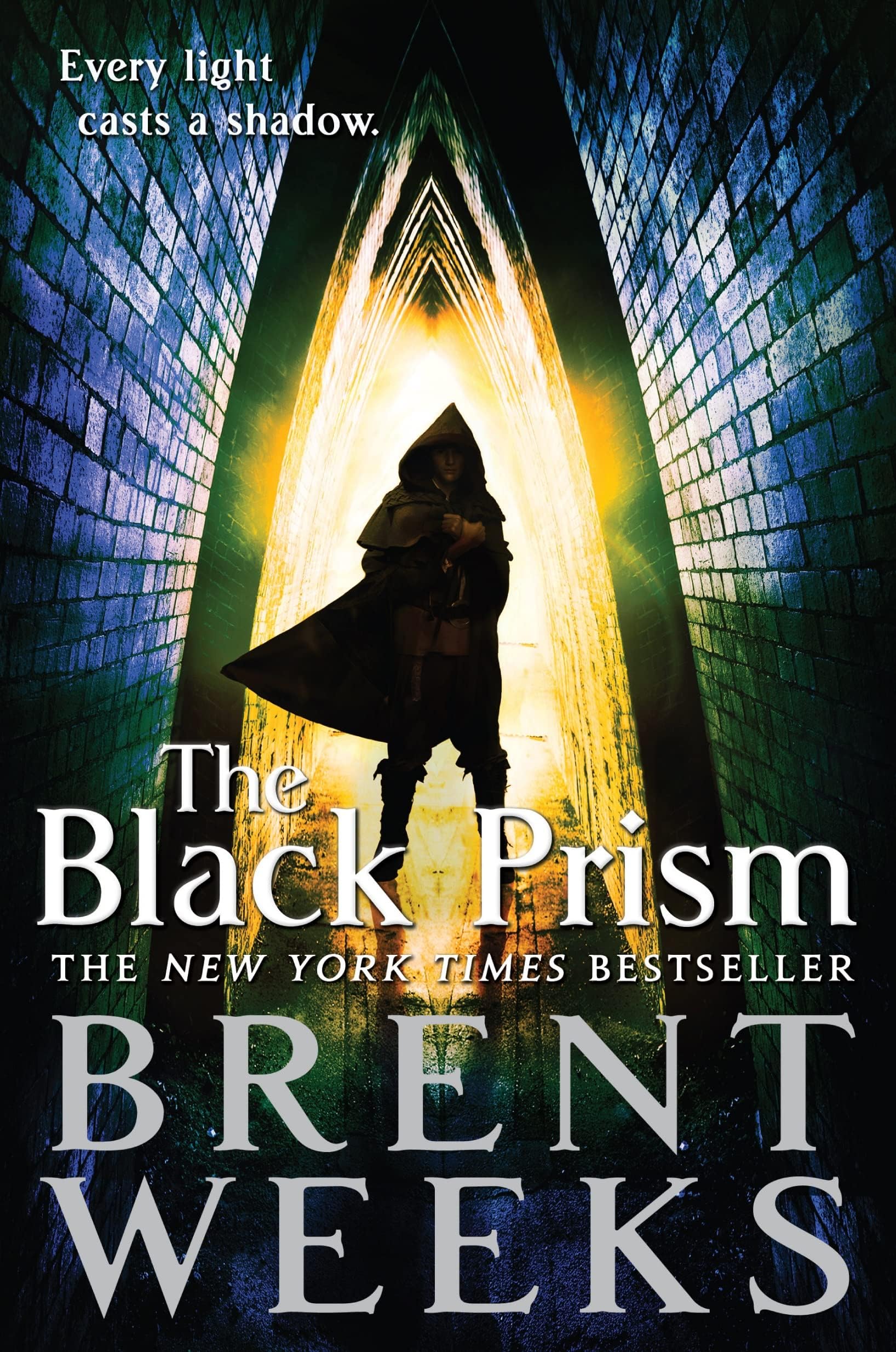
The Black Prism
Product ID: 5880720
Buy anything from 5,000+ international stores. One checkout price. No surprise fees. Join 2M+ shoppers on Desertcart.
Desertcart purchases this item on your behalf and handles shipping, customs, and support to EGYPT.
In a world where magic is tightly controlled, the most powerful man in history must choose between his kingdom and his son in the first book in the epic NYT bestselling Lightbringer series. Guile is the Prism. He is high priest and emperor, a man whose power, wit, and charm are all that preserves a tenuous peace. Yet Prisms never last, and Guile knows exactly how long he has left to live. When Guile discovers he has a son, born in a far kingdom after the war that put him in power, he must decide how much he's willing to pay to protect a secret that could tear his world apart. If you loved the action and adventure of the Night Angel trilogy, you will devour this incredible epic fantasy series by Brent Weeks. Review: The start of a promising fantasy series - Black Prism is the start of Weeks' second fantasy series. It concerns a world with what may be the most unique magic system that I've seen in a fantasy series. This magic is entirely based on turning light solid, with the solid form of each color having both different properties and a different effect on the person casting this magic. Casters in this world are called Drafters. The majority have the ability to "draft" a single color, others may draft multiples. The greatest tragedy, however, is that casting color magic in this way is fatal - Drafters will inevitable go insane. An entire religion in this world has been built up based on controlling Drafters, including a tradition of suicide rather than madness. This religion is built around the "Prism", a person whom has the ability to take white light and shatter it into its component colors, drafting any of them. Prisms are considered the head of the religion, but have a lifespan that is measured in multiples of seven years. Small multiples; four is unheard of. The book centers around the current Prism - Gavin Guile. In so many ways, this is a story about a family dynasty and the effects that it has had on the setting. Before the book, Gavin fought a war with his brother (Dazen) over who would be Prism. The results of this war set the stage for basically every character in the book - a list which includes the brother, whom has been kept secretly captive for the entire gap of time. The action focuses on the viewpoint of just a few characters and in this neatly avoids a trap that many other epic fantasy has fallen into. This includes Gavin, Dazen, Gavin's newly discovered bastard son Kip, Gavin's ex-fiance Karris, Corvan; a General from the war, and his daughter. These characters are, in fact, tightly entwined - a fact which gives the book an extremely strong focus. Other than the magic concept, one of the strongest points for this author is characterization. Every one of the characters listed above are actual people - the author takes great care to flesh them out, give them motivations that extend beyond "being good". Each character, in the course of the book and before, does things that a reader would find terrible; sometimes in the pursuit of the greater good and sometimes not. This extends to the primary villain of the book, whom I've taken care not to say much about (the book hinges on several revelations, of which this is just one). His motivations are such that it is somewhat easy for the reader to sympathize with the goals, if not necessarily the methods. As stated - the plot is tight and well thought-out. The book hinges on several revelations, one of which comes very early. Each of these revelations makes sense in the scope of the plot; as you hit them, you can understand where they are coming from. Further, the writing is top-notch. The best example for this, as far as I'm concerned is chapter 78. The author presents two separate, entwined scenes that serve as point/counter-point better than any that I've seen before. Further, he does a great job of showing a weapon early in the book, that you know will end up involved in the climax. Really, the only negative I have is that the prisoner plotline starts and seems to end with no actual progress being made. I suspect this thread will be followed up in a future book, but its the only thread like that in the book. Overall, I would recommend this book to anyone looking for a new fantasy series in the wake of the end of Wheel of Time. Its a long read, and thus far the author thinks that it will require four books for the full telling of it. There's no real indication if this will become the kind of bloated mess that Wheel of Time (in the middle) and Storm of Ice and Fire has devolved into, in my opinion. That said - the scripting is tight enough that I have hope it won't. Review: puts the epic back in epic fantasy - About a quarter of the way through The Black Prism I found myself thinking, "Oh no, not good, this awesome book is the first in a series and it only just came out...I will finish it wanting more, and instead I will have to wait and wait and wait." All the waiting is going to suck. But The Black Prism? The book? It did not suck. It was awesome. So let's see. What are some of the things I liked about The Black Prism. A good cast of characters. It was nice flipping between chubby, frequently pathetic Kip and gorgeous, endlessly charismatic Gavin. And all the characters in between. Each character faces severe challenges, and their individual storylines weave around one another in interesting ways. There are lots of twists and turns, many of them unexpected, and the pace is furious. Weeks seems to be really big on choices - there are lots of hard choices, and even the best choices often have terrible consequences. He's not afraid to make his characters suffer, or push them to do things that made me angry. That's all good. Given his focus on choices, it's no surprise that he often walks the reader through a choice as the character makes it. When it makes sense, this is great. But there were a handful of key moments where Weeks led us through a choice it rang utterly false to me. I didn't believe that the character would really think or feel that way. One early example of this is when Kip's mother dies. She's been a pretty awful, worthless mother - constantly strung out on drugs, unloving and abusive. As she dies, she makes Kip swear to exact vengeance on someone who's wronged her. She doesn't name the person, but Kip fills in the blank. That's already annoying enough; as a reader, I knew that I was being tricked. But then Kip agrees to dedicate himself to fulfilling his mother's wish for revenge, and he seems to really mean it. And, reading, I was thinking: really? Where'd that come from? They don't have enough of a bond to inspire that kind of passion for revenge. On top of which, Kip is way, way too smart to fill in a blank and then act like he's been given really specific marching orders. Naturally, Kip's promise to his dying mother turns out to be important...sometimes. Most of the time, he's aware that his mother was worthless and doesn't seem to mourn her particularly. But every once and a while, when it's convenient to the plot, he gets all passionate about avenging her. Something like that - important events that ring false; motivations that are here one minute, gone the next - can be pretty problematic if it's repeated too many times. And there are a good handful of them here. That being said, for the most part the characters - and their choices - ring true. Quibbles aside, I definitely recommend this book. If you can stand all the waiting.
| Best Sellers Rank | #1,954,760 in Books ( See Top 100 in Books ) #110 in Historical Fantasy (Books) #395 in Fantasy Action & Adventure #544 in Epic Fantasy (Books) |
| Customer Reviews | 4.5 out of 5 stars 12,801 Reviews |
A**R
The start of a promising fantasy series
Black Prism is the start of Weeks' second fantasy series. It concerns a world with what may be the most unique magic system that I've seen in a fantasy series. This magic is entirely based on turning light solid, with the solid form of each color having both different properties and a different effect on the person casting this magic. Casters in this world are called Drafters. The majority have the ability to "draft" a single color, others may draft multiples. The greatest tragedy, however, is that casting color magic in this way is fatal - Drafters will inevitable go insane. An entire religion in this world has been built up based on controlling Drafters, including a tradition of suicide rather than madness. This religion is built around the "Prism", a person whom has the ability to take white light and shatter it into its component colors, drafting any of them. Prisms are considered the head of the religion, but have a lifespan that is measured in multiples of seven years. Small multiples; four is unheard of. The book centers around the current Prism - Gavin Guile. In so many ways, this is a story about a family dynasty and the effects that it has had on the setting. Before the book, Gavin fought a war with his brother (Dazen) over who would be Prism. The results of this war set the stage for basically every character in the book - a list which includes the brother, whom has been kept secretly captive for the entire gap of time. The action focuses on the viewpoint of just a few characters and in this neatly avoids a trap that many other epic fantasy has fallen into. This includes Gavin, Dazen, Gavin's newly discovered bastard son Kip, Gavin's ex-fiance Karris, Corvan; a General from the war, and his daughter. These characters are, in fact, tightly entwined - a fact which gives the book an extremely strong focus. Other than the magic concept, one of the strongest points for this author is characterization. Every one of the characters listed above are actual people - the author takes great care to flesh them out, give them motivations that extend beyond "being good". Each character, in the course of the book and before, does things that a reader would find terrible; sometimes in the pursuit of the greater good and sometimes not. This extends to the primary villain of the book, whom I've taken care not to say much about (the book hinges on several revelations, of which this is just one). His motivations are such that it is somewhat easy for the reader to sympathize with the goals, if not necessarily the methods. As stated - the plot is tight and well thought-out. The book hinges on several revelations, one of which comes very early. Each of these revelations makes sense in the scope of the plot; as you hit them, you can understand where they are coming from. Further, the writing is top-notch. The best example for this, as far as I'm concerned is chapter 78. The author presents two separate, entwined scenes that serve as point/counter-point better than any that I've seen before. Further, he does a great job of showing a weapon early in the book, that you know will end up involved in the climax. Really, the only negative I have is that the prisoner plotline starts and seems to end with no actual progress being made. I suspect this thread will be followed up in a future book, but its the only thread like that in the book. Overall, I would recommend this book to anyone looking for a new fantasy series in the wake of the end of Wheel of Time. Its a long read, and thus far the author thinks that it will require four books for the full telling of it. There's no real indication if this will become the kind of bloated mess that Wheel of Time (in the middle) and Storm of Ice and Fire has devolved into, in my opinion. That said - the scripting is tight enough that I have hope it won't.
K**R
puts the epic back in epic fantasy
About a quarter of the way through The Black Prism I found myself thinking, "Oh no, not good, this awesome book is the first in a series and it only just came out...I will finish it wanting more, and instead I will have to wait and wait and wait." All the waiting is going to suck. But The Black Prism? The book? It did not suck. It was awesome. So let's see. What are some of the things I liked about The Black Prism. A good cast of characters. It was nice flipping between chubby, frequently pathetic Kip and gorgeous, endlessly charismatic Gavin. And all the characters in between. Each character faces severe challenges, and their individual storylines weave around one another in interesting ways. There are lots of twists and turns, many of them unexpected, and the pace is furious. Weeks seems to be really big on choices - there are lots of hard choices, and even the best choices often have terrible consequences. He's not afraid to make his characters suffer, or push them to do things that made me angry. That's all good. Given his focus on choices, it's no surprise that he often walks the reader through a choice as the character makes it. When it makes sense, this is great. But there were a handful of key moments where Weeks led us through a choice it rang utterly false to me. I didn't believe that the character would really think or feel that way. One early example of this is when Kip's mother dies. She's been a pretty awful, worthless mother - constantly strung out on drugs, unloving and abusive. As she dies, she makes Kip swear to exact vengeance on someone who's wronged her. She doesn't name the person, but Kip fills in the blank. That's already annoying enough; as a reader, I knew that I was being tricked. But then Kip agrees to dedicate himself to fulfilling his mother's wish for revenge, and he seems to really mean it. And, reading, I was thinking: really? Where'd that come from? They don't have enough of a bond to inspire that kind of passion for revenge. On top of which, Kip is way, way too smart to fill in a blank and then act like he's been given really specific marching orders. Naturally, Kip's promise to his dying mother turns out to be important...sometimes. Most of the time, he's aware that his mother was worthless and doesn't seem to mourn her particularly. But every once and a while, when it's convenient to the plot, he gets all passionate about avenging her. Something like that - important events that ring false; motivations that are here one minute, gone the next - can be pretty problematic if it's repeated too many times. And there are a good handful of them here. That being said, for the most part the characters - and their choices - ring true. Quibbles aside, I definitely recommend this book. If you can stand all the waiting.
K**E
Incredible, unique magic system and expansive world. New favorite series!
In The Black Prism, magic is based on colors, where drafters can create a solid form from the different colors in light waves. Each color creates a different texture and has a different property. But the more you draft color, the closer you come to your death because the magic is slowly killing you. I have been looking forward to reading the Lightbringer series for quite a while, and that small bit about how the magic system worked was all I knew before starting. I didn’t know about the plot at all, but knowing about the color magic that slowly kills its user was enough to hook me into reading the book. While I’ve been excited to read this series, I’ve also felt a bit intimidated because each book is 600-700 pages and I knew it would be a commitment. I shouldn’t have been scared to start the series though because this book was so easy to read. I fell right into the story, even with the new and complex magic system, and I found myself engrossed in the plot and the characters and the magic. I usually can’t sit and read for hours on end but with this book I found it to be easy to do just that. I never wanted to put it down, but life’s duties kept calling. I actually started this book by reading through the whole glossary and appendix because, a few chapters in, I already had questions and I didn’t want to be confused. This helped me understand the magic system and the world right from the beginning, which I found to be super useful. This is one of those books that I constantly kept referencing the information at the back to keep everything straight in my mind, and I’m so glad the author included these reference materials. I’m also grateful for the map because I love to reference locations as they’re mentioned in the story. The only problem I had was that the map is upside down—South is at the top—and it took me five minutes of staring at it to realize this. I hope this has some important meaning we find out later because otherwise what’s the point of an upside-down map? The description of the Chromeria with colorful buildings that turn to always be facing the sun sounds so neat and I wish I could see a city like that in real life, or at least some fanart depiction of it. But as much as I love the Chromeria so far, I feel like it is actually not a very good place. This book had some pretty great characters. Gavin was a really neat protagonist. I enjoyed learning about him as the Prism and what those duties entail as far as keeping all the colors balanced in the world. He has a lot of secrets, and I loved discovering snippets of these throughout the story. For example, what are his seven purposes? I really want to know! I also rather enjoyed Kip and the mystery surrounding his parentage because it was clear from the beginning that Gavin wasn’t telling anyone the full story. We got bits and pieces along the way, and I love a good mystery aspect in a book. Although I will say that Kip was rather impulsive at times. He would blurt out offensive statements then immediately be like “crap why did I say that?” I just wasn’t sure why he was acting that way but I guess that’s just who he is. I still don’t know how I feel about Dazen. It’s interesting that we learned right from the beginning that he wasn’t dead as everyone suspected, and I’m curious to see how this will play out in future books. Because of very spoilery reasons, I actually feel sorry for him right now. Karris was okay. I mostly just felt like she was angry the whole time, but I guess part of that can be expected because of her history with Gavin. I kept waiting for her to learn the full truth because I wanted so badly to see her reaction. I think I will like her more as the series progresses. I really liked Liv from the first chapter. And knowing what her mission was and that the Prism didn’t know what or who she was in the beginning just added to the suspense and made me even more excited to keep reading about her. Plus I really like that she’s a superviolet drafter. For some reason, that’s the most interesting color to me, so I loved seeing what she could do with it. Also, she has me very intrigued with what she could do given her position at the end of the book. I’m very excited to see her character progression. Even though I know Lord Omnichrome is the villain and a terrible person, I can’t help but agree with some of his ideals. What he says about the Chromeria makes sense in a way. The good are not always fully good and the bad are not always fully bad. I’m very curious to see how his beliefs affect other characters and the rest of the story in other books. One minor problem I had was the writing style at times. Weeks’s writing was good for the most part but occasionally he would explain something and I wouldn’t understand what he was saying and I would be confused about that aspect of the world or magic system. I did have to reread a few paragraphs because of this issue, but for the most part, I thought the writing was good. One thing, though, that was kind of jarring about Weeks’s writing style was that thoughts in the first person were not italicized. It really threw me off for the first few chapters that I saw it, but it gradually became a normal part of the story and I stopped noticing it as much. I thought this was an interesting way to approach writing in third person, and even though I didn’t think I would like it, I did. It was kind of like third-person limited mixed with first-person. Something else I didn’t really like was how long the final battle scene was. It was almost two hundred pages long, and by the end, I was just exhausted of reading about the drafters fighting. I much preferred the non-combat scenes of the book. I’m positive there will be many more fight scenes in the later books, so I can only hope they do not last as long or they are written in a way that is more entertaining to me. I was fine with the first three-fourths, but during the very ending I was just wanting to be done with battle and I didn’t really care what happened anymore. This book was very compelling, not only because of the story itself, but also because each chapter ended on a cliffhanger but the next chapter would be a new character’s perspective. I had to keep reading to find out what happened next for each of the five character perspectives. It’s been awhile since I read a book like this, one where I was actually excited to know what would happen next in such a way. Overall, I thought The Black Prism was a fantastic book. It has a very unique and impressive magic system, a well-built world, a great cast of characters, some mysterious aspects, intense fight scenes, vivid imagery, and a compelling plot. The writing did take some getting used to in the beginning, but eventually I came to enjoy it. I would recommend to anyone who is looking for an enthralling fast-paced epic fantasy. I’m very much looking forward to where this series takes me on its journey. “Moments of beauty sustain us through hours of ugliness.”
A**P
Great start to the series
I finally got around to reading this book after seeing Amazon advertise "The Blinding Knife" at me for several months. It finally wore me down and I decided to see what it was all about. I have to recommend this book to a number of people, if for nothing else, the elaborate, well-structured explanation for how and why magic works. The author had it fully thought out and explained down to a science. In fact, magic basically IS science in this book, I would say. I was surprised by a revelation that came out about a third of the way through, which may not have surprised me if I'd read the grossly inaccurate and spoilerific description posted on amazon. I'll give you a hint. It mentions twins. There are no twins in this book whatsoever. The description doesn't do the book justice, and I think could easily ruin some things for people. So, if you haven't read that yet, I highly advise you not to. The main character, Gavin Guile, is enigmatic. I wasn't sure I liked him initially. I just couldn't decide. I was leaning toward dislike, at first. But as more of the history between Gavin, his brother Dazen, and Karris White Oak was gradually revealed, I grew to like the main character more and his brother less and less. It was perhaps a cheap tactic, the way the author kept some of the history from the reader until later points at the book, but it did result in genuine surprise on my part, more than once, and I honestly really enjoy being surprised by books. Too often, I can see where a story is going these days. Perhaps because I just read so much of this genre. It's a rare author who brings out truly unexpected revelations and turns of events. This book did hit upon one of my biggest pet peeves. I almost reduced the rating by a star for it, but in the end I decided not to, because he may wind up doing something with it that makes it worth it in the end, so I'm not going to hold it against him yet. That pet peeve is when a plot revolves around a character misinterpreting something crucial. I can't stand that. It drives me fracking nuts. But a great deal of the book's theme is deception and misdirection. The main character is named Guile for a reason. I also have the impression, because the main character essentially told me, there is still a great deal I don't know. There is slavery in this book. And it isn't entirely reviled, which makes me a little bit uncomfortable while being perhaps a somewhat different take on it than I'm used to seeing. There are people who treat slaves well, and who have true loyalty from their slaves. There is etiquette with regard to slaves, such as it being considered rude to address a slave by his or her name without the slave's permission. This was interesting. It is something that may make many readers uncomfortable, so I am putting it out there in case this is not the book for you. It won't be for everyone. Some modern concepts are touched upon in here. Again this is something I appreciate. Those fantasy readers who are big on historical accuracy won't care for that. Personally, I think fantasy is not history and thus has no obligation to be historically accurate. There is a character who thinks back on an incident that is really a rape. The character doesn't think of it as this, but looks back on it with shame and guilt that is pretty common for women who have had this experience. I found it all really believable. My hope is that at some point in the future, this will be discussed and the assertion will be made that it really was rape. This is another incidence that will be off-putting for some readers, so I mention it in case this, again, is not the book for you. Other concepts that were touched upon, which I appreciated, were class differences. I thought this was handled quite well. As I said, this book would not be for everyone, but I thoroughly enjoyed it and look forward to reading the next one.
A**R
Outstanding story marred by lack of good editing.
This story was simultaneously one of the hardest to read and the hardest to put down of any I have ever read. It is a superb example of world-building with plenty of variagated characters and history but without ever bogging down the narrative. The characters are well written and each act true to their very believable and differing interests. No two-dimensional cut-outs here. Furthermore the plot is never predictable, especially when you're sure it is, and the author takes their time building a plot that rather than wrapping up nicely in one little book is big enough to span a series without being stretched. But it's not without its flaws. The author is CONSTANTLY switching between first and third person perspectives without warning to voice characters' thoughts. While this is a common enough writing technique, such text is usually italicized or placed in quotes or in some way demarcated. In this version purchased from Amazon it was not, thus the reader's emersion was broken over and over again as the previously invisible narrator suddenly broke into the scene and started talking directly to them. Isn't how to write in the third person still taught in schools anymore? What was still more shocking is that no other reviews even mentioning this. I suppose there is the possibility my copy is faulty, but at any rate it detracted considerably from the enjoyment of the read. Other grammatical errors, though present, were few and far between. If I were to point out any other flaws in the writing I think I would simply complain that while the author may have a perfectly good idea what the characters are doing in his head, he is not always so good at putting things to paper. When characters start drafting pulleys here to support stiff luxen of this color there which is somehow connected to flexible luxen of another color over there using some real rope and some luxen of this color there encased in luxen of this other color... By the end of it some of us readers aren't even trying to follow it anymore. How does putting seven different layers of luxen in this certain order from inside to out make a wall literally invincible? Good luck figuring it out but we just spent a whole chapter watching it... Despite this the book has plenty of action, if not really a conclusion, and how much you'll benefit from reading it will depend largely on how much in love with the author's unique light-based magic system you are and if you get along well with the writing style or if like me you clash with it. Yet even for all my complaints I can't help but recommend this book. Weeks is weaving a story that while it may take a long while to come to a conclusion offers a lot along the way and promises a satisfying payoff.
H**E
Secrecy, intrigue, loyalty, and questioning faith
Before I detail the plot and characters, I want to give a little description of the magic system which centers around light and the ability to "draft" physical objects from it. Each drafter can draft different colors -- each color has certain strengths and weaknesses; green can be incredibly durable, but will also weigh you down and can induce mania, superviolet may be invisible to most, but it can be used in secret messaging, and so on. When someone can draft, which not everyone can, they can be a monochrome (one color), bichrome (two colors), polychrome (3+ colors, usually in successions: red-orange-yellow), or if they can draft every color, they are known as the Prism. Only one person can be the Prism at a time. They last for years in increments of 7 -- they die out after 7, 14, or if they're lucky, 21 years. Gavin Guile is the Prism at present. Unfortunately, due to unknown circumstances, his younger brother Dazen was also granted prismatic drafting abilities. This spawned the Prism's War (or the False Prism's War, if you were on Dazen's side). Gavin won the war 16 years ago, and has been the religious figurehead, sort of emperor, and High Luxlord Prism of the Chromeria ever since. The Chromeria is a neat, sort of oppressive ruling body and elite school where anyone who can draft, and can afford it or earn a sponsor, goes to learn the magical craft. The Black Prism follows Gavin and a few other key characters, like his bastard son, Kip, his prisoner and brother, Dazen, his ex-fiance Karris, a general who fought on Dazen's side in the False Prism's War, Corvan Danavis, and Corvan's daughter, Liv. I honestly can't talk too much about plot without giving away a huge spoiler that happens about 1/3 of the way into the book. Though I will say that watching Kip and Liv, both from the same town originally, learn and grow so differently based on how the Chomeria affects them when they go there was a great dynamic. Spoilers aside, the plot focuses on Gavin's great purposes that he sets out to accomplish before his final 7-year span finishes and how each of the other characters eventually help or hinder him. In the land, there are seven satrapies (sort of territories/countries) that are loyal to the Chromeria. Unfortunately, one of them-Tyrea, has had their head satrap (diplomatic leader) go rogue and insist he is the King of Tyrea. Gavin has to enlist the help of everyone to try to figure out why this occurred-aside from the fact that Tyrea suffered major losses 16 years ago in the (False) Prism's War-and how they can put an end to the senseless massacres of innocent citizens. I loved this book, and the magic system was incredibly fun to learn about. Of course, once you think you have a handle on it, Weeks throws in some curveballs that the characters don't even understand, but that just adds to the whole mystery of chromaturgy (drafting powers). The only real complaint I have about the book is Kip's POV. Even from the beginning of the novel, I wasn't a huge fan of his sections. At first, I thought he was a boring weakling, but even after he started becoming more powerful, he was just awkward. It was obvious that it was part of his appeal, but I didn't find it that appealing. The shifts from third person narration to first person in his sections was a little jarring at times, and sometimes just felt unnatural. Fortunately, it was a rare occurrence that the rest of the brilliant narrative easily makes up for. Balancing his incredibly awkward teen vibe, Gavin Guile absolutely shines in the book as a debonair, clever, handsome, and extremely powerful ruler who is actually wily and more humble than he likes to admit. His character was incredibly fun to read as a POV and I am excited to get more of him in the next book, The Blinding Knife. With The Black Prism, Brent Weeks spins an incredible tale of secrecy, intrigue, loyalty, and questioning faith. If you enjoy high/epic fantasy with incredibly intricate and clever magic systems, I highly recommend The Black Prism. It's through the magic and worldbuilding that the book really shines. With plenty of character growth in the second half of the novel, the Lightbringer series is a promising one.
A**X
It's a long story...
As a preemptive disclaimer: I've put THE BLACK PRISM down for now. I read a very healthy chunk of the book, but it just wasn't for me. I'm not going to say that it's a bad book, because it's not, but for anyone who was taken by the trials, tribulations and hard-hitting action that defined The Night Angel Trilogy , you'll find it only by doing a bit of digging. THE BLACK PRISM, like THE NIGHT ANGEL TRILOGY, is very unique in its own right. Fantasy is growing to a point where you either write about orcs and elves, or you don't. Weeks doesn't, and he knows this. The first chapter is almost a big middle finger to conventional fantasy, and the second chapter sends you hurdling, head first, into the world of the Seven Satrapies (where south is the new north, according to the map). The basic, basic premise is that there is unrest growing in the lands, as a king declares his independence by way of massacring one of his own towns. This tyrant hopes to send a message that any oversight by the ruling authority of the land, the Chromeria, would be ultimately in vain. But the destruction of this village acts as a catalyst that sends the rest of the plot in motion, bringing the Emperor together with his bastard son in what is possibly the worst case of bad timing ever. There you go. But, now, when I say that Weeks sends you hurdling, head first, into his world, I really mean that. Most fantasy authors use a slow build, to casually introduce their universe to their readers at a certain pace so that it's all easy to assimilate for later recollection. Weeks does not believe in this. Within the first few chapters, you will be hit with the same monologues that were so prevalent in his last trilogy, that spell out almost everything you need to know, and several things you'd never need to know. Maybe it's just me, but I literally got a headache trying to sort everything out. Who's the White, and what's a wight? What's a monochrome, bichrome, polychrome, superchromat? What's a Prism? What's that weapon she's wielding? An ataghan? Casting red does this, and casting green does this? Why are there guns, and why does everyone insist on using bow and arrows regardless? Why is this town even being attacked again? If you haven't read the book, and none of those terms initially make any sense out of context, be prepared to wander in ignorance for a good 100 pages because you won't really get a good explanation until then. I was almost halfway done with the book, and I was still feeling the need to turn back and reread what all of that stuff meant. This book is in dire need of a glossary. Experiencing a new world shouldn't be that much of a chore. And, as a gamer, I pretty much derailed completely when I saw that one of his characters was named Andross. Made me want to put the book down, do a couple barrel rolls, and get back to reading when it was out of my system. On top of it all, I didn't really care for how the story involves yet another very powerful warrior who takes on an orphaned apprentice. I thought I had just read that in THE NIGHT ANGEL TRILOGY. Brent Weeks is certainly no dummy, but his writing makes it sound that maybe he thought his own world was too complicated. The perspective in this story is very much limited to the characters it follows, so it makes it very hard to get all of the details to a reader. Because when you're experiencing a story inside of the character's head, a character knows everything already, they have no reason to suddenly recall details about their own town, its history, the reason that building on that street is there in the first place. The fact that the characters DO participate in this made everything very uneven, when suddenly someone starts giving a history lesson that spans pages - and this happens very often. I'm giving this book three stars because despite all of this (probably meritless) ranting, the story held my attention much longer than it should have, given how picky I can be. Weeks has a way with characters, with making them real, believable, easy to sympathize with. If he wants you to feel his characters' pain, then you'll very soon be experiencing that. And despite its steep learning curve, the magic system is terribly unique and fun to visualize. If those two factors alone form the basis for the coming books in the series, I have no doubt that these books will do very well, if not better than THE NIGHT ANGEL TRILOGY. But for me, I'm setting it aside - for now. I might pick it up in the future, but it might be awhile.
B**Z
amazing
I decided to re-read this book before I started the sequel, The Blinding Knife. While I'm really glad that I did read it again, I will say that it didn't hold up quite as well as I expected. I still really liked the book, but I don't think I liked it nearly as much as when I first read it. I think that my biggest problem is that the World Building really slows the book down, especially since it's such an extensive and original world. I really gobbled it up all of the info the first time I read it, but now with it repeating everything I already know, it can be a little tedious. My other big problem with the book is the pacing, as it just never slows down. I mean I think that the whole book only takes place during one week, or maybe two with it skipping some of it near the end for the wall building montage. I would have loved some time to just absorb the world, but right when you think you might get a moment for the characters to explore and grow, they're thrown another obstacle and they have to leave what they were doing at a moments notice. I also thought it was weird when the characters would every once in awhile comment about how so much has happened and it seems like it occurred forever ago when it was actually only a day or two. I guess part of the reason that the characters couldn't get a break, was because other characters were in trouble and the narrative, even though it jumped from character to character after every chapter break, tried to stay completely sequential. Furthermore, while I loved the depth of the characters, sometimes the choices they made felt forced, as a way to drive the plot forward without making a lot of sense. I mean of course people in real life make stupid choices for undefined reasons, but I kind of felt that Weeks relied on this a little too much in The Black Prism. Now that I'm done talking about some of the things I disliked during my re-read, I thought that I'd talk a bit about why I still really loved the book. My favorite thing has to be the magic system, as it's completely original and really well developed. I love how there are so many defined limitations to the magic, but it also has almost unlimited ways to develop and evolve. I love the multiple facets of each color, where they have a specific smell when the luxin (physical construct) is created, they each dissipate into the environment differently, how they all have different varied uses, and especially how each color instills a unique emotion when the person drafts. I also really appreciate that drafting has a very strong consequence, where there's limit to how much each person can draft in their life, and once that limit is reached the color in their eyes breaks the halo and extends past the Iris and into the whites of the eye. When this happens, they become erratic, dangers, crazy, and uncontrollable, completely lost in the emotions of their color. This results in a policy where they are immediately killed if they break the halo, and each year people that are too close to the breaking point are voluntarily ritually sacrificed by the Prism. There's also interesting aspects to the magic system and world building with people that have access to more colors (bi-chrome/poly-chrome) are a higher class than the other drafters, and there's some interesting ties with religion and superstition with how the Prism (one who can draft all of the colors) is chosen. Some of the other world building could be a little confusing, with all of the different cultures, as there isn't too clear of a similarity to our world. However, all you really need to know here, is each different country is part of the empire, but they really don't care too much for each other. Also, that people with blue eyes make more powerful drafters, and people with dark skin can slightly hide what color they're drafting as it doesn't show, making them more dangerous in battle. There's some interesting gender roles in this book, as in many ways they are slightly subservient to powerful men, but in general they are better drafters as most of them are superchromats, meaning they can see and draft the perfect shade of a color, while men just have to power through with more Will to form an equal luxin creation, this also results in men having a much shorter lifespan than women. So overall, the roles of women are closer to what they are currently in our world, than what they would have been like in a similar time period (black powder muskets flintlock pistols and cannons). Overall, it's the World Building is really extensive, and it provides an excellent playground for Weeks, it was a little annoying to go through it all a second time, but it's amazingly original and it has plenty of ways to grow as the story moves along. For the story of this book, it's at a little interesting time, where around 16 years ago there was a huge civil war where hundreds of thousands of people were killed. Really, this whole time period would have made an excellent book, but it is very interesting where different facts and tidbits are exposed various ways throughout the book, so the reader gets a good view of everything that occurred during that time period. There's a lot of the story that I don't want to go into, as there are some huge spoilers that I don't want to reveal, but I will say that all of the little to big plot twists are interesting and very well done. The basic plot of this book, is that as a consequence of the War, one of the countries Tyrea (or something like that) that sided with the losing side has really become the whipping boy for all of the other countries in the empire. Resulting from this, the current leader of that country is rebelling from the Chromeria empire, calling himself a king and started his own school to train his own Drafters away from the eyes of the Prism and the rest of the empire. At the start of the book, the King decides to make an example of one one of the towns that has refused to send levies, and this town just so happens to the home of one of the main characters, Kip. Then due to some coincidences, the Prism arrives in time to save Kip but not before just about everyone and everything he's ever known is destroyed (a common fantasy trope). Everything that follows is really the result of what happens in the beginning, as the Prism, Gavin Guile, tries to stop the rebellion before it turns into a full out war. It's a very enjoyable story, but at times it doesn't really seem to have a middle or an end. It's really more of a cliffhanger ending, setting up the sequel. I remember really wishing I could read the following book right away, but instead being forced to wait two years, thankfully with this re-read I was able to start the sequel right after I finished. The other best part of the book, has to be the characters, as they are very well developed unique characters whose actions and motivations lie in the varied shades of grey. There are multiple main characters, and each one has a very unique voice and point of view in the world. I generally liked all of them, but the jumping around every chapter between them could be annoying and they many times make very frustrating decisions. I know many people disliked Kip, but personally he was probably my favorite character, as I was also an intelligent but fat and awkward teenager, and I really related to his character. My close second character was Gavin, as he is very unique and has an incredible amount of layers to his character. He could be a little too powerful at times, but he does have limitations, and he probably has a great villain to face in the Color Prince for the upcoming books. The other characters are also very good, but I thought the choice Liv made near the end of the book was kind of goofy (it was slightly hinted at earlier in the book, but I hope that things change for her in the following books) and while Karris could be a little goofy at times (reads a little too much like a man attempting to write a believable woman character) the reveal later in the book was very powerful and provides a great look into her character and why she is who she is. In the end, while I didn't love the book as much as I did the first time, I still really loved the book, and the writing has a great flow, it's a real page turner. I would definitely recommend this book to fantasy fans, especially ones that enjoy unique extensive magic systems. I'm already reading the sequel, and enjoying it so far.
K**R
Do Read It...
Do read it... Initially I started and stopped after some 50 pages... couldn't place everything in the scheme of the book. But I am happy that I started reading it again. It is not as good as Name of the wind, but in the league of sanderson books... First I read his night angel trilogy which I liked... But this ones definitely better than night angel...
M**A
great read, definitely exceeded expectations
I decided to try out this author and book without knowing what I would find and it was a great discovery. The story line is interesting, unusual and rich in surprises. There are many characters with complex background stories, complex interactions. Definitely recommended. I am really looking forward to see how the series evolves
K**R
Fantastic start and exciting new series
What a start to a series. Weeks has created a whole new world of magic, based around light and colours but with such layers that becomes more and more complex as the story goes on. I would recommend any of Weeks' work, the Night Angel trilogy is in one of my many reread piles, and will always be one I love to come back to again, and he has carried on that same ability to keep the story entertaining, keeping, you hooked into it every step of the way. He balances perfectly the action and the development of the characters, writing from their perspectives but the narrative always stays consistent. He drops hints to make your mind go crazy with theories, and little details that indicate to the scale of the world he has developed, the histories he as come up with to give meaning to all actions and events. A very good start to a new series and I am very excited to finish this off.
J**X
Faszinierend
Mit "The Black Prism" setzt Brent Weeks den Auftakt zu einer neuen Serie, "The Lightbringer Trilogy". Im Mittelpunkt der Handlung steht Gavin Guile, der als Prisma den religiösen wie weltlichen Führer der Welt darstellt. Grundlage seiner Macht sind seine überragenden magischen Fähigkeiten; ein Prisma kann als einziger Mensch alle sichtbaren und unsichtbaren Anteile des Lichtspektrums beeinflussen und ist damit allen anderen Magiebegabten überlegen. Seine Überlebenszeit mißt sich in 7-Jahreszyklen, innerhalb derer er sich 7 scheinbar unmöglich zu erreichende Ziele setzen muß. 5 Jahre des dritten Zyklus sind noch übrig - allerdings gerät seine Planung völlig aus dem Ruder, als ihn die Nachricht erreicht, einen Sohn in einer fernen Provinz zu haben... Wer gehofft hatte, eine Fortsetzung der "Nightangel"-Trilogie geliefert zu bekommen, muß sich hier umstellen. Weeks beginnt etwas völlig Neues mit einer anderen Grundstimmung, und so lesen sich die ersten 100 Seiten etwas sperrig, bis man sich darauf eingestellt hat, daß hier keine Assassinen auftauchen werden. Trotz Einsatz einiger traditioneller Fantasy-Elemente werden vertraute Muster auf den Kopf gestellt: Die Hauptfigur der Handlung ist kein verarmter Straßenjunge oder versteckter Prinz, sondern der mächtigste Mann der Welt. Seine magischen Kräfte sind beeindruckend, als Kaiser und religiöser Führer hat er scheinbar uneingeschränkte Macht. Was hinter dieser Fassade steckt, erschließt sich dem Leser nur in kleinen Schritten; immer wenn man davon überzeugt ist, nun durchschaut zu haben, wo der Plot hinführt, schlägt Weeks einen seiner typischen erzählerischen Haken, die Spannung steigt, und man liest weiter, wieder ahnungslos - bis zum nächsten Aha-Erlebnis. Seine Charaktere sind keine strahlenden Helden, die mit weißer Weste gegen das Böse kämpfen und nebenbei ihre magischen Fähigkeiten entdecken; sie haben dunkle Seiten und Abgründe, manchmal schreckt man vor ihren Taten zurück; dennoch kommen sie im Lauf der Handlung immer näher und wirken unglaublich realistisch und überzeugend. Erfrischend wirkt auch, daß ihnen Fehler unterlaufen und Pläne scheitern - und der junge "Held" kein gutaussehender, mutiger Adliger ist, sondern ein übergewichtiger, linkischer junger Mann, der den Mund immer zum falschen Zeitpunkt aufreißt und dessen Kampfinstinkt sich auf einen Totstellreflex beschränkt. Beeindruckend ausgebaut ist das Magiesystem, das auf Licht basiert. Komplex aufgebaut und bis ins Letzte logisch durchdacht, präsentiert er ein auf physikalischen Gesetzen beruhendes magisches System, mit Anwendungen in Alltag und Kriegsführung, eigenen Machtstrukturen und Gesetzmäßigkeiten; durch Berücksichtigung von Komplementärfarben und Sehschwächen bei Farbverwechslern wirkt es unglaublich vielschichtig und manchmal fast schon technologisch präzise. Der technische Standard der Welt hat sich von der typischen Mittelalter-Szenerie schon weg entwickelt, es gibt Pistolen und Kanonen, was die Kämpfe und kriegerischen Auseinandersetzungen schneller und härter als in der klassischen Fantasy macht. Es spricht für Weeks' Talent und Einfallsreichtum, daß er sich nicht auf dem Erfolg von "Nightangel" ausruht und einfach noch ein paar weiter Folgen anhängt (die dennoch sehr willkommen gewesen wären..!), sondern etwas beeindruckend Neues schafft. Mit seinem faszinierenden Magiesystem, überraschenden Wendungen in einem verwickelten Plot und seiner überragend direkten Erzählweise ist Weeks ein rundum überzeugender Auftakt seiner neuen Serie gelungen.
S**S
Very very good book
I truly would never have read a book that is so large but now that I have I can't wait for the next one wow amazing writing it left me on the edge of my chair and not wanting to put it down and now I am on to the next in the series great read can't wait to see what is next
Trustpilot
1 month ago
2 weeks ago