
Buy anything from 5,000+ international stores. One checkout price. No surprise fees. Join 2M+ shoppers on Desertcart.
Desertcart purchases this item on your behalf and handles shipping, customs, and support to EGYPT.
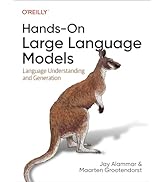
AI has acquired startling new language capabilities in just the past few years. Driven by rapid advances in deep learning, language AI systems are able to write and understand text better than ever before. This trend is enabling new features, products, and entire industries. Through this book's visually educational nature, readers will learn practical tools and concepts they need to use these capabilities today. You'll understand how to use pretrained large language models for use cases like copywriting and summarization; create semantic search systems that go beyond keyword matching; and use existing libraries and pretrained models for text classification, search, and clusterings. This book also helps you: Understand the architecture of Transformer language models that excel at text generation and representation Build advanced LLM pipelines to cluster text documents and explore the topics they cover Build semantic search engines that go beyond keyword search, using methods like dense retrieval and rerankers Explore how generative models can be used, from prompt engineering all the way to retrieval-augmented generation Gain a deeper understanding of how to train LLMs and optimize them for specific applications using generative model fine-tuning, contrastive fine-tuning, and in-context learning Review: It's truly a gem - I preordered "Hands-On Large Language Models" by Jay Alammar and Maarten Grootendorst as soon as it was available, and I've just received it. I've been eagerly anticipating this book, especially since Maarten is the author and maintainer of the BERTopic library, which has been crucial in many of my NLP projects. I'm grateful for his contributions, which have greatly supported my research efforts. This book captures that same spirit—it's truly a gem! I've dabbled with LLMs before, particularly in areas like fine-tuning models and developing autonomous agents, but this book has significantly deepened my understanding. The way they break down complex concepts with crystal-clear visuals is not just educational, but also inspiring. For instance, their explanation of transformer attention mechanisms, paired with intuitive diagrams, made an otherwise abstract topic remarkably easy to grasp. It's making me rethink how I communicate my own research—striving for a blend of depth, engaging visuals, and clear, relatable examples to make complex ideas accessible. When the authors say "hands-on," they're not kidding. Real datasets, practical coding projects, and digital resources—you're not just reading; you're doing. Jay and Maarten have managed to demystify the intricacies of large language models, particularly in chapters like the one on fine-tuning techniques, turning an intimidating topic (for those who had limited experience) into an engaging and approachable journey. Whether you're looking to cover the basics or explore the finer points, this one's a keeper. Review: 🧠 Fantastic practical intro for serious ML folks diving into LLMs - As someone who works in machine learning but mostly on CV problems, this book was a perfect bridge into the world of language models. It doesn’t assume you’re a total beginner, but it also doesn’t dump you in the deep end with dense theory and academic papers. The authors do a great job of grounding concepts in clear explanations and walk-throughs you can actually run. What stood out for me: • ✅ Hands-on notebooks + code to reinforce each concept • ✅ Explains transformer internals without getting lost in math • ✅ Covers modern workflows — from fine-tuning to inference • ✅ Clean visualizations (if you know Jay Alammar’s style, you know) Also, Maarten’s sections on vector databases, embeddings, and RAG workflows were super relevant for production applications. You can tell both authors have experience teaching and shipping real-world stuff. ⚠️ Minor caveat: This isn’t a deep theoretical text — if you’re looking for the type of math found in something like “Deep Learning” by Goodfellow, this isn’t it. It’s much more about doing. If you’re a data scientist, ML engineer, or just a curious dev looking to go beyond ChatGPT and understand how to work with LLMs at a system level — grab this book. You’ll get a lot out of it.


| Best Sellers Rank | #13,255 in Books ( See Top 100 in Books ) #3 in Data Modeling & Design (Books) #4 in Computer Science (Books) #4 in Natural Language Processing (Books) |
| Customer Reviews | 4.7 out of 5 stars 277 Reviews |
T**L
It's truly a gem
I preordered "Hands-On Large Language Models" by Jay Alammar and Maarten Grootendorst as soon as it was available, and I've just received it. I've been eagerly anticipating this book, especially since Maarten is the author and maintainer of the BERTopic library, which has been crucial in many of my NLP projects. I'm grateful for his contributions, which have greatly supported my research efforts. This book captures that same spirit—it's truly a gem! I've dabbled with LLMs before, particularly in areas like fine-tuning models and developing autonomous agents, but this book has significantly deepened my understanding. The way they break down complex concepts with crystal-clear visuals is not just educational, but also inspiring. For instance, their explanation of transformer attention mechanisms, paired with intuitive diagrams, made an otherwise abstract topic remarkably easy to grasp. It's making me rethink how I communicate my own research—striving for a blend of depth, engaging visuals, and clear, relatable examples to make complex ideas accessible. When the authors say "hands-on," they're not kidding. Real datasets, practical coding projects, and digital resources—you're not just reading; you're doing. Jay and Maarten have managed to demystify the intricacies of large language models, particularly in chapters like the one on fine-tuning techniques, turning an intimidating topic (for those who had limited experience) into an engaging and approachable journey. Whether you're looking to cover the basics or explore the finer points, this one's a keeper.
R**T
🧠 Fantastic practical intro for serious ML folks diving into LLMs
As someone who works in machine learning but mostly on CV problems, this book was a perfect bridge into the world of language models. It doesn’t assume you’re a total beginner, but it also doesn’t dump you in the deep end with dense theory and academic papers. The authors do a great job of grounding concepts in clear explanations and walk-throughs you can actually run. What stood out for me: • ✅ Hands-on notebooks + code to reinforce each concept • ✅ Explains transformer internals without getting lost in math • ✅ Covers modern workflows — from fine-tuning to inference • ✅ Clean visualizations (if you know Jay Alammar’s style, you know) Also, Maarten’s sections on vector databases, embeddings, and RAG workflows were super relevant for production applications. You can tell both authors have experience teaching and shipping real-world stuff. ⚠️ Minor caveat: This isn’t a deep theoretical text — if you’re looking for the type of math found in something like “Deep Learning” by Goodfellow, this isn’t it. It’s much more about doing. If you’re a data scientist, ML engineer, or just a curious dev looking to go beyond ChatGPT and understand how to work with LLMs at a system level — grab this book. You’ll get a lot out of it.
H**N
Transformers Finally Clicked
The book is pretty comprehensive. Each chapter really packs a punch. After trying to piece different concepts together, chapter 3, really made transformers click for me. I also really enjoyed the organization of the earlier chapters that talked about the various techniques as solutions to earlier problems. It gives the reader a sense of the intent and purpose of each component or technique. This isn't a "dive into" type of book even thought it does have some good code samples. The amount of information per page is dense so it make take some time to fully grok each page but it is well worth the effort. This is really a book for people who want to deep dive and aren't there just to copy and paste code until it does something. Funnily enough, a great study companion for this book is ChatGPT or any other similar LLMs. There are parts that may be confusing and ChatGPT and Claude are both great at explaining the book/themselves.
T**E
Gem of a book for Language AI and LLMs
As a resident of Sweden, I was thrilled to discover the Kindle version of this book, allowing me to dive in immediately without waiting for international shipping. From the moment I started reading last week, I've been completely engrossed. The authors' approach is brilliantly practical, seamlessly blending theoretical explanations of Language AI and LLMs with hands-on .ipynb exercises that bring concepts to life. The visuals are simply outstanding, offering incredibly detailed insights into the inner workings of LLMs. I particularly appreciate the balanced coverage of both open-source and licensed models, providing a comprehensive view of the field. I've been so impressed that I've already started sharing the book with a friend, who finds it equally enlightening. The clarity and depth of the content make it an invaluable resource for anyone interested in LLMs. I'm confident that this book will inspire countless innovations and breakthroughs in the field. Jay and Marteen have created a truly phenomenal work that's both educational and inspiring. Thank you for this exceptional contribution to the AI community!
V**A
Must read and good for LLM internals
Very Good books to understand internals of LLM. I strongly believe that they could have made contents further simple and easy to understand for folks across the globe.
A**S
Easy to read
Great book
V**L
Decent effort but with major shortcomings
Unfortunately, this book has less detail on the actual Transformer architecture than Jay's own blog. Perhaps this is because the authors felt that rehashing the contents of the blog would not be worthwhile in the book, but unfortunately, this just means that one has to combine the material in the book (a fake amount of which is disjoint from the blog, and of good quality) with the blog content. Once major shortcoming of the book is that, like many books on AI, it studiously avoids the usage of mathematics, spending great effort to say on so many words and pictures what a single equation would convey succinctly. Perhaps because it feels that its readerbase lack the requisite mathematical background (a college level course on calculus is all that's required). Not a bad book to have in one's collection, but not as useful as it could have been either...
B**E
Excellent Book
Is a great starter through deep detail. Would recco ...
C**T
Great book that fills a much needed niche!
This is a great resource! The strength here is on sentence transformers, RAG, Agentic AI, and prompt engineering. This books covers those topics better than many others out there. Get this book and get started expanding your AI coding!
J**A
Excellent textbook with stunning visuals
I am blown away at how Jay Alammar and Maarten Grootendorst’s visuals blend in with the theoretical aspects of LLMs. As an 18 year old who is obsessed with the intricacies of LLMs and working with different environments like LangChain and the OpenAI API, this book felt like a playground. On another note, if you combine this with Chip Huyen’s AI Engineering textbook as well as the FastAPI framework and containerization using Docker, you’ll have the tools to deploy AI systems into production in the cloud.
H**H
Recommended
nice book
W**S
Amazing for building intuition on LLMs and enabling to use them in your work
This book is great but it depends a bit on the purpose you have. I have much background in general data science methods like ML and python programming but I lack knowledge on how LLMs work and how to use them which I wanted to fill in by reading. This book provided me exactly that amazingly well: Based on prior knowledge on python programming and basic data science (regression, clustering, dimension reduction etc) it provides an extremely good high level understanding and intuition on how LLMs work and it's usecases and the required code for it. I can now competently use existing models to approach text based data science tasks like classification, sentiment analysis and so on and even fine tune them to some degree. It does however not teach you how how to code LLMs from scratch, how the math works in detail and so on Anyways, if you want to go there I would still recommend starting with this book and then dive deeper with other books, as the high level discussion and applications this book provides are incredibly clear and well structured so you will have all the intuition in place which will benefit when going into the deep details. When you are one of those data folks like me however that just want to understand what LLMs can do and how to use them this is all you need.
A**.
Un excellent livre
Les livres O’reilly sont assez inégaux mais celui-là est juste excellent. Clairement un des meilleurs sur le sujet. Vous pouvez l’acheter les yeux fermés. Il est par ailleurs très bien illustré. À garder dans sa bibliothèque une fois lu pour y revenir plus tard.
Trustpilot
1 week ago
2 weeks ago