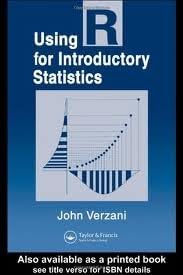
Using R for Introductory Statistics 1st (first) edition Text Only
Product ID: 805995235
Desertcart purchases this item on your behalf and handles shipping, customs, and support to EGYPT.
The cost of statistical computing software has precluded many universities from installing these valuable computational and analytical tools. R, a powerful open-source software package, was created in response to this issue. It has enjoyed explosive growth since its introduction, owing to its coherence, flexibility, and free availability. While it is a valuable tool for students who are first learning statistics, proper introductory materials are needed for its adoption. Using R for Introductory Statistics fills this gap in the literature, making the software accessible to the introductory student. The author presents a self-contained treatment of statistical topics and the intricacies of the R software. The pacing is such that students are able to master data manipulation and exploration before diving into more advanced statistical concepts. The book treats exploratory data analysis with more attention than is typical, includes a chapter on simulation, and provides a unified approach to linear models. This text lays the foundation for further study and development in statistics using R. Appendices cover installation, graphical user interfaces, and teaching with R, as well as information on writing functions and producing graphics. This is an ideal text for integrating the study of statistics with a powerful computational tool. Review: best overall introduction to statistics using R - This book is an excellent introduction to basic statistics, not assuming a knowledge of calculus, using an intuitive "hands-on approach" using the free computer program R. Statistics should be learned with the fingers on a computer, not merely by memorizing formulas, so you do well to learn statistics with a book in one hand, sitting in front of a computer. John Verzani gives a gentle introduction to statistics using R. For those unaware, R is a complete, very powerful statistics program that was developed in the 1990s based on an early language called S/Splus, created by John Chambers in the 1970s. S/Splus is an extremely powerful language for doing statistics / numerical research, and was developed explicitly for that purpose. It is far stronger than Matlab for statistical data analysis. R has a vibrant online community with hundreds of free add-on packages (available from the CRAN website). R has grown to be much more powerful than SPSS or SAS in recent years, and is becoming the tool of choice by the experts in the field. It's suitable for beginners too, but doesn't have the point and click style of simpler programs. There are three main books that are introductions to R. One by Verzani (reviewed here), one by Dalgaard, and one by Crawley. Of the three, I find this one to be the best. It is the most clearly organized and has the best logical presentation of the three. It goes into the right amount of depth without getting bogged down. You can work through all the exercises in the book because the datasets are freely downloadable from the web. Be sure to do as many of the exercises in the book as you can -- that will really help you to learn statistics well! Review: Good introduction to basic statistical concepts and data manipulation - The book essentially covers two topics: data manipulation and statistics at an introductory level. The first four chapters cover basic R commands for viewing, creating and displaying continuous or categorical data, while the remaining chapters gradually introduce classical statistics concepts and how to use R to apply them to data analysis. For beginners of R and Statistics, this is a valuable self-learning book.
| Best Sellers Rank | #5,945 in Probability & Statistics (Books) |
| Customer Reviews | 3.9 out of 5 stars 31 Reviews |
K**S
best overall introduction to statistics using R
This book is an excellent introduction to basic statistics, not assuming a knowledge of calculus, using an intuitive "hands-on approach" using the free computer program R. Statistics should be learned with the fingers on a computer, not merely by memorizing formulas, so you do well to learn statistics with a book in one hand, sitting in front of a computer. John Verzani gives a gentle introduction to statistics using R. For those unaware, R is a complete, very powerful statistics program that was developed in the 1990s based on an early language called S/Splus, created by John Chambers in the 1970s. S/Splus is an extremely powerful language for doing statistics / numerical research, and was developed explicitly for that purpose. It is far stronger than Matlab for statistical data analysis. R has a vibrant online community with hundreds of free add-on packages (available from the CRAN website). R has grown to be much more powerful than SPSS or SAS in recent years, and is becoming the tool of choice by the experts in the field. It's suitable for beginners too, but doesn't have the point and click style of simpler programs. There are three main books that are introductions to R. One by Verzani (reviewed here), one by Dalgaard, and one by Crawley. Of the three, I find this one to be the best. It is the most clearly organized and has the best logical presentation of the three. It goes into the right amount of depth without getting bogged down. You can work through all the exercises in the book because the datasets are freely downloadable from the web. Be sure to do as many of the exercises in the book as you can -- that will really help you to learn statistics well!
Y**G
Good introduction to basic statistical concepts and data manipulation
The book essentially covers two topics: data manipulation and statistics at an introductory level. The first four chapters cover basic R commands for viewing, creating and displaying continuous or categorical data, while the remaining chapters gradually introduce classical statistics concepts and how to use R to apply them to data analysis. For beginners of R and Statistics, this is a valuable self-learning book.
L**N
Snoozer but helpful
Probably will help if you're trying to use R but took stats 10 years ago.
Z**S
Using R statistics
It took three weeks for me to receive the book after the order and whe I got it it look extremely used up. It has all the pages so far but I expected the book to be in better conditions.
W**E
Horrible book for an intro to R
HORRIBLE BOOK - R is already such a frustrating program, so if you want to make your life worse, buy Verzani. The worst thing about Verzani is that you can't tell what chapter you're in when you are using the book - there are no chapter headings next to the page numbers! You are working on something in R and need help with code, but first you have to hunt for 30 minutes though Verzani to find it! Most of the time it isn't even worth it - the author often presents the wrong way to program first to show you how NOT to do it, which is completely useless because the reader doesn't know how to do anything in the first place! The index is horrible, and the topics are all out of order. Horrible reference for an already extremely frustrating computer program. I just sold my copy for a loss of $6.00 on Amazon, and I wish the poor buyer the best as he tries to make sense of the tangled mess known as VERZANI.
A**E
Often overlooked but solid title
This book doesn't show up under most listings for books about R, but it should. It's a very solid introduction to using R -- including installation, configuration, and some progrmaming -- for basic statistical work. My only complaint is that it wasn't quite comprehensive enough -- not enough examples were given and not enough discussion on important functions and parameters were present. Also, the index is atrocious. I would recommend it as a good book to get going, but for in depth work you'll be referring to the HTML help a lot.
A**S
Poorly organized and frustrating
In an introductory book, it is really important to present concepts in order. This book fails on this count. On more than one occasion, a concept (e.g., "trimmed mean") or a function (e.g., "range(x)") is mentioned without being defined, only to be presented as new later on. This is very frustrating and prevents a new student from working through the book fast. As some other reviewers remarked, the index is a complete disaster, which only makes this worse. It is nice that the book comes with a package of problems. The package lacks answers to most of these problems, though, so one can't check progress easily. Look elsewhere.
R**N
Excellent Book
I work in an office which uses R statistical software for most data analysis, database management, label making, map creation, etc. IR is really a powerful tool and I had no previous experience with it. I was also rusty on my stats, and this book has been really helpful. I feel more confident using the program and list this software proficiency on my resume. It will be a great help for my thesis in grad school.
C**N
Bueno pero no el mejor
Es un buen libro para empezar con la bioestadística pero no ha sido el mejor que he consultado. Algunas cosas se podrían mejorar pero el core lo deja bien explicado.
Trustpilot
1 month ago
2 months ago