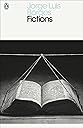
Fictions
Product ID: 84607303
Desertcart purchases this item on your behalf and handles shipping, customs, and support to EGYPT.
The most popular anthology of Jorge Luis Borges's short stories, Fictions is a wildly original and influential collection of fantastic tales, translated from the Spanish with an afterword by Andrew Hurley in Penguin Modern Classics. Jorge Luis Borges's Fictions introduced an entirely new voice into world literature. It is here that we find the astonishing accounts of 'Funes the Memorious', the man who can forget nothing ; 'Pierre Menard, Author of the Quixote ', who recreates Miguel de Cervantes's epic word-for-word; a society run on the basis of an all-encompassing game of chance in 'The Lottery in Babylon'; the mysterious world of 'Tlön, Uqbar, Orbis Tertius' which seems to be supplanting our own ; and the 'Library of Babel', which contains every possible book in the whole universe. Here too are the philosophical detective stories and the haunting tales of Irish revolutionaries, gaucho knife fights and dreams within dreams which proved so influential (and yet impossible to imitate). This collection was eventually to bring Borges international fame; over fifty years later, it remains endlessly intriguing. Jorge Luis Borges (1899-1986) was born in Buenos Aires, Argentina. A poet, critic and short story writer, he received numerous awards for his work including the 1961 International Publisher's Prize (shared with Samuel Beckett). He has a reasonable claim, along with Kafka and Joyce, to be one of the most influential writers of the 20th century. If you enjoyed Fictions , you might like Italo Calvino's The Complete Cosmicomics , also available in Penguin Modern Classics. 'Hurley's efforts at retranslating Borges are not anything but heroic. His visions are clear, elegant, crystalline' Ilan Savans, The Times Literary Supplement 'One of the most memorable artists of our age' Mario Vargas Llosa Review: Master of magic realism - For a literary neophyte like me, making an informed choice between “Ficciones / Fictions” and “The Aleph” as a Borges primer wasn’t easy. Thankfully, Penguin did make things simple with this omnibus edition that boasts of his collective body of fiction, all presented in a chronological sequence (shame they did away with the hardcover version though). Picking it up was thus, a no-brainer. It’s been three weeks since, and having savored five of the short story collections included (“A Universal History of Iniquity”, “Fictions”, “The Aleph”, “Brodie’s Report” and “the Book of Sand”), I find myself captivated by the Master’s style(s)! An eclectic mix of history, medieval philosophy, spirituality, magical realism, humor and mystery means the reader is always kept guessing about the author’s next move in tales that simultaneously amaze and tantalize with their unspoken allusions. Its foolhardy to try summarizing the entire expanse of this vast repertoire from a master storyteller. Better to take things up one collection at a time. Here are a few of his stories I simply adored in “Fictions” , the first four being included in “The Garden of Forking Paths”. 1. Tlön, Uqbar, Orbis Tertius : Borges at his imaginative best! The story revolves around a fictional country , Uqbar(and its conceptualization of a mythical realm, Tlön, like a dream within a dream) , that the Author ‘s friend stumbles upon in a certain forgotten edition of the Anglo-American Cyclopaedia. A bibliophile’s enthusiastic search for the origins of this mysterious land in forgotten bookshops and Libraries is what ensues That quest, however, ends in a dead trail. Years later, chance hands the author one of the many volumes of an obscure Encyclopedia devoted entirely to the mythical world of Tlön and authored by a secret organization , Orbis Tertius. What follows is a deep delve into a completely different world view (Empirical Idealism) that aligns with the Tlönian understanding of reality. A world where proper nouns are eschewed for impersonal verbs and where objects "grow vague or sketchy and lose detail" when they begin to be forgotten. 2. The Circular Ruins: A drifter painstakingly crafts his protégé within the mental realm in a dream world, with some assistance from a forgotten “Fire” God in the ruins of a jungle temple lost in time. An all-pervading mystical Gnosticism permeates the story and gives it an otherworldly aura. 3. The Library of Babel : Infinity and eternal time are a recurring theme in Borges’s works. This story takes it to dizzying heights, substituting the Universe for an eternally repeating motif of a Library of hexagonal galleries that is “unlimited, but periodic” and where supposedly exist works of invaluable importance (“The Vindications”) amidst a vast body of meaningless texts, a search for which has sent many a Librarian into the Void. This one’s heavy on symbolism, and in a way, reflects the true human existence, meaningless, futile, repetitive and with elusive hopes that often lead to disappointment. 4. The Garden of Forking Paths : A Chinese professor Yu Tsun, acting as a spy for Imperial Germany, is pursued by a British intelligence officer, and escapes into the country. Tsun ends up in the residence of a Sinologist, Dr. Stephen Albert (reason for which is revealed only in the end) who, incidentally ,is studying Tsun’s predecessor, Ts'ui Pen's incomplete labyrinthine novel that diverges into multiple forking paths representing the various possible futures that may spin out from each event. A brief metaphysical discussion on infinitely forking possible futures ensues, terminating in a dramatic culmination that has some serious wartime implications. 5. The Theme of the Traitor and the Hero (from “Artifices”) : A whodunit steeped in history and classical literature, the tale traces back the possible cause of the murder of Fergus Kilpatrick, an Irish revolutionary leader. Elaborating the storyline in detail would be a disservice of the spoiler kind to future readers. Suffice it to say that the narrator unravels the truth behind that incident with some help from “Julius Caeser”. Tagline? All the world’s a stage… , and that’s all the hint you will get out of me. 6. The Cult of the Phoenix (from “Artifices”): What is this secret Organization that has suffered persecutions (and has persecuted) through Eternity? A collective Body which lacks a single Holy text and scriptures, yet is bound by a Ritual that is sacred, yet “ridiculous”, “trivial” and “needs no description”? Borges mystifies and teases, finally leaving the fleshing out of the answer to the Reader, and it’s a piece that is bound to raise some interesting debates in the cha-adda table. 7. The Shape of the Sword (“Artifices” again) : Vengeance is best served hot. A usual revenge-themed tale that is turned upside down on its head once you realize who the protagonist actually is. The story is marred somewhat by the overexplaining at conclusion though. I’m sure someone like Maugham would have left the last paragraph out to keep some of the mystery intact. This heterogenous potpourri, however, represents only a handful of the gems that the compendium includes, mere drops in an ocean. Labyrinths, duels (of the mental and visceral kind), brushes with infinity and immortality, these are some of the recurrent motifs in his school of literature, a deep dive into which would require lengthy posts of their own. And then, there are those ethereal, hard to categorize works like “Averroës' Search” and “The Other” that inspire awe by their width of scope. Talking about them would require a detailed breakdown of works like “The Aleph”, “Brodie’s Report” and “The Book of Sand”. Review: Good product - Good product
| Best Sellers Rank | #15,314 in Books ( See Top 100 in Books ) #252 in Short Stories (Books) #562 in Classic Fiction (Books) #969 in Contemporary Fiction (Books) |
| Customer Reviews | 4.7 out of 5 stars 1,035 Reviews |
M**R
Master of magic realism
For a literary neophyte like me, making an informed choice between “Ficciones / Fictions” and “The Aleph” as a Borges primer wasn’t easy. Thankfully, Penguin did make things simple with this omnibus edition that boasts of his collective body of fiction, all presented in a chronological sequence (shame they did away with the hardcover version though). Picking it up was thus, a no-brainer. It’s been three weeks since, and having savored five of the short story collections included (“A Universal History of Iniquity”, “Fictions”, “The Aleph”, “Brodie’s Report” and “the Book of Sand”), I find myself captivated by the Master’s style(s)! An eclectic mix of history, medieval philosophy, spirituality, magical realism, humor and mystery means the reader is always kept guessing about the author’s next move in tales that simultaneously amaze and tantalize with their unspoken allusions. Its foolhardy to try summarizing the entire expanse of this vast repertoire from a master storyteller. Better to take things up one collection at a time. Here are a few of his stories I simply adored in “Fictions” , the first four being included in “The Garden of Forking Paths”. 1. Tlön, Uqbar, Orbis Tertius : Borges at his imaginative best! The story revolves around a fictional country , Uqbar(and its conceptualization of a mythical realm, Tlön, like a dream within a dream) , that the Author ‘s friend stumbles upon in a certain forgotten edition of the Anglo-American Cyclopaedia. A bibliophile’s enthusiastic search for the origins of this mysterious land in forgotten bookshops and Libraries is what ensues That quest, however, ends in a dead trail. Years later, chance hands the author one of the many volumes of an obscure Encyclopedia devoted entirely to the mythical world of Tlön and authored by a secret organization , Orbis Tertius. What follows is a deep delve into a completely different world view (Empirical Idealism) that aligns with the Tlönian understanding of reality. A world where proper nouns are eschewed for impersonal verbs and where objects "grow vague or sketchy and lose detail" when they begin to be forgotten. 2. The Circular Ruins: A drifter painstakingly crafts his protégé within the mental realm in a dream world, with some assistance from a forgotten “Fire” God in the ruins of a jungle temple lost in time. An all-pervading mystical Gnosticism permeates the story and gives it an otherworldly aura. 3. The Library of Babel : Infinity and eternal time are a recurring theme in Borges’s works. This story takes it to dizzying heights, substituting the Universe for an eternally repeating motif of a Library of hexagonal galleries that is “unlimited, but periodic” and where supposedly exist works of invaluable importance (“The Vindications”) amidst a vast body of meaningless texts, a search for which has sent many a Librarian into the Void. This one’s heavy on symbolism, and in a way, reflects the true human existence, meaningless, futile, repetitive and with elusive hopes that often lead to disappointment. 4. The Garden of Forking Paths : A Chinese professor Yu Tsun, acting as a spy for Imperial Germany, is pursued by a British intelligence officer, and escapes into the country. Tsun ends up in the residence of a Sinologist, Dr. Stephen Albert (reason for which is revealed only in the end) who, incidentally ,is studying Tsun’s predecessor, Ts'ui Pen's incomplete labyrinthine novel that diverges into multiple forking paths representing the various possible futures that may spin out from each event. A brief metaphysical discussion on infinitely forking possible futures ensues, terminating in a dramatic culmination that has some serious wartime implications. 5. The Theme of the Traitor and the Hero (from “Artifices”) : A whodunit steeped in history and classical literature, the tale traces back the possible cause of the murder of Fergus Kilpatrick, an Irish revolutionary leader. Elaborating the storyline in detail would be a disservice of the spoiler kind to future readers. Suffice it to say that the narrator unravels the truth behind that incident with some help from “Julius Caeser”. Tagline? All the world’s a stage… , and that’s all the hint you will get out of me. 6. The Cult of the Phoenix (from “Artifices”): What is this secret Organization that has suffered persecutions (and has persecuted) through Eternity? A collective Body which lacks a single Holy text and scriptures, yet is bound by a Ritual that is sacred, yet “ridiculous”, “trivial” and “needs no description”? Borges mystifies and teases, finally leaving the fleshing out of the answer to the Reader, and it’s a piece that is bound to raise some interesting debates in the cha-adda table. 7. The Shape of the Sword (“Artifices” again) : Vengeance is best served hot. A usual revenge-themed tale that is turned upside down on its head once you realize who the protagonist actually is. The story is marred somewhat by the overexplaining at conclusion though. I’m sure someone like Maugham would have left the last paragraph out to keep some of the mystery intact. This heterogenous potpourri, however, represents only a handful of the gems that the compendium includes, mere drops in an ocean. Labyrinths, duels (of the mental and visceral kind), brushes with infinity and immortality, these are some of the recurrent motifs in his school of literature, a deep dive into which would require lengthy posts of their own. And then, there are those ethereal, hard to categorize works like “Averroës' Search” and “The Other” that inspire awe by their width of scope. Talking about them would require a detailed breakdown of works like “The Aleph”, “Brodie’s Report” and “The Book of Sand”.
V**.
Good product
Good product
K**R
Go for it
One of the most imaginative writers of the 20th century. Must read
P**E
A Brilliant and Fascinating book !
There's nothing to dislike ! What's to dislike about J.L.Borges ? A master craftsman at work - and what an edifice he did build ! The book is beautifully crafted, soft creamy paper, classy cover, and superbly bound. Absolutely smashing ! A pleasure to feel, hold and read. If you want to read something unusual, and are willing to put in time and concentration, Borges is your man !
P**R
You're born, you love, you read Borges and you die!
Roberto Bolaño summed it the best when he said if he could read just one book for the rest of his life it is this. As far as the deluxe edition is concerned, the best paperback, as good as Everyman Library is in hardbacks, french flap cover, deckle edged quality thick pages. Read it through once and no creases or damage to the spine etc Bought it for Rs 770 worth even if you get it at the MRP of Rs 1299. (What weird rotation of the photos though :p)
A**H
Great
Enticing stories by Borges.
S**L
Jorge Luis Borges
Rare book for your books collection....Only the fine people find these kinds of book. Happy reading ☺️
S**M
Genius and gorgeous book with deckle-edged pages.
This edition brings together all the fictions of Borges. My personal favorite is 'The Book of Sand'. You need to forget about the 'natural' and delve into the labyrinth created by the master. You will not read this book; you will live it. The book looks beautiful too with its deckle-edged pages and french flap covers. Also, do read Cortazar and Stanislaw Lem if you like this. Instagram: perfect_zoltar (where I talk about more books)
T**S
Gray Magic?
I wanted to know what interested Curtis Yarvin about the story of Tlön. My curiosity was satisfied. Yarvin may have been looking for instructions on gray magic, on how to subtly manipulate ideological narratives without completely breaking with the prevailing order.
T**R
Amazing
I think this is the best Borges collection, in my opinion.
C**N
La Poste m'a sauvee
J'ai commande deux livres de cet ecrivain comme cadeau pour mon fils pour son arriversaire. J'ai passe commande le jeudi et son anniversaire etait le dimanche. L'autre livre devait arriver le lendemain mais il n'est pas arrive ce jour la. Heureusement ce livre est arrive le samedi par la Poste et j'ai quelque chose a offrir a mon fils. Merci, la Poste! Quant au livre, c'est tout a fait ce que j'ai attendu.
C**E
Wonderful fiction by Borges
This paperback is in decent shape (smaller print than I expected but then my eyes have changed...). Book arrived on time and well packed.
R**C
this penguin classic deluxe edition is a masterpiece
I am listening to this in the Spanish language on Audible and following along at the same time with Andrew Hurley's paper back English translation. This paperback is very high quality in terms of its paper and its binding. It deserves a permanent place on bookshelves. I notice that Andrew Hurley's translation includes a short story "The Approach of Al-Mu'tasim" that is omitted from the Audible Spanish version. I think it's a good use of time to read every short story in this book, slowly, and at a rate of about one short story every two or three days. Jorge Luis Borges is very special, but he is not the easiest author to read. I think it's worth the effort. Andrew Hurley has done the world of English readers a great service by translating this book from Spanish. I hope one day someone will care enough to convert this paperback book into Kindle format.
Trustpilot
1 day ago
3 weeks ago