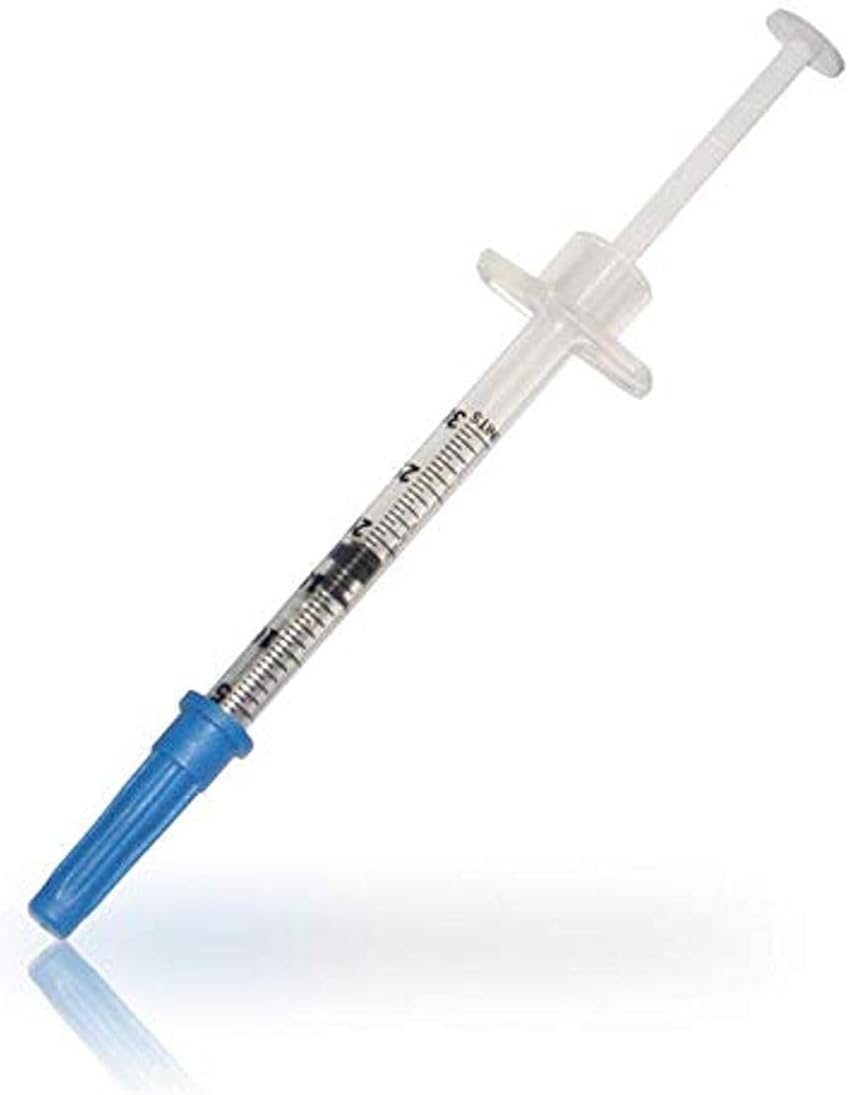



Liquid Ultra Thermal Paste Compound Grease CPU Processor Heatsink
Product ID: 1202756
Details
- Brand
- ColorGray
- Item FormPaste
- MaterialMetal
- Specific Uses For Productpersonal
📉Up to 20°C temp drop
❄️100% metal for max cooling
🖌️Easy brush application
🔥 Cool your CPU like a pro, or get left in the heat!
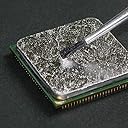
Coollaboratory Liquid Ultra is a premium 100% metal thermal paste designed for serious enthusiasts and overclockers. Its unique metal-based formula delivers exceptional heat conductivity, enabling up to a 20°C reduction in CPU temperatures. The paste comes with precision brushes and cleaning tools for easy, mess-free application. Ideal for delidded Intel CPUs with copper or nickel-plated heatsinks, it outperforms conventional thermal compounds, ensuring quieter, cooler, and more stable performance under heavy loads.
| ASIN | B0039RY3MM |
| Best Sellers Rank | #438 in Silicon Grease |
| Brand | Coollaboratory |
| Brand Name | Coollaboratory |
| Color | Gray |
| Compatible Material | Metal |
| Container Type | Tube |
| Customer Reviews | 4.5 out of 5 stars 769 Reviews |
| Global Trade Identification Number | 04260157580152 |
| Included Components | Brush |
| Item Form | Paste |
| Item Package Quantity | 1 |
| Item Weight | 0.04 Kilograms |
| Manufacturer | Coollaboratory |
| Material | Metal |
| Material Type | Metal |
| Model | 900100264 |
| Other Special Features of the Product | Heat Resistant |
| Part Number | 4260157580152 |
| Special Feature | Heat Resistant |
| Specific Uses For Product | personal |
| Volume | 4 Milliliters |
| Water Resistance Level | Water Resistant |
W**.
The best I've used in 22~23 years of hobbyist computer hardware experience
Please note I've used F and C temperatures a lot, as we use F here but computers default to C readings unless you change it. Delidded 4790k finally has it's heat-issue since day 1 fixed with this product. Bought a delid kit 3 months ago to delid the chip, which worked, but Zalman ZM-stage 1 didn't cut it for this hotbox processor. The computer was disassembled quickly and the cpu removed. I removed all the old gunk and used some alchohol on the processor and lid, and also the heatsink contact surface to remove oils etc. Painted the smallest amount possible ontop the processor die itself, and re-assembled the processor package itself. I then removed the lid for a second to see that NONE of the material escaped where it belonged. For those that don't know, intel doesn't solder the LID of the cpu to the chip, for mainstream Z or B-chipsets from 3xxx series and higher. I placed the processor back in the pc (which was upright, I used a plastic fork leaning on my GFX card, to hold up my CPU retention plate to insert my cpu easier with two hands). I then painted on to the heatsink some of this good stuff - just enough to barely cover the surface, it's base is copper, this is NOT made for aluminum and will harm it. Most enthusiast heatsinks are copper or nickel-plated copper. Check your documentation to be sure. The lid of the CPU on an intel chip (if you're delidding), is nickel-plated copper, NOT aluminum, just to make this clear. I let the processor sit for 10~15 minutes before re-installing the cpu & applying material to between the heatsink and cpu itself. I waited so that the lid would not fall back off of the cpu when I was installing it. Maybe cover or remove your video card in-case it does. I replaced the heatsink & bolted it slowly back into place, after everything was dusted a bit, since now is a good time to do it. 4.0GHZ speeds at stock voltage showed a TWENTY DEGREE DROP (both while delidded), compared to ZALMAN ZM stage 1, under load. 4.4GHZ speeds compared also resulted in a 20C drop. It was about 30~32F or something close to that at this clockspeed under load. I checked that everything was A-OK in BIOS and monitor temps for a few moments, everything checks out nicely. The stock heatsink would throttle in every multi-core game. This is with a non-delidded processor. Stock heatsink is useless - USELESS. Phanteks TCP14E 140mm dual-fan dual-tower cooler (red model) was used for the temps listed above, and is a good air-cooler. Using said cooler, I could hold my turbo speed but it would still get very close to around 80C~84C under load (not delidded, zalman paste) Delidding and using Zalman paste actually raised temps by 3~8 degrees F (2~4C). Possibly put a touch too much on when I did it. Now for this product (clarification, used all air cooling, no liquid cooling here) Delidding and using THIS PRODUCT dropped temps substantially, from the first delid attempt that I had previously tried. Idle load at 4ghz was 90~105F (not C!), loading brought these temps to around 160F on highest core reading (70~71C). Idle load at 4.4 ghz turbo (ALL cores) brought this to around 100~113F idle, and no higher than 162F under load (72C). Full load running fallout 4 heavily modded and not really gpu-constrained too much at 1920x1080 did not exceed the temps above. I used default 1.0925V for 4ghz, and 1.25V at 4.4ghz, for the tests above. Hyper-threading and virtualization features are ENABLED. My computer is cooler, quieter, and my cooler and other fans don't have to work nearly as hard now, as heat transfer is much more efficient. I have enough product left over for four uses including what is used right after delidding this processor. While you may use this product on any cpu, keep it off your circut boards or you WILL have issues and your machine may not boot. DO NOT attempt to delid processors before 3xxx series on intel systems, or x79/x99-based systems, as they're all soldered. DO NOT attempt to delid any AMD processors or you will break the processor. Delidding is a tactic used by folks wanting to make the heat-transfer of heat inside the CPU to the cooling unit more efficient, to help squeeze every last bit of power out of the system or just make it cooler/more stable/quieter. You should expect a 10C drop normally when delidding and using this, and atleast a 5~8C difference between this and the leading non-metallic products like I mentioned before. Your mileage may vary, but if you have a similar CPU, expect about this. The warmer this chip gets (70C and above), the more likely instability will occur, you need to keep this CPU cool. When applying this product, apply it to one contact surface, not both (e.g. put it on the cpu surface or the bottom of the cooler, NOT both). Bare-bones Instructions come in German, English, and French on the package itself, the website has more available for more detail. In the package is: Two brushes, a cleaning pad, a scrubbing pad to remove old paste, the material itself. A grain of rice size is a good start between the cpu top and the bottom of the heatsink. Don't use too much here, as too much is better than not enough. A pea size blob may be too much. A grain of rice or LESS for the inside of the cpu if you delid. Keep in mind delidding knocks out your standard CPU warranty. Alchohol will help you remove this stuff if it gets where it should not, please be very careful with it & keep fingers OFF the area you wish to apply this, or it WILL NOT stick. That bacon sandwich and french fries will have to wait for later as did mine. If you use this with a RYZEN cpu please be aware that temps may read (since day 1) 20C higher than they really are, this is normal, and is not this product, please consult power-user / hardware forums for the skinny on that. It's a built-in safety margin, for what it's worth. When I say 'paste' 'material' or something similar, I mean the product you get in this package. Sorry if this doesn't read well, please excuse that I wanted to include as much needed info as possible. --Cheers! Feel free to comment/like if this is or isn't up-to-snuff, I can clarify and modify this if needed. Best wishes!
A**R
Best performance, easy application, but seems risky. Also long-term effects are unknown.
Coollaboratory Liquid Ultra is the most effective thermal compound I have ever used. If that is all that matters to you, then consider this a recommendation. I run an ancient Thinkpad T60 laptop, needless to say it's not the coolest running thing around anymore. I tried other pastes, best results coming from MX-4, but my laptop has always needed to rev the fan if it did anything at all, which I can't stand. Packaging: Not much to say about it other than it's thermal paste packaging. You get the CLU stuff, an alcohol cleaning cloth and a sanding pad. There's nothing to be impressed about here. Application: You apply CLU similar to most other thermal pastes, except you actually spread it with the provided brush. Cut off half the bristles over a trash can, it makes spreading much easier. The paste spreads fairly easily, you need VERY VERY LITTLE to cover the die, 1 little drop was enough. Paint over the Die(s) with the brush so a thin layer covers the whole thing, make sure it won't ooze over the sides when you put the heatsink back in place. This stuff conducts electricity. Thankfully my CPU doesn't have any exposed pins so electrical failure was less likely, but be VERY CAREFUL. Only other thing to say is please, please wash your hands after applying this stuff. Coollaboratory claims that this is non-toxic, and it's not mercury, it IS liquid metal and it gave an odor when I applied it. If you want to be a step better, wear a safety mask too, maybe it's safe for human contact but I was not warned of an odor and it makes the company seem a little dodgy. Performance: I'm hesitant to provide actual numbers as my laptop fluctuates frequently, whether using MX-4 or CLU, but I think my IDLE temperature with no fan has dropped from 53 C to 45 C. Load with max fan and I've dropped from 55 C to 51 C. Also, this definitely comes back from temperature spikes much better than other thermal pastes. When I used MX-4, my temps would spike from 40s to 60s, and unless the fan kicked in they would stay there or very slowly decline. With this paste, my temps will drop back down if they spike over the 50s, this really helps keep the fan from kicking in. In comparison tests, this is claimed to be the best thermal paste around, and after using it I fully believe them. I'd suspect you'd see much better results than mine in high-end setups like gaming or video editing. I'd like to point out that I've only used this paste for 2 days now. I am concerned about reports of this paste corroding the copper or burning up and becoming ineffective and unremovable after several months of use, and I will report back if this is the case. Otherwise, I couldn't really ask for more other than Coollaboratory give some comment on the safety of breathing in the odor of this product.
Y**G
Great performance but too pricy
The paste worked well however the packaging was shotty and the syringe was like half empty when I got it. Almost made me think this was a used syringe but apparently a lot of people had similar issues. That said, performance is great. I used this on my i5 3570k between the CPU die and the integrated heat spreader (IHS). Previously I used PK-3 and temps were great but after a few days the temps rose super high. After two more applications and some digging online I found out that this was due to the pump out effect where the heating and cooling pumped the TIM out. Hence I tried Coollaboratory Ultra. Coollaboratory Ultra worked wonderfully. There is no pump out effect since it is liquid and remained liquid. Best of all is that I do not need to replace the Coollab Ultra. It's been over 1 year and I am still getting the same temps I started with. I did not use Coollab Ultra on the contact between the IHS and my heatsink because I was deathly afraid of drip and having rouge beads roll off and make contact with my motherboard. I used regular PK3 for that. While this stuff is a superb TIM, IT IS ELECTRICALLY CONDUCTIVE!!! I played around with the idea of using it on my Radeon 7950 but when I took the heatsink off, I realized there were lots of exposed leads next to the CPU die that could potentially get sorted out.
M**X
Absolutely the Best Thermal Paste Available
I had been a fan of IC Diamond for a very long time. It's still good stuff and I still like using it for ordinary use conditions, but it does not hold a candle to Liquid Ultra under severe or demanding conditions. This stuff is simply amazing and deserves more than 5 stars. I have not been this impressed by a product for a long time, but this one definitely impressed me and exceeded my expectations. Overclocking is my hobby. I have tried almost every major brand of thermal paste and this is the ideal paste for overclockers. I own an Alienware M18xR2 with a 3920XM CPU and push this bad boy really hard. With IC Diamond I was able to run 4.3GHz all day, every day, with good temps. Beyond 4.3GHz I had to use my portable AC unit to keep the CPU cool enough for extreme benching because it got too hot at higher clock speeds. With Liquid Ultra I am able to run 4.6-4.7GHz with temps similar or slightly better than 4.3GHz with IC Diamond. I also have an Alienware 18 with a 4930MX CPU. Anyone with an unlocked Haswell CPU knows what a totally ridiculous overheating mess that product can be without water cooling. Water cooling isn't available for laptops, so this presents a serious challenge. If you don't know it already, an overclocked Haswell runs insanely hot. Liquid Ultra completely changed my experience with this CPU. With NT-H1 and IC Diamond the 4930MX would reach a point of thermal shutdown at 4.3GHz in a matter of seconds. With Liquid Ultra it can run 4.5GHz with reasonable temperatures... as I said, this stuff is "simply amazing" and that's not an exaggeration. I apply Liquid Ultra to the copper plate on the CPU heat sink and to the CPU die. A tiny drop about 1/3 to 1/2 the size of a grain of rice is enough to coat both surfaces. Using the included brush, I start on the copper plate, spread it out enough to cover the mating surface on the CPU die, then use what is on the brush bristles to coat the die. Only "paint" a thin layer on both surfaces, as you definitely don't want this paste to get on any aluminum surfaces or electrical contacts. You need just enough for the surfaces to be wet when they are mated together, and no more. Clean up is easy with isopropyl alcohol, cotton swabs and a lint-free cloth or paper napkin. There is not very much in a tube, but plenty for multiple paste jobs. The first tube was enough for 3 CPU and 2 GPU paste jobs. (One tube covered two laptops, including both GPUs on one of them, and a desktop CPU.) Again, moderation is the key here. Use it sparingly... less is more in this case. You only want to use enough to provide a thin and even coating, but use caution and follow the directions to avoid getting it on something it should not be getting on.
H**S
Know what you are doing and this stuff cant be beat!!!
After reading all the raving reviwes about this product I had to purchase it for myself. A little background i currently have a sager P770zm which using a desktop chip can run a bit on the warm side even hit thermal throttle under certain conditions. As an (experienced) computer lover I got into a healthy competition to be the first 5ghz processor in a laptop without heavy modifications. When I first received this stuff I Delidded my 4790K and that was the first wow factor. This was my first time using this type of thermal paste so I was shocked at how much my temps decreased. I averaged about 10C off my chip under all loads. I then took the heatsink and chip off for a nice lapping. Lapping provided a further decrease since my sink and chip were convave. now that I was certain I was making even and sufficient contact it was time to replace the gelid with CLU. This is when i was a bit dissapointed. Even though I was making sufficient contact with the chip for average paste the thin layer required for CLU did not allow for proper contact with my chip. My temps had increased back to stock temps. With that said It is an amazing product and the best there is right now. I just wanted to say not all chips can use this between the IHS and sink. (This can also be dangerouse if you are not careful since the past is conductive). Now with that said the paste is very easy to apply. I did what other suggested and cut the brush head to a much shorter size to cut down on the wicking of the paste. Once I did this it was effortless and easy. Be smooth with your brush strokes and take your time. If you do then you will avoid splattering your motherboard with tiny microscopic beads that can be catastrophic. Another word of advice is to surround the chip with electrical tape just in case to avoid any drops of the paste. I know that I used mine in my laptop which is frowned upon, but as an enthusiast I just had to give it a try. If you plan to use your laptop for travel often then I would suggest not using this paste. Since most laptops have combined heat sinks there isn't much you can do to increase contact pressure. Even if it is enough to provide better heat transfer that doesn't mean a nice bump or nudge cant drop a bead of the paste and ruin your computer. It "shouldn't happen bc the stuff actually sticks together fairly well but the risk is there. I know some of you already know most all of this stuff but I get asked these questions very often so figured I would try and do my part in explaining the risks a tad. Once you understand the risk and how to use it properly and when it might not work this stuff is the best you can get and highly recommend it. Since then I have re-pasted both my desktops with this stuff and wow what a difference.
O**K
Very Little to Work With, But Performs as Advertized
When I opened the syringe there was silver liquid lining the inside of the cap. It was either covered when the cap was put on during assembly or leaked out during the time between assembly, storage and shipped to me. When I tried to get the liquid out, it was thick like mercury and I barely got any out. I applied to the surface of the processor and to the cooling fan copper heat sink. The liquid wouldn't spread evenly and ended up in globs. I used the supplied brush to try and spread it but all it did was adsorb about half of the liquid, making there even less to work with. I finally decided to use a non-absorbing material to spread the remaining liquid. I used a piece of regular blank paper. I was able to spread the liquid into a fine layer on both pieces. The liquid seemed to bond with the copper surface and fill in, creating a clean, extremely smooth surface. Now, after installing those, the liquid worked as advertised. My temperature on my CPU dropped from an average of 48 degrees to around 34 degrees. It varies with load of course, but the CPU never got hot, even when loaded it down with 64bit video processing software and started a video rendering. So, I recommend buying it, but be careful. They do not give you enough for a second chance.
S**E
WOW, just wow *update with different CPU and cooler
I have a delidded i7 3770k @4600Mhz 1.3Volts. Just delidding it did give me a 5c drop in temps under stress. I have used AS5, MX4 and a few other pastes under IHS and on base of both a H80 Corsair and a Phanteks PH-TC14PE_BL. None of these pastes seemed to be any better than the other and I tried all sorts of combos under IHS and on base of cooler. The one thing they all did was get worse temps over time. Had to reapply them about every 3 months to keep temps down. The "pump out" effect I'm guessing. That's what led me to this product, have read it won't "pump out" between the Die and the IHS. Didn't expect it to drop the the temps down so much. Started out with the H80 and two 120 mm 74 cfm fans. When paste was fresh, testing with IBT would get my cores up to an average 78c. Switched out to the Phanteks cooler, same fans, (H80 pump was making noise) got exact same load temps as H80. Applied CLPro to the Die and IHS, used CLUltra on base of Phanteks (lapped flat) Ran IBT and hottest core was 59c during stress, NO WAY! can't be right, it was. A 19c drop. None of this "MX4 AS5 wasn't applied right" B.S., It was applied with every method out there, multiple times and temps were always the same. Both of these TIMs spread out very nice, warmed up TIM and surfaces. Made sure they were absolutely clean, no problems .. Used amount about the size of 1/4 grain of rice between IHS and base of cooler, alot less on Die and IHS Any questions, fire away ! When applying this to CPU and cooler I suggest you apply it to base of cooler then use what is in left over in brush to apply to top of CPU. I have read a few stories about the syringe sticking when squeezing out TIM then suddenly letting go squirting this across the motherboard. The application looked like chrome when the spreading was done, no pits, no fisheye. * Put CLU between a FX 8370E 4532Mhz (206x220) 1.3volts and a H80 cooler. Same temps as AS5 and TX4, 60c with IBT. Guessing the cooler is at it's limit. Running two 120mm 75 cfm fans on it.
C**N
delidded cpu? This is the Thermal solution of your dreams.
This stuff is AMAZING!!!! I hardly used any of it and boy oh boy my temps flew down. I delided my 4690k just to use this. I am happy I did. Great instructions in the package. Do not let this stuff touch any part of your mother board. It is very conductive and will cus a short. The instructions tell you this also. I used a very very small amount not even a drop not even half a drop. I mean a minuscule amount did the trick. I just used the supplied brush. I cut the bristles off the brush a bit to prevent the liquid from wicking up on the brush. I read about that from another user of this amazing product. All you need is an 8th of an inch of brush and your golden. The cap had more then enough to spread on my cpu die. I know I have enough of this stuff to use at least 20-35 times easy (no joke you don't need much at all) Note this stuff is not for Aluminum!!!!! Oh yea just so you all know what I mean when I say my temps flew down. I am using this thermal paste with my Noctua NH-D15 cooler ( sure beats the s*** outta my H100i and a hell of a lot more quiet). Before using Coollaboratory liquid Ultra on my 4690k @4.7 ghz. My temps idle 30c-46c. 100% load 91c-97c after I used this awesome product (delided removed stock intell paste and applied to die) my temps @4.7ghz oc idle 28c-37c 100% load never went above 65C O.O talk about winning <3 Now I gotta try for 5ghz baby. I know my temps wont be stupid (lol).10/10.
I**O
Ottimo prodotto.
Il prodotto è spedito immediatamente ed arriva dopo circa una settimana e mezzo , corrisponde esattamente alla descrizione comprende il metallo liquido ( siccome ne va steso poco è sufficiente per più applicazioni ) panno abrasivo per pulire a fondo le superfici interessate , carta imbevuta di alcool isopropilico sempre per pulire. Personalmente ho utilizzato il metallo liquido per stenderlo tra ihs e die di un i7 4770k , con la procedura sono passato da 83 gradi ( 4.2 ghz e 1.18 volt ) a 73 gradi ( 4.4 ghz e 1.24 volt ). Il prodotto è enormemente migliore delle tradizionali paste termiche nel trasferimento del calore , ovviamente però bisogna ricordare che conduce la corrente e perciò si deve assolutamente evitare che vada a finire su connettori, Pin , contatti e quant'altro , ad esempio se si vuole mettere tra ihs e die è bene prima isolare i contatti sotto l'ihs con smalto per unghie o altro composto adatto . Si può stendere anche tra cpu e dissipatore facendo sempre attenzione a stenderne una piccola quantità ( su quest'ultimo punto fate attenzione , nel mio caso dopo averlo steso tra cpu e dissipatore ( un corsair h60 ) il metallo liquido non si è "spalmato bene " ( forse un mio errore di stesura ) e perciò il contatto tra le due superfici era limitato a soltanto piccoli punti più sporgenti di metallo che si comportava quasi come fosse solido e non liquido , cioè ha portato ad avere temperature oltre 100 gradi con conseguente trottling termico della cpu ( ovvero cala drasticamente l'utilizzo per non fondere ) , ho risolto tale inconveniente sostituendo il metallo liquido con pasta termica tradizionale tra cpu e dissipatore ma lasciando il metallo liquido solo tra ihs e die, ( Ovviamente parlo di cpu deliddata anche detta scoperchiata ), infatti tra ihs e die non ho riscontrato tale problema , forse perché vi ho applicato una maggiore pressione durante il montaggio cosa che forse ha permesso la giusta adesione delle due superfici .
G**T
Toujours cool, du métal liquide
Soyez bien sûrs d'isoler le reste de la carte mère si vous appliquez ça sur des CPU/GPU de laptop. Sinon c'est vraiment génial, on peut presque passer à du refroidissement passif. Je recommande!
T**.
As per Description
Good.
M**L
Works greats, be aware of no needle point on the syringe
This is the best thermal interface material you can buy, thermal transmission wise. I use it on delidded CPUs and GPUs. Read the instructions and know that this TIM is NOT to be used on aluminum. It will EAT aluminum. Be aware that this TIM is also conductive, so keep it away from exposed circuitry. You also need very little of it applied. It is a liquid, and will drip off the surface onto other components if you apply too much. Use the included spreader brush and start with a very small amount, adding more only as you need it. Also, the two syringes that I received did not come with needle points on them. As a result, the liquid metal pooled in the cap of the first syringe during transport, and when I removed it, the liquid metal dripped out onto my work bench. Approximately 5 ml of it. MemoryC was kind enough to send me another syringe. I am not sure why the Coollaboratory products I received didn't come with needle points on the syringes, as seen in video product reviews by others, so be careful when removing the syringe cap for the first time. Store the product with the syringe open end upwards to prevent the liquid metal from pooling in the cap due to gravity.
O**N
it was only after so many tests showed just how positive the results were that I impulsively bought this as I needed a new therm
I will admit, it was only after so many tests showed just how positive the results were that I impulsively bought this as I needed a new thermal paste and tomshardware guide and other such sites showed just how much better the results can be Hands up, I was impulsive and thought this is the stuff for me.. it was only after it was delivered did I start to read how it can be very corrosive to aluminium and how reviews stating they didn't feel safe using it compared to a typical thermal compound did I start to have concerns. So after much googling to ensure no aluminium was present I took the chip out just to be safe and the brushes included with this were excellent for application, and made it super easy.. It also made sure that any of the little bubbles that can appear are quickly rectified and spread out. I would whole heartedly recommend this, drop in temps is significant when you think this is only a paste.. application is simple and I am a fond believer if i can do this then any semi competent individual will have zero issues. Just make sure the cooler is not aluminium. my i7-4790k is now running @ 60c under full load on prime 95 which is a significant 4-5c drop on previous results.. very happy
Trustpilot
1 month ago
3 weeks ago