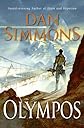

Olympos: A Science Fiction Epic Where Achilles and Hector Defy Zeus and Wage War on Olympus (Ilium series Book 2) - Kindle edition by Simmons, Dan. Download it once and read it on your Kindle device, PC, phones or tablets. Use features like bookmarks, note taking and highlighting while reading Olympos: A Science Fiction Epic Where Achilles and Hector Defy Zeus and Wage War on Olympus (Ilium series Book 2). Review: What Does It Mean To Be Human? - In this sequel to "Ilium", Dan Simmons picks up right where he left off, continuing to develop a universe (several universes?) populated by "Post-humans", "Old-style" humans, Moravecs, LGM (Little Green Men), Greek Gods, Voynix, and Calibani. It almost sounds like fantasy, you think, but "Olympos" is nothing like fantasy: it is hard science-fiction with one of the most interesting plot devices I have ever read. Many reviewers didn't like this book-and their opinions are just as valid as mine-but like ultra right-wing conservatives, I simply don't understand where they're coming from. I enjoyed "Olympos" very much; indeed, I enjoyed it so much that I actually slowed down my reading pace so that the book would last longer. I found it refreshing to read a sequel that I considered to be as good as the first book, a sequel that wasn't just a rip-off of a popular first story; a sequel that left open enough elements for a third installment without obviously trying to do so. Imagine a future in which Homo sap has learned to manipulate everything from the basic building-blocks of life to time and space itself. Great engineering feats and art and technical advances become commonplace and pedestrian. What does a species bored with its success do now? It reaches back into misty pre-history and tries to re-connect with its roots, and it finds there a drama that can be replayed, an interactive drama with plenty of roles for a semi-omnipotent species to act out; to re-discover the worst of the human character as well as the best, and to experience these traits working side by side, weaving in and out and around each other with one common lesson: free will. In the meantime, the detritus of previous eras continue on their own courses of discovery and growth: cyborg moravecs who become more endearingly human, perhaps, than their human creators; a small population of humans living in a safe, manufactured world who long to know if there isn't more and who rise admirably to a challenge beyond their experience; engineered little green men, built for a task of vanity, who evolve altruism as their defining trait; revived ancients, Greeks and Trojans, who divert from their pre-ordained course when, through aristeia, they learn that their "gods" cannot live up to human expectations. Simmons leaves no character undeveloped, and story arcs grow and intersect in satisfying ways. Those with a thorough knowledge of Greek mythology will probably pick up on interesting plot points that I missed in my reading, but even though I know very little of Greek mythology, I still found "Olympos" to be very enjoyable, a great allegory of what it means to be human. Review: Marcel Proust on Quantum Steroids - This sprawling novel is inventive, ambitious, fast-paced, not completely coherent, but always engaging. My hat's off to Simmons for bringing his love of literature and a belief in the transformative power of artists to the sci fi genre. (Don't let this make you think the novel is airy or arty; it actually has a lot in common with Simmon's hard-baked detective novels.) The preceding book, Illium, introduced a mix of Homer's Illiad, Shakespeare's sonnets, the Tempest, and Marcel Proust with Greek and Trojan heroes on a terraformed Martian landscape. This world is ruled by petulant Olympian gods with a penchant for quantum manipulation and a strange unexplained relationship to events on a future Earth. I simply didn't believe Simmons could pull this all together in one more novel, but he has largely done it. While some holes remain, and the author had to rely on too many deus ex machinas to pull the plot threads together, the conclusion is satisfying. If you enjoyed Illium, you will find this equally engrossing. My only complaint with the writing is an overdone pseudo-science that features the word "quantum" way too often. Apparently anything can happen if you evoke the magic Q-word. This is one time I think leaving the science a little vague might have been better, since the heart of the book isn't science at all. This flaw is more than made up for by a large cast of interesting characters that Simmons never loses track of, and a page-chomping cinematic style that charms and lures you on. By the way, don't skip the long Marcel Proust quote -- you will understand the novel far better, and you may never quite look at a great work of art the same way again.

| ASIN | B000FCK97C |
| Accessibility | Learn more |
| Best Sellers Rank | #82,424 in Kindle Store ( See Top 100 in Kindle Store ) #215 in Time Travel Science Fiction (Kindle Store) #785 in Exploration Science Fiction #834 in Space Opera Science Fiction (Kindle Store) |
| Book 2 of 2 | Ilium series |
| Customer Reviews | 4.4 4.4 out of 5 stars (2,136) |
| Edition | Reprint |
| Enhanced typesetting | Enabled |
| File size | 1.1 MB |
| ISBN-13 | 978-0061801884 |
| Language | English |
| Page Flip | Enabled |
| Print length | 912 pages |
| Publication date | October 13, 2009 |
| Publisher | Harper Voyager |
| Screen Reader | Supported |
| Word Wise | Enabled |
| X-Ray | Enabled |
S**E
What Does It Mean To Be Human?
In this sequel to "Ilium", Dan Simmons picks up right where he left off, continuing to develop a universe (several universes?) populated by "Post-humans", "Old-style" humans, Moravecs, LGM (Little Green Men), Greek Gods, Voynix, and Calibani. It almost sounds like fantasy, you think, but "Olympos" is nothing like fantasy: it is hard science-fiction with one of the most interesting plot devices I have ever read. Many reviewers didn't like this book-and their opinions are just as valid as mine-but like ultra right-wing conservatives, I simply don't understand where they're coming from. I enjoyed "Olympos" very much; indeed, I enjoyed it so much that I actually slowed down my reading pace so that the book would last longer. I found it refreshing to read a sequel that I considered to be as good as the first book, a sequel that wasn't just a rip-off of a popular first story; a sequel that left open enough elements for a third installment without obviously trying to do so. Imagine a future in which Homo sap has learned to manipulate everything from the basic building-blocks of life to time and space itself. Great engineering feats and art and technical advances become commonplace and pedestrian. What does a species bored with its success do now? It reaches back into misty pre-history and tries to re-connect with its roots, and it finds there a drama that can be replayed, an interactive drama with plenty of roles for a semi-omnipotent species to act out; to re-discover the worst of the human character as well as the best, and to experience these traits working side by side, weaving in and out and around each other with one common lesson: free will. In the meantime, the detritus of previous eras continue on their own courses of discovery and growth: cyborg moravecs who become more endearingly human, perhaps, than their human creators; a small population of humans living in a safe, manufactured world who long to know if there isn't more and who rise admirably to a challenge beyond their experience; engineered little green men, built for a task of vanity, who evolve altruism as their defining trait; revived ancients, Greeks and Trojans, who divert from their pre-ordained course when, through aristeia, they learn that their "gods" cannot live up to human expectations. Simmons leaves no character undeveloped, and story arcs grow and intersect in satisfying ways. Those with a thorough knowledge of Greek mythology will probably pick up on interesting plot points that I missed in my reading, but even though I know very little of Greek mythology, I still found "Olympos" to be very enjoyable, a great allegory of what it means to be human.
J**Z
Marcel Proust on Quantum Steroids
This sprawling novel is inventive, ambitious, fast-paced, not completely coherent, but always engaging. My hat's off to Simmons for bringing his love of literature and a belief in the transformative power of artists to the sci fi genre. (Don't let this make you think the novel is airy or arty; it actually has a lot in common with Simmon's hard-baked detective novels.) The preceding book, Illium, introduced a mix of Homer's Illiad, Shakespeare's sonnets, the Tempest, and Marcel Proust with Greek and Trojan heroes on a terraformed Martian landscape. This world is ruled by petulant Olympian gods with a penchant for quantum manipulation and a strange unexplained relationship to events on a future Earth. I simply didn't believe Simmons could pull this all together in one more novel, but he has largely done it. While some holes remain, and the author had to rely on too many deus ex machinas to pull the plot threads together, the conclusion is satisfying. If you enjoyed Illium, you will find this equally engrossing. My only complaint with the writing is an overdone pseudo-science that features the word "quantum" way too often. Apparently anything can happen if you evoke the magic Q-word. This is one time I think leaving the science a little vague might have been better, since the heart of the book isn't science at all. This flaw is more than made up for by a large cast of interesting characters that Simmons never loses track of, and a page-chomping cinematic style that charms and lures you on. By the way, don't skip the long Marcel Proust quote -- you will understand the novel far better, and you may never quite look at a great work of art the same way again.
C**R
The Saga is Complete? BETTER Than Ilium.
What if everything from a genius imagination was real? It all boils down to that in Olympos. That simple yet complicated question is explored in depth. Brilliantly After reading Ilium I had no idea what to expect from Olympos... Ilium is the only other book I've seen fit to write a real review for. And Olympos follows suit. Ilium was, no matter how thrilling, predictable in it's Iliad storyline, we all knew what was going on, and how everything would happen. Then the curve at the end of the book leaves you hanging, with all those questions unanswered. Olympos explained everything I had questions about from Ilium, but it also raised a few more, and left some things open. The conclusion to the two book saga is every bit as rewarding as I was hoping it would be, but there is room for more. Perhaps Mr. Simmons is planning another Cantos like his also brilliant Hyperion saga. I certainly hope so. The best I can do to sum all of this saga up is that it seems like it WILL be real. All of us have that feeling when reading Lord of the Rings that this is something that DID happen, it seems historical, and no matter how fantastical it gets, it's still grounded and thrilling. Olympos has that feeling, only in a future sense. It is something that WILL happen. Brilliant books altogether. I truly believe that these works, Ilium and Olympos, are every bit the masterpiece of such books as Lord of the Rings, Ender's Game, Dune... and more. It's rare to discover true literature in Sci-fi, but oh so rewarding when you do. I know it seems as though I've not said much about the book, but there is far too much information to shrink into anything less than the novel. You just can't sum it up without it losing somthing. I have no doubt that anyone who LOVES to THINK while they are reading will love this book. I'm just hoping I can get a leatherbound edition so that I can pass these two books to my grandchildren. But don't even try this one unless you've read Ilium first.
E**L
The story is set in the future where humans have evolved into post humans. Mars has been colonised and terraformed. But something goes wrong, the post humans get ideas above there station seeing themselves as Gods. The story unfolds into a brilliant drama.
J**Z
Dan Simmons est de très loin le plus ambitieux et le plus impressionnant des auteurs de science-fiction contemporains. Le diptyque ‘Ilium/Olympos’ est d’une ampleur extraordinaire, à la hauteur de ses fameux ‘Hyperion Cantos’. L’auteur, décidément un excellent conteur et un remarquable créateur d’univers, emporte la conviction tout au long de ces 1400 pages. Restent à l’esprit énormément d’images très marquantes (des demeures des dieux de l’Olympe au bord du lac de Caldeira martien, à la bibliothèque au sommet de l’Everest, par exemple, en passant par cette faille à ciel ouvert qui traverse l’Atlantique…). Cependant, j’espérais une dernière partie avec davantage d’explications. On reste à certains égards dans un flou commode. Et puis, si le côté érudit d’un roman tel que celui-là, pétri de références, nous éloigne d’une science-fiction convenue et bas de gamme, il faut reconnaître que l’anglais de Simmons laisse parfois à désirer. Si certains chapitres sont merveilleusement écrits et méritent vraiment d’être relus (ce que j’ai pris plaisir à faire), il lui arrive de se laisser aller, d’employer trois fois de suite le même verbe, entre autres. On aimerait qu’il se relise davantage et arrive à un stade de perfection dont il n’est pas très éloigné.
W**T
Ich persönlich kann die Kritik an Olypmpos nicht nachvollziehen. Das Buch knüpft quasi nahtlos an Ilium an, und schließt im Verlauf die Geschichte glaubwürdig und (nahezu) konsistent ab. Die meisten (auf jeden Fall die wichtigsten) offenen Fragen werden beantwortet. Das Lesen hat mir viel Freude bereitet und die Geschichte hat mich nachhaltig bewegt. Was will ich mehr?
J**C
Un libro entretenido y dificil de parar de leer.
A**Y
This Author is super talented. I've loved everything of his that I've read. I like big, bold ideas Sci-Fi, and that's what these two books are. This is the 2nd, by the way. Enjoy!
Trustpilot
1 week ago
2 weeks ago