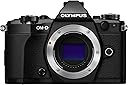
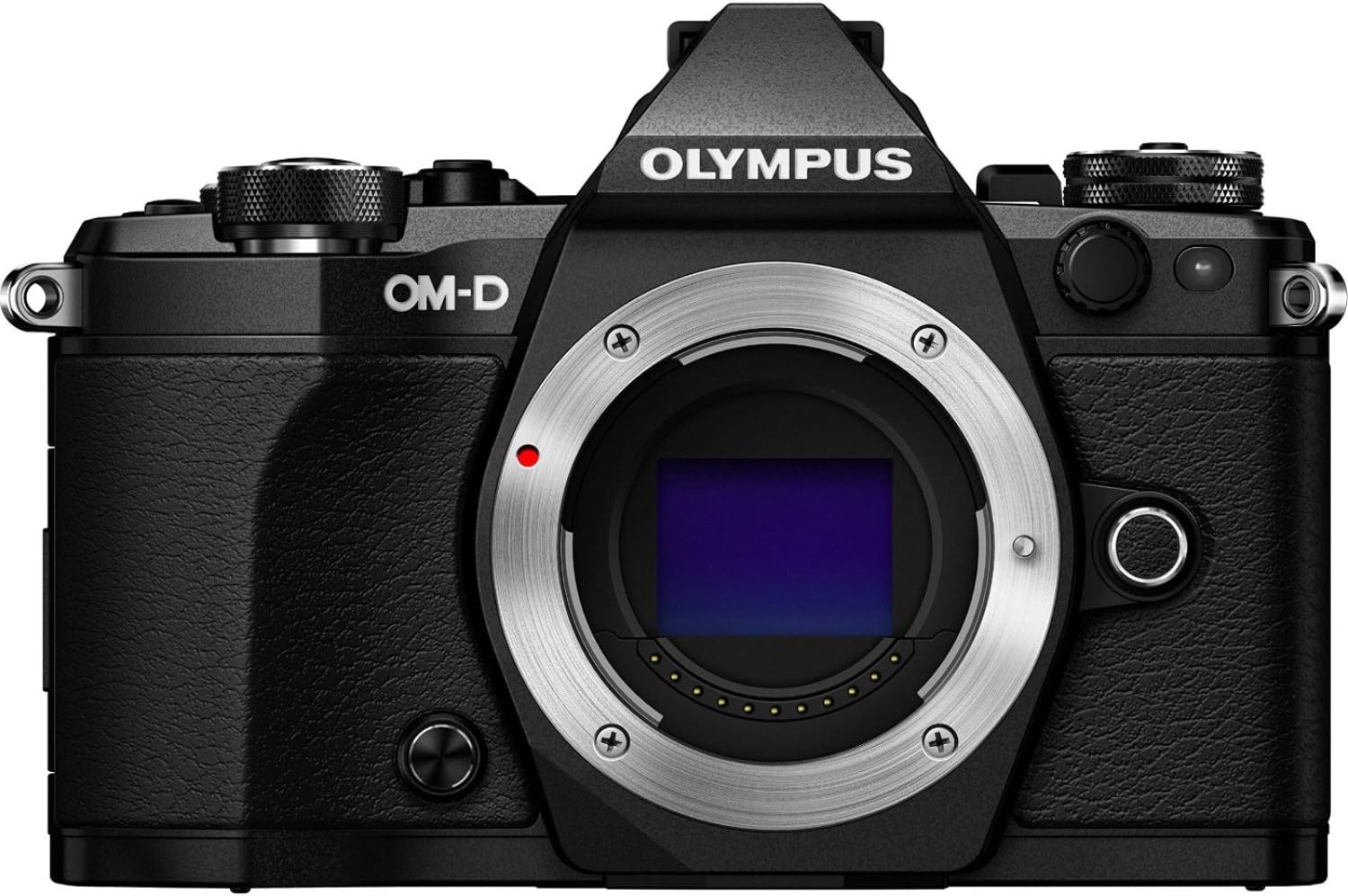
📷 Elevate your craft with the OM-D E-M5 Mark II — where pro-grade precision meets unstoppable portability.
The OM SYSTEM Olympus OM-D E-M5 Mark II is a compact, weather-sealed mirrorless camera featuring a powerful 5-axis voice coil motor image stabilization system, a 16MP Live MOS sensor with a 40MP high-resolution shot mode, and 10 fps continuous shooting. Its durable magnesium alloy body is splashproof, dustproof, and freezeproof, making it ideal for professionals and enthusiasts who demand high image quality, speed, and reliability in a portable form factor. With a large 2.35 million dot electronic viewfinder, built-in Wi-Fi, and extensive customization options, it’s designed for creative control and seamless connectivity on the go.


| ASIN | B00S6DBM2S |
| Aperture modes | F2.8-F5.6 |
| Are Batteries Included | Yes |
| Aspect Ratio | Unknown |
| Auto Focus Technology | Center, Continuous, Contrast Detection, Face Detection, Live View, Multi-area, Selective single-point, Single, Touch, Tracking |
| Autofocus | Yes |
| Autofocus Points | 81 |
| Best Sellers Rank | #89,017 in Electronics ( See Top 100 in Electronics ) #822 in Digital Point & Shoot Cameras |
| Brand | OM SYSTEM |
| Built-In Media | Camera Body Only |
| Camera Flash | Built-In |
| Color | Black |
| Compatible Devices | Wi-Fi enabled devices and those using SD/SDHC/SDXC storage media |
| Compatible Mountings | Micro Four Thirds |
| Connectivity Technology | Wi-Fi |
| Continuous Shooting | 10 |
| Crop Mode | 4:3 |
| Customer Reviews | 4.6 out of 5 stars 223 Reviews |
| Digital Scene Transition | false |
| Digital-Still | No |
| Display Fixture Type | Articulating |
| Display Maximum Resolution | 1920 x 1080 |
| Display Resolution Maximum | 1037000 |
| Display Type | LCD |
| Dots Per Screen | 1037000 |
| Effective Still Resolution | 16 MP |
| Expanded ISO Minimum | 100 |
| Exposure Control | Aperture priority, Automatic, Program, Shutter priority |
| File Format | JPEG (Exif v2.3), Raw (Olympus ORF format), MPO (3D) |
| Flash Memory Bus Interface Type | UHS-I |
| Flash Memory Type | SDXC |
| Flash Sync Speed | 1/250 sec |
| Focus Features | Contrast detection |
| Focus Mode | Continuous-Servo AF (AF-C) |
| Focus Type | Manual Focus |
| Form Factor | SLR-style-mirrorless |
| Generation | 2 |
| Global Trade Identification Number | 00050332189188, 04545350048280 |
| HDMI Type | Type D Micro HDMI |
| Hardware Interface | AV Port |
| Has Color Screen | No |
| Image Capture Type | Video |
| Image Stabilization | Sensor-shift |
| Image stabilization | Sensor-shift |
| Item Weight | 1 Pounds |
| JPEG Quality Level | Basic, Fine, Normal |
| Lens Type | body-only |
| Manufacturer | Olympus |
| Manufacturer Part Number | V207040BU000 |
| Maximum Aperture | 3.5 Millimeters |
| Maximum Shutter Speed | 1/16000 Seconds |
| Metering Methods | Multi, Center-weighted, Spot |
| Minimum Shutter Speed | 60 seconds |
| Model Name | Olympus OM-D E-M5 Mark II |
| Model Number | V207040BU000 |
| Model Series | OM-D E-M5 |
| Movie Mode | Yes |
| Night vision | No |
| Number of Diaphragm Blades | 9 |
| Optical Zoom | 1 x |
| Photo Sensor Resolution | 16 MP |
| Photo Sensor Size | Micro Four Thirds 4/3 - inch |
| Photo Sensor Technology | MOS |
| Real Angle Of View | 47.1 Degrees |
| Remote Included | No |
| Screen Size | 3 Inches |
| Sensor Type | MOS |
| Series Number | 2 |
| Shooting Modes | Aperture Priority, Automatic, Shutter Priority |
| Skill Level | Amateur |
| Special Feature | Portable |
| Specific Uses For Product | Sports Photography, Landscape Photography, Low-Light Conditions |
| Supported File Format | JPEG (Exif v2.3), Raw (Olympus ORF format), MPO (3D) |
| Supported Image Format | Micro Four Thirds |
| Total Still Resolution | 16 MP |
| Total USB 2.0 Ports | 1 |
| Total USB Ports | 1 |
| Total Video Out Ports | 1 |
| Touch Screen Type | Yes |
| UPC | 050332189188 |
| Unit Count | 1.0 Count |
| Video Capture Format | FHD |
| Video Resolution | FHD 1080p |
| Viewfinder | Electronic |
| Viewfinder Magnification | 1.48x |
| Warranty Description | 1 year coverage for labor, 1 year coverage for parts |
| White Balance Settings | Auto, Cloudy, Daylight, Flash torch |
| Wireless Technology | Wi-Fi |
| Zoom | Optical Zoom |
S**N
Great camera and would highly recommend!
Let me just start off by saying: I LOVE this little camera! As a disclaimer, I am new to mirrorless camera / enthusiast-level photography but I have spent hundreds of hours researching cameras over the last 6 months. I almost purchased a Nikon d5500 before finally settling on buying this camera in black with the Olympups 14-42 EZ with the LC-37C lens cap and the Olympus 40-150mm. I also ended up buying the Olympus 25mm f1.8 prime a month or so later. One of my main priorities in a interchangeable lens camera system was compactness and portability, and this camera fit the bill perfectly. Having had a chance to use it for 2-3 months now, and continuing my research of the competition, I feel pretty confident in my evaluation of the pros and cons of this camera. I will just hit on the standout points that helped me decide to buy this camera, and leave the more exhaustive reviews to the professionals: Pros: - Size: Like I said above, this size of this camera was a big deciding factor for me. I wanted something small and portable that I could take with me on all my vacations, including tropical / hot places, and not feel like I was about to die lugging this beast of a camera with me everywhere. As part of researching which camera to buy, I borrowed my buddy's Canon t5i on a trip my girlfriend and I took down the Pacific Coast Highway, and we just didn't love the added bulk that the body and three extra lenses added to our trip (and that camera isn't even that big compared to some DSLRs!). This camera hit the sweet spot offering good image quality, a good lens selection, portability, and quality. - Build quality: I absolutely love the build quality of this camera. This is a huge pro in my book. It is a magnesium-alloy metal body, and it feels very solid and durable in my opinion. In researching, I also tested the Sony a6000, which is plastic, and the metal build of the Olympus feels 10x better than the a6000. I realize there is a significant price difference, but in my opinion paying a little bit more for a camera with much better construction is worth it. You get what you pay for. - Lens selection: If you're looking at this camera, you probably already know that the m4/3 camera system offers the best native lens selection of any mirrorless camera system. Obviously, many systems make use of adapters to extend the compatability of lenses, but most of those solutions are clunky and not optimal. So far, in my experience, lenses have been high quality yet with reasonable prices. If you're looking for a system that you can grow into that won't break the bank, m4/3 will do the job for you. - Customization: This camera is extremely customizable. Ever single button on the camera can be repurposed from the default settings. You can even set different user profiles and change between them at a flick of the switch. Cons: - User Interface has a little bit of a learning curve: The menu system / user interface of this camera is definitely not the most intuitive. For experienced photographers, this probably won't be much of a problem, but for someone like me, that is just learning the basics of photography and interchangeable lens camera systems, it was definitely intimidating. The screen kept shutting off randomly, I couldn't figure out how to easily switch between auto and manual focus, and changing certain settings required diving into complex menus, etc. In using my friend's Canon t5i I initially found that I preferred the Canon user interface. However, watching a few youtube videos helped a lot, and now I actually prefer the Olympus menu system for the amount of customization that it contains. - Price: This camera definitely is a little more pricey than its competitors. If you're looking for absolutely best bang for your buck, I would say look elsewhere (Sony a6000, Nikon d3300, Nikon d5500 would be my top picks ATM). However, for me, there were a lot of factors that went into my decision besides price. Overall, I am very happy with my purchase of this camera, and would definitely recommend it to someone who is looking for a balanced, lightweight, portable camera.
M**A
What the Olympus E-M5II does for me
After 50 years of photography from amateur to part-time pro, I have come to judge camera gear for what it can do for me. Outdoors, I photograph landscapes, cityscapes, flowers, and birds. At home, in my little indoor studio, I do some fine art studies and small product photography. I also do my own fine art printing up to 16x24". This year I did the impossible: I gave up my Pentax APS-C system and moved definitively to the micro 4/3. I now work with two E-M10's, one E-M5II and a good selection of Olympus and Panasonic lenses. I find the E-M5II to be an amazing tool for every aspect of my photography. EVF and LCD: coming from film SLR's, I am used to some beautiful pentaprism finders. The E-M5II EVF is very large and clear, it adapts to the brightness of the subject and, with its main camera settings display, it allows me to keep shooting and reset the camera without taking my eye off it especially with dynamic subjects. The LCD is beautiful, sharp and fully articulated. I regularly photograph close to the ground (i.e.: small plants) where this feature is a God-send. Even in the studio this is very handy. The Super Control Panel is visible on both the EVF and LCD and is very functional. Sensor: its IQ can compete with many APS-C camera sensors. Shooting Raw and developing in Camera Raw or (even better) DxO Optics Pro, noise is not an issue up to ISO1600 (my max ISO setting). 16Mp are enough for what I do. Even cropping down to 12Mp, I can upsize my files with Perfect Resize up to 800% without visible loss of quality. This gives me a 96Mp or 8485 x 11313 pixel file that I can print up to 28x37" at 300dpi. For static subjects and some other creative use, the High Res Shot produces moiré-free files with amazing detail, color fidelity and low noise which could be enlarged even further. I did test this feature and can assure you that it's real and mind-boggling. Image stabilization: it's simply the best on the market. The control is so fine that allows for a 5 f/stops stability gain and for the High Res Shot feature. Exposure: the EM5II has some of the best exposure metering in the business. Unique features include Live Time that allows you to monitor the brightness buildup of dark scenes and stop exposure when you like it, and Live Comp which is ideal for creative night scenes including fireworks, car lights and star trails. Autofocus: the S-AF is very fast and assertive. C-AF and Tracking could be better. I had to learn to manage the latter and help it latch onto the desired subject (difficult to explain here). I photograph mostly shore birds with the Pana 100-300mm zoom and find that personal technique is truly paramount. Some of the best action happens at take off and landing, events that I can predict. Here S-AF works just fine and lets me shoot sequences at 10fps. For total depth of field in macro photography I use the excellent Olympus 60mm macro often with focus stacking. I take multiple frames focusing from the front of the subject to the back and a number of intermediate steps. I import the frames as layers in Photoshop in a single file, apply Auto Align and Auto Blend and Photoshop creates a single frame with all the sharpest parts of the multiple frames (magic). Ergonomics: the camera is a pleasure to handle. It's small and relatively light but, at the same time, built like a small tank. It fits well in my medium-size male hands and the many controls are well placed. Some people complain that longer lenses unbalance the camera but I disagree. With telephoto lenses, I let the camera sit in my left hand at the zoom ring and this makes the whole system even more stable than with smaller lenses. Weather sealing: with all my shooting in heavy weather, so far I have had only one non-weatherized camera failure. Nevertheless, when I take expensive (for me) trips to places that I will see only once in my lifetime, a few hundred dollars more for weatherized equipment is a lot of peace of mind. To achieve effective weatherization, gear must be built with fine materials and tight tolerances. (added on 100715: I took the fisherman's pic at Montauk Point, Long Island, in 50mph wind gusts and a recurrent fine seawater spray. Once back at home, I washed the EM5II and 12-40mm f/2.8 lens with a sponge and that was it). Learning curve: I am an electronic engineer with a ton of photographic experience nevertheless it took me some time to learn this camera and its software (Raw High Res Shots can only be developed in Olympus Viewer 3). You can set the camera to auto and let it roll but people who want to use its advanced features should be aware of its complexity. You do have to read the manual cover to cover and, probably, do some additional research on the web. Then for some time you have to experiment with the camera in real life to get acquainted with its multiple features and controls. I happen to love this learning phase but some people could find it overwhelming. I would strongly recommend using Myset (1 through 4) to record your favorite settings for different shooting situations. This allows you to recover from any accidental camera resetting in a few seconds. Others: the camera grip (sold separately) is a useful accessory. It adds a deeper grip and a second battery, and can take an AC adapter which is great in the studio. Conclusion: I find that for my kind of photography the E-M5II is overall hard to beat. The excellent selection of lenses is another decisive factor to buy into the M43 system. I use the slower but minuscule lenses for maximum portability and the brighter Pro models for max IQ. I am attaching two studio pictures of one of my wife's jewelry creations. The first one is a typical Raw developed in Camera Raw with some sharpening, the second is a High Res Shot straight out of Olympus Viewer 3. 020116: Considering the little money that I could get for the Pentax K5 I decided to keep it but since I got the Olympus bodies I have used it very little. In a medium size and very comfortable sling bag I can fit my EM5II and EM10II with short and medium zooms on them and there is still room for additional glass (such as the 60mm macro).
C**.
Video is not bad at all! Substantially better than the Mark1.
I had the EM5, and I loved that camera, but I did had some issues with the video it produced: It was very bad, with very disturbing compression artifacts (especially when panning or filming foliage) and was almost unusable. The stabilization and the lenses made it useful though, and the photographs where the best I've ever taken. And then came the MarkII. At first I was a bit disapointed to hear that the video quality wasn't much better, that the sensor was the same, and that it didn't had 4k. Then I went to a store, checked it out, and noticed some very welcome changes to the original: The viewfinder is substantially better than the Mark1, which is crucial for focusing manual lenses. It has Zebra stripes for focus assist! Better LCD Better built quality and more custom function buttons. But it wasn't enough to convince me to buy one. But then there was a 200 dollar discount, and I bought it. That's where I noticed how much better it is compared to the Mark1, in the aspects that I find relevant, especially video. The video quality is SUBSTANTIALLY better. No more ugly artifacts, at last it has 24p and 60fps, and my god what a HUGE difference it makes to shoot video with this camera over the original. That alone is totally worth it. I insist, this is substantially better video quality, and the stabilization is even better than before! Furthermore, you can't underestimate how relevant is for the camera to have at last... a microphone in and levels. It makes a huge difference, especially when hooked up with an external audio recorder. The High Res shot mode is really useful for me too. I take many photographs of static objects (art, mostly) and the resolution seems substantially higher. It's true, it is a pitty that it doesn't work for moving subjects... but honestly, 16 megapixels seems more than enough for me on that regard. Besides, there are not a lot of lenses that can resolve 40megapixels. The Olympus 12-40 Pro can, and I really recommend that one. But I'm focusing this review on the video. And I insist, it is substantially better than the original. The viewfinder, twistable lcd, audio levels and extra buttons (dedicated focus assist for manual lenses)... well, it feels almost like a proper film camera. Again, compared to the original! In this regard, don't expect it to produce video as nice as a GH4 or a Blackmagic Pocket. There are things missing here: The video doesn't have the best resolution in the world, the color profile is not Log (pleaaaase Olympus! make that happen!), but you can make a "flatish" profile that might help, and which is pretty gradable with some planning. In summary, this is a phenomenal photo camera, that now shoots great video that is color gradable, and shows no compression artifacts. It's still primarily a photo camera, but now it is a very capable film tool. update: I can't believe I forgot to mention the timelapse function! that's such a fantastic addition!
N**T
Fantastic camera that's a bit overpriced in 2017.
This camera is pretty fantastic-- with a couple of exceptions. The biggest exception is the price. If you're buying new, this camera is more expensive than it should be in 2017. But, it also does things that you can't get for cheaper. I mostly do product photography, so the 40MP high res mode was the biggest draw of this camera. It's limited, obviously, but for still life stuff, it's the cheapest way to get that sort of resolution right out of the camera (that I know of). More generally, the viewfinder is big and awesome. The autofocus is very fast in S-AF. Continuous auto focus works, but it's not great. I've gotten some OK shots of my dog running with it, but I'm not the best person to test that function. It doesn't seem very fast, though. The build is super solid. It's too small to feel like a tank, but it's heavier than my E-M10 mark I, but not really appreciably bigger. The screen is crisp and bright and usable in sunlight, but the bezels around it are pretty big. I feel like the screen could be bigger pretty easily, but everything at this level has the same size screen. The controls are where this camera shines. I didn't like the dials at first, because they weren't as clicky and positive as my E-M10, but after using it a big, the E-M10 felt too stiff and somewhat flimsy in comparison. The position of the dials is perfect, and all of the buttons feel solid. The buttons can feel a touch cramped, but they did a good job making it easy to tell which button you're touching by feel. The result is that you don't have to take your eye off of the viewfinder much. The controls are also absurdly customizable. There are 8 customizable buttons (if you include the d pad buttons) plus the little lever switch. Image quality is great. It's a bit behind the best APS-C cameras, but the insane image stabilization makes up for it somewhat. I can't stress enough how good this image stabilization is. The video is solid for 1080P. Again, the image stabilization works wonders here. Video is still a bit of an afterthought for Olympus, so you shouldn't expect best-in-class. The only major complain I have is that there's apparently no way to turn off the screen while leaving the eye sensor on, which would help the battery life a lot. You can assign a button to switch between the LCD and the EVF, but it would be nice if both could be off until you hit a button or put your eye to the viewfinder. I suppose "major complaint' is a bit of an overstatement, but it seems like a weird omission, unless I just haven't found the right setting. The battery life isn't great, like most mirrorless cameras.
R**I
E-M5 mkii vs E-M1
Well, I own both this camera and the E-M1, and for different reasons. I don't see any other reviews comparing the two so I will try my hand at it. The bottom line up front: I've owned the E-M1 for a year now and I love it as a daily shooting camera in the field because of superior ergonomics. The E-M5 mkii makes a great tripod and studio camera and can be useful for other specific shooting situations with its various features. Ergonomics: Simply put, the ergonomics of the E-M5 mkii are quite a bit behind the E-M1. The grip is insubstantial and if you're going to put the M.Zuiko Pro 40-150mm f/2.8 lens on the E-M5 mkii you NEED the battery grip. It's not even an option. Expect to pay an extra $200 over the base price for the grip. That being said, with the extended grip, ergonomic differences between the two cameras vanish almost entirely. Almost. My only other gripe is that the E-M5 mkii only has a single front programmable button vs the E-M1's two. This might not be a big deal for you, but for me, I like having my magnification and focus peaking right up there where I can access it quickly on the E-M1. On the E-M5 mkii I have to use the AEL/AFL (Fn1) button for peaking instead. I prefer the shutter button on the E-M5 mkii which has a solid half-press to focus and then a full press that bottoms out quickly for shutter release. The E-M1 has a floating switch that activates somewhere in the middle for autofocus and then releases the shutter very shortly after that. It's easy to accidentally snap a picture when you just wanted to lock focus on the E-M1. Functionality: I couldn't tell any specific differences between the EVFs, visually. The IBIS on the E-M5 mkii beats out the E-M1 by a hair with the lenses I use (mostly Noktons.) Manual focusing is pretty easy with both bodies, but I find that the focus peaking on the E-M5 mkii shows a lot more "noise" in the scene that is very distracting vs the E-M1 which tends to really just highlight what's in focus and nothing else. Continuous autofocus on both bodies is useless. Don't bother with it. That's not why you want these cameras. S-AF speed varies with the lens, the fastest being the M.Zuiko Pro 12-40mm f/2.8 and the slowest being the 60mm Macro f/2.8 but the lenses generally perform equally on each body with the same lighting conditions. Anti-shock shutter and electronic shutter on the E-M5 mkii make this body a superior street camera (anti-shock is super quiet, electronic is actually silent) but beware rolling shutter while using the electronic shutter. The buffers on both cameras run out very quickly, however the E-M5 mkii will recover faster than the E-M1 with the new SDXC UHS-II cards (worth it if you're shooting multiple bursts or high-res shots.) The battery meter on the E-M5 mkii tends to be full until it's not full vs the E-M1 which will actually show gradual battery discharge state. Image Quality: In normal shooting, I can't say there's a huge difference between the two. Noise quality seems the same, and I tested this doing astrophotography at ISO 2000 with both cameras on the same night shooting the same subject (Milky Way.) The E-M5 mkii's high res shot makes an insane difference, however. If you shoot still lifes or do macros or any other sort of controlled studio work I highly recommend it. It is even easy to configure high res shots with flash sync. Lightroom tends to claim your high res files are not actually photos, but I'm sure this will be addressed eventually. Any subject movement will create very noticeable artifacts at 1:1 viewing. Nitpicks: The eyecup on the E-M5 mkii is just... awful. It falls off. Constantly. And you can't buy a replacement from getolympus yet! I already lost mine after 2-ish months. No such issue on the E-M1. The paint finish on the black E-M1 scratches off and flakes everywhere. It's not especially bothersome to me, but it might be to others. Conclusion: I like the OM-D system a lot. :) At the end of the day, either body gets the job done and that's all I care about. I have been using the E-M5 mkii as my primary studio body and the E-M1 as a backup and field body. If I plan to shoot candids or street I would consider taking the E-M5 mkii because of the various (quiet) shutter options.
T**E
Two Cameras in One: Compact, but Expandable Jewel
Olympus OM-D E-M5 Mark II (Black) (Body Only) I have been using the OMD 5 Mark II for about six months. I am a long-time Micro Four-thirds user with a good collection of Olympus-Zuiko and Panasonic-Leica lenses. I currently also use a Panasonic GX 8 and LX100 as well as the Olympus Pen EP5. As there are numerous reviews already posted praising the virtues of the OMD 5 Mark II, I won’t try to repeat what has been said about the many fine features of the OMD 5 Mark II, but I will briefly explain why I prefer it over the OMD 1 and often reach for it over the Panasonic LX100. Although the OMD 1 is currently Olympus’ semi-pro flagship, the newer OMD 5 Mark II offers some refinements, but in a smaller, yet expandable, package. Like the OMD 1, it is weather resistant, has nearly the same critical specs with a solid feel and improved dials, as well as the excellent (but impractical, unless you like to carry tripods) sensor shift capability. But the primary reason I traded in my OMD 1 for the OMD 5 Mark II is because of the newer camera’s versatility. With optional expandable grip, it can accommodate larger pro lenses (such as the Olympus 12-40 mm f2.8 or the new 7-14 mm f2.8) with reasonably good balance. But when compactness is needed, its smaller body can be paired with pancake lenses or smaller primes that make for a very convenient light-weight, quality package. When I want to travel really light, I either go with the LX100 or the OMD 5 Mark II plus one or two small lenses (such as the Olympus 14-42 mm EZ or the Panasonic 20 mm f1.7 pancake). As much as I like the small and capable LX100, the OMD 5 Mark II isn’t that much larger and is the quality choice. For my purposes, the OMD 5 Mark II approximates the OMD 1 in balance when used with the optional grip (those with very large hands might not agree), but it can also be broken down into a nearly pocketable compact package that still produces high quality output, unless one is really into video—for that the Panasonic GX 8 with 4K is preferable over all of the current OMDs. If you choose the OMD 5 Mark II, definitely add the optional Olympus grip if you have any of the larger pro lenses.
J**H
Great evolution of the M 4/3 system.
I have a Nikon D750 and an Olympus micro 4/3 EPL-5 (and quite a few older cameras, from a screw mount Leica, Olympus OM1 and OM2, Nikon D70, and many Canon P&S cameras). The OM-D E-M5 II is the best handling camera I own and produces images that are so close to the D750 in all but poor light that the size, convince, and handling, the OM-D is the camera I now use 80% or more of the time for everyday (family, street, local landscapes etc.). I mostly use it with the Pany 20mm and Pany 14mm. I haven't done any rigorous tests between the Pany 40-150 with the OM-D and the Nikor 28-300 VR I use as a tele on the D750, but the 5-axis in body stabilization on the OM-D seems at least as good, if not better than the in-lens Nikor stabilization. For video it's hands down the OM-D. Neither does 4K, and to do video on the Nikon you have to go into LiveView using the LCD. Only the OM-D you just start recording while using the same viewfinder. (the only time I use the external LCD is to get low or high shots). Focusing on the D750 is far better. Low light performance on the D750 is far better. Raw image quality on the D750 is better. But Olympus has a killer jpeg engine. I mostly shoot raw+jpeg on both (when taking single photographs) and I rarely use the RAW file from the Olympus. The OM-D feels much more like my OM-1 or Leica IIIf in my hand than the D750 so there is a comfort bias. The OM-D is so customizable it takes considerable effort to get it set up the way you want it, but the in-viewfinder (and LCD if your using it) Super Control panel is much more direct than switching the same amount of settings on the D750. In the end it's my favorite camera. But for a take almost anywhere camera (you can palm it from the back so it's almost unseen if your using a pancake lens) it's either amazingly customizable or overly complicated. For most people who just want great photographs in all lighting conditions, don't want to spend time learning complex, customizable controls, and just want a single zoom lens, a Nikon D3300 is a better choice.
G**T
An Absolute Joy to Use
I was looking to change things up from my old D3100. Initially I figured full frame was the way to go for an upgrade on account of what so may blogs, videos, influencers, and forums had said; much to my suprise, I ended up heading in almost the exact opposite direction when it comes to camera philosophy, and I couldn't be happier about it. Taking my time, I decided to list out what I was looking for in a camera. I have always been rather inspired with the work of Edward Weston and other members of f.64, therefore I decided that seeking out extremely shallow depth of field was not important. I had been very much enjoying shooting on an old Canon AE-1, particularly the form factor and portability of that system. I don't shoot billboard campaigns or crop my photos excessively, therefore I had no need for extra high resolution. I also don't find myself shooting weddings or action in low light very often, so high ISO performance fell off as a need. Against all odds, this list of requirements lined up pretty well with the Micro 4/3 landscape. After more research and refining of my list of needs/wants, it came down to either an E-M5 II or an E-M10 III. The weather sealing and hi-res shot mode on the E-M5 ultimately swung my decision. I paired it with the Panasonic 25mm 1.7 and the Olympus 40-150mm and haven't looked back! I recently took my kit on a trip to the Channel Islands and it performed superbly. Very compact and easy to hike around with while simultaneously delivering great images. As a bonus, I was able to pick up an adapter to use my old Canon FD lenses with my Olympus, which works surprisingly well. The only niggle I have with the camera is that it tends to go through batteries quicker than I am normally used to. All things considered, I must say that the demise of Micro 4/3 had been greatly exaggerated. This is a great little camera which is a true pleasure to use; I am never getting rid of it and I believe that it will someday be considered a seminal example of early mirrorless cameras. Well done Olympus!
S**Z
Maravillosa
Me encanto, es una maravilla. Esta cámara no me pide nada a Sony de misma gama.
E**D
Replaced my Canon DSLR
This is an amazing piece of tech. I am amazed by the sized, clarity and colors made by this camera. As a family person and a photo hobbyist, this became my go to camera to a point that I had to sell my DSLR. Positives: 1. Size and weight. If you want a camera to be with you all the time. This will be the camera your looking for. Size, weight and weather sealing. Not to mention the retro look. 2. ISO and color rendition. Even at 1600 ISO the images are usuable . Colors just pops out and renders wonderfully. 3. Lenses. Or more specifically prices of lenses. For most photos, the lenses makes the difference on how intimate or how crisp and clear your images are. With a lot of selections for the MFT line and a very consumer friendly price, this camera wins in lens price with quality. Negatives: 1. High default ISO. Not really a big negative since the ISO noise is clean but coming from a DSLR mind frame, this annoys me always. 2. Low megapixels at 16 only. I always crop in my photos and this somehow limits me. However it encourages me to frame my subject well... So a positive negative? 3. 10bit raw? Really? I don't understand that it's not 16 bit. It's just 2 bit better than jpeg. Although it gives me good control over the raw files, I still find that I hit the wall faster than editing a native 16bit format Overall a great camera. If your a hobbyist and would love to take your camera everytime everywhere at any situation, then this is your go to camera. If you have a family and want to take that next level of family photos, This is your camera. If you love street photography, this is your camera. Granted there are better cameras out there but for the price and size... This one for me, for now is the best one that suits my needs.
J**Y
Amazing "Little" Camera
I have had a couple of hours with this Camera as I just received it last night. I am amazed by this "little" Camera. It is a beauty both in terms of looks as well as performance. I have tried shooting in most modes with the exception of manual mode - and the images are really great and tack sharp. I have a Panasonic Lumix Vario G 14 - 45 mm lens attached to this camera while I am waiting for my Olympus 25 mm f1.8 lens to arrive. I am an amateur photographer who is moving from a full frame Canon 6D to this MFT model, and I must say that I am not disappointed at all. This is a great unit and coupled with the excellent choice of Pro-grade lenses that are available form Olympus & Panasonic, one can have a very good system for the cost of 1 full frame camera body. I bought it with the additional grip, and battery holder. The unit comes with a small and cute clip on Olympus flash unit which is quite adequate for most indoor work.
T**M
Great feature filled mirrorless option
Loving this camera - a great change of pace from my larger T3i. You really feel the size difference moving to the mirrorless system. Feels well built in hand - no flimsy or loose pieces, with a nice weight to it. Grip is a little small, but much improved over the Mark I. With all the extra features - built-in wifi, silent shutter, extra dials and function keys, I've been very happy with my decision to move off my Canon system and onto Olympus. Pair this with the Oly 12-40mm f2.8 pro, and you've got yourself a killer combo.
S**S
You can't go wrong with this camera!
Let me start with the reason I didn't give 5 Stars. The listing made no mention of this being a returned/refurbished item but the camera body I received had the “Warehouse Deals Inspected” sticker on the camera box indicating it was a returned or refurbished item, not brand new as I expected based on the listing. I contacted Amazon Customer service and they quickly offered me a solution I was happy with so I decided to keep the camera. While I'm satisfied with the solution and the camera is in like new condition (other then the box which was scratched up), it was disappointing to open a returned/refurbished item when I had ordered and paid for something brand new. I'm a hobbyist photographer with a few years experience. I own a Full Frame DSLR (Canon 6D) and until recently owned an Olympus OMD EM10 Mk2. I loved my OMD EM10 so it would have been the obvious choice to simply replace it with the same camera. But after much research of all the Mirrorless Camera options currently on the market my decision landed on the Olympus OMD EM5 Mk2. In my opinion this is currently the best value for the money in the mirrorless category and I have not been disappointed since receiving it. Included in the box was the Camera body, camera strap, charger, battery, clip on flash, manual, warranty card, set up CD (all pictured in the image I posted) Obviously this camera takes clear crisp photos but that can be said of most cameras on the market these days. The features that set this camera apart from the others for me are: Pros: Image stabilization that is the best of any mirrorless camera making it possible to take low light photos and smooth video without a tripod. 40 MP multi-exposure mode. Well built weatherproofed body. Articulating viewfinder (vs tilting viewfinder) External mic port (a must if you plan to record video with sound because the internal mic is poor quality). Cons: There are so many features on this camera it can take a little time to learn all the functions and get it set up in a way that works best for you. The short battery life (which I've discovered is especially short when using the included clip on flash that runs off the camera battery). This is easily solved with a couple extra batteries. One common love/hate comment about this camera is the small body size. Some love the small body size for obvious reasons but others with medium to large hands find it difficult to get a good grip. I found this is easily solved by purchasing a grip for it. There are several on the market and I found the Fotodiox Pro Metal Grip to be an excellent choice for me. (I'm a female with medium sized hands). Overall while I was disappointed initially with the fact I received a returned/refurbished camera body instead of brand new I'm thrilled with the quality and functionality of this camera!
Trustpilot
2 weeks ago
1 week ago