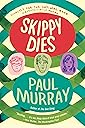
Skippy Dies: A Novel
Product ID: 14349962
🏆Multiple literary award nominations
📚700 pages of immersive storytelling
🇮🇪Authentic Dublin setting & cultural depth
Desertcart purchases this item on your behalf and handles shipping, customs, and support to EGYPT.
📖 Unlock the cult classic that’s rewriting coming-of-age—don’t miss the story everyone’s talking about!
Skippy Dies is a critically acclaimed, nearly 700-page novel by Paul Murray, shortlisted for major literary awards including the Booker Prize. Set in Dublin’s historic Seabrook College, it explores the tragic death of a teenager through a darkly comic and heartfelt narrative. The book delves into themes of adolescence, friendship, institutional failure, and Irish culture, making it a must-read for millennials seeking a profound yet entertaining literary experience.
| Best Sellers Rank | #114,211 in Books ( See Top 100 in Books ) #1,773 in Coming of Age Fiction (Books) #3,698 in Literary Fiction (Books) |
| Customer Reviews | 4.2 out of 5 stars 2,770 Reviews |
N**O
One of the best I've read this year.
If you're looking for a really good book to read, this is the one. Don't just add it to your TBR pile...go get a copy and read it. It's nearly 700 pages, but you won't even notice, especially if you buy it in the 3-box set. It is undoubtedly one of the funniest books I've ever read, but at the same time, quite poignant; it is a book that will at times tug at your heartstrings. The story begins in the first book, called "Hopeland," and continues through the next two books, "Heartland" and "Ghostland." In the very first scene at Ed's Doughnut House on a Friday evening in November, 14-year old Skippy, whose real name is Daniel Juster, is having a doughnut-eating race with his friend Ruprecht Van Doren, who boasts that he has not been beaten in "fifteen consecutive races." But something goes wrong and (this is not a spoiler) Skippy dies after leaving the words "Tell Lori" written in jam filling on the floor. And then the author takes his readers back to fall term at Seabrook College, the oldest Catholic boys' school in Ireland -- to find out exactly what brought things to this point. Skippy is a student who boards at Seabrook. Until just shortly before midterm, Skippy had been an excellent student, is on the school's swim team, and generally liked, but his grades have been falling recently. Skippy enjoys playing a video game called "Hopeland," a kind of mystic quest, which will increase in importance as the story goes on. He shares a room with Ruprecht, whose goal is to study at Stanford, and has a lab in the basement where he conducts experiments which he hopes will lead him to the secret origins of the universe. Skippy's other friends include Dennis, who is an "arch-cynic, whose very dreams are sadistic, hates the world and everything in it..." He also has Geoff, Niall and Mario as friends, although these characters (and many of the other boys around Skippy) are really less developed as characters than Ruprecht and Dennis. After thinking he sees a UFO one day, Skippy looks through Ruprecht's telescope and sees a girl throwing a Frisbee. This is Lori, a girl from St. Brigid's, a "smoking-hot" girl who immediately captures Skippy's attention. The problem is that another Seabrook boy, Barry, has become infatuated with Lori, and Barry is bad news. But this book is not just about the boys of Seabrook -- the school's faculty and staff are just as much a part of the story. One of the main characters is Howard Fallon, the school's history teacher, who himself graduated from Seabrook some ten years back, and is haunted by an episode from his past. There's Father Green, the French teacher, whose name the boys have translated into French as "Pere-vert". His calling, as he sees it, is to snuff out sin, but at the same time, he feels he must keep Skippy in a state of innocence. He has his own inner demons to deal with as well. Then there's Greg Costigan, the acting principal of Seabrook in the absence of Father Furlong, who has suffered a recent heart attack. Costigan is snarkily referred to as "the Automator," and believes that the Paraclete Order is on its last legs, and that the only solution is to modernize the school, with himself at the helm. He believes that Seabrook's history as the oldest Catholic boys' school is brandable -- and that the school's role is to prepare the students to "get up there on the world stage and duke it out with the best of them." He wants to roll with the times and represents progress in a very anti-traditionalist sort of way; he doesn't care that the boys actually learn anything, just that they pass their exams to continue Seabrook's reputation, come what may. The reputation of the school is everything and must remain so, no matter what. Fallon, on the other hand, begins to understand that history is something of value -- and that teaching others to care about the past may be just as important as throwing them into the competitive capitalist arena. Although Skippy Dies is often so funny you can't help but laugh out loud (for example, there's a scene where the boys' English teacher has just gone over the meaning of Robert Frost's "The Road Not Taken" and one of the kids takes his interpretation to a whole new level), the story is at times tragic and heartbreaking. It's a good look at how these teenagers understand and interpret themselves in the face of today's world (including sex and drug use) how they see adults, and how despair can cause loss of hope and yet for some, become a building experience. It's about the hold of memory on the human psyche and the importance of remembering. There are other themes at work as well -- including the socio-economic situation of modern Ireland and the role of the Catholic church in the face of all of the scandals that dog it -- making this very long book just fly by. I loved this book. Absolutely. It's extremely well written, although it does get bogged down a bit for a short time in the middle. But on the whole, it is most excellent. I have absolutely zero qualms about recommending it. It is so good you will not be able to stop reading it. I really hope it becomes a runaway bestseller.
M**R
Darkly comic, uplifting nihilism... that kind of thing.
Plenty of plot summaries already exist for this energetic tragicomedy set among the handful of boarders at a Dublin Catholic school - no need to write another recap of the huge cast of odd characters or the twisty road that takes them through the death of a classmate. Skippy Dies reads much shorter than its nearly 700 pages... Murray has a feel for pacing. More importantly, he has a strong sense of these early-teen boys - neither sympathetic nor damning, he captures their easy cruelty and flitting loyalties and ceaseless search for a sense of self. He reflects their casual drug abuse and hormone-fueled dramatic antics without commenting on them; they are, for the author and his characters, simply realities of adolescence. His judgment, then, is reserved for the adults who are unable or unwilling to shed that self-involvement. Without exception, these adults are deeply flawed - sometimes sympathetically so, but no less irredeemably. Paul Murray is a bit too on the nose when he digresses into World-War-I rantings about the betrayals of institutions and the unfairness of history, but the point remains: parents, teachers, governments and schools are plagued by their own self-involvement. In the end, this is a broadly cautionary tale: place no faith in assumed friendships or imposed leaders - both will betray you. For this heavy backdrop, however, Murray has a light touch. The teens' interactions are deft and charming, even when they are cruel. Skippy Dies is the finest kind of page-turner, one built of its own momentum and powered by compelling characters instead of artificial cliffhangers. Murray doesn't mock or satirize his characters, but he cloaks their darkness in daylight. He reminds us that of that moment where we each realized that teenage angst is universal, that we were both bullied and bullies, and that the insecurity we felt was the reflection of the insecurity we created in others. His Dublin can be lonely and can be funny, but mostly it is familiar.
T**O
The Book of the Century
The book of the century for me is Skippy Dies by the Irish Author, Paul Murray. (I am aware that the century is still young, but I am not, and so I have to get my vote in early.) The story takes place in the present at a small private school, Seabrook Academy, on the outskirts of Dublin. The school is run by the Paraclete Fathers, a dying community of missionary and teaching priests. As there are only a handful of aging and ailing priests left, the school is gradually being taken over by an ambitious lay administrator. The story revolves around a dozen students and an equal number of faculty and old boys. There are also two girls who get into the act, students at St. Bridgits, the sister academy which is tantalizingly close (just across a courtyard from the boys' dorm) but light years away. Murray's humor is everywhere. It's a kind of Bob and Ray humor that builds up comic tension in you but seldom lets you laugh out loud to relieve it. What's humorous here is half situational and half in the quirky characters you come to care about. Yet neither the situations nor the characters seem exaggerated. In spite of the humor, this book is dead serious. It's not alternately serious and funny; it's serious throughout, and its humor stems from the awfulness that creeps over you as the author reels you in. The book is upsetting and infuriating: you want to leap into the school and get involved yourself. The most striking feature of Murray's writing is the continual invention. The book is forever steering you off in a direction that you never saw coming, but only a few pages later you know it was simply inevitable. I'm not sure quite how the author pulls this off, but it happens again and again. For example, the book comes to a perfectly satisfying conclusion about halfway through, but there are still all those pages to go. And a hundred pages later you understand that the seemingly satisfying conclusion of the midpoint simply wouldn't have been up to the standard of this gifted writer. Toward the very end, Murray introduces the story of D Company of Dublin's Royal Fusiliers who fought in the First World War. Ireland was not directly involved in the war, but the Brits recruited there and raised a number of companies of volunteers. D Company was made up largely of Rugby players from the club system; they were joining in groups -- sometimes entire teams -- eager for adventure. The company was called the Dublin Pals. Though they expected to serve on the Western Front, they were shipped off to Gallipoli with less than two weeks of training, and there they were massacred along with the Australians and New Zealanders in one of Churchill's worst ever miscalculations. The few who came home arrived in the middle of the Risings, and instead of treating them as heroes the Irish thought them traitors. After all, they'd fought in the service of Britain. It's an upsetting story by itself; woven as it is into Skippy Dies it becomes something else entirely. I was intrigued enough about Paul Murray to track down and read his first book, An Evening of Long Goodbyes. That one was less obviously brilliant. It was amusing but only modestly engaging. . . until the very end. When I closed the book I concluded that I wasn't merely engaged but captivated. Again, I'm not sure how Murray had managed to get to me, but he did. I chanced upon an interview with Paul Murray published shortly after An Evening of Long Goodbyes was nominated for the Whitbread Prize, and it gave something of hint about his magic. He said that Joyce and Beckett were his first author/heroes, but that Irish writers who came after them were averse to taking risks. And he continued: "By 'risks' here, I think I mean humor. What I love about Beckett is that one minute he can be dealing with grand existential themes and the next minute someone's pants fall down . . . . I don't think a book ought to be limited to one genre, as comedy or tragedy or whatever. Without wanting to get too grand about it, that's not the way life works, is it? It doesn't divide itself up neatly into humorous part, tragic part - it's more blurred than that. When things seem outwardly perfect, we can find ourselves despairing, and conversely, when things seem at their absolute most hopeless and desolate, we can find ourselves laughing at the silliest joke." The story of Skippy Dies is hopeless and desolate and you'll find yourself chuckling all the way through it.
E**J
Thought-provoking with some elements of greatness
This book is exhausting, both emotionally and for your eyeballs. Although the story largely takes place within the narrow confines of a boys' Catholic school in Dublin, the breadth of the issues discussed is as wide as (and includes) the universe. The writing is insightful and the subject matter is interesting. However, the book was so densely packed with musings ranging from the origins of the universe to the nature of pop music that it just frayed around the edges a bit. A few of the threads in the book could have probably been trimmed to make it a tighter, more interesting read. The centerpiece of the story is Skippy, a teenaged boy attending the Catholic school, and I won't be spoiling anything when I mention that Skippy Dies. The bulk of the book describes the events leading up to his death, with a large cast of characters who seem to corner each possible Catholic schoolboy (nerd, ladies' man, rich kid) and faculty (boring old priest, returning alumnus, hot chick, possible molester) stereotype. This is not to say that these characters are not interesting, and, in some cases, provide some much-needed humor in the midst of what is unquestionably a grim tale. The biggest problem with the story is that at times, the plot gets crushed by its own weight. There is a lot going on, and it does not necessarily all tie together in the end. I finished this book a few days ago and wanted to let it marinate a bit before writing a review, because I could not decide if this was a modern classic and my initial impression of it being a bit over-done was just from reader fatigue. Ultimately, to me the book was between 3 and 4 stars, and fell to 3 stars for the long and rambling sections that I was hopeful would be tied together better. In the end, they were repetitive and just did not maintain my interest. Without question, Murray is an excellent writer and a deep thinker with a lot to say. In this book, there was just a bit too much of all of it.
J**D
Almost Amis
As Irish and entertaining as it is, SKIPPY DIES is missing something. Unlike the Irish renaissance novels of the nineties, SKIPPY is not short. Like them, however, it is elegantly written and full of language, scenes, action and ideas one savors. No reader would confuse this for a romance, nor the product of womanly skill. It's hard-edged and tough,yet aching with sentiment and naivete. For a while, as one begins to read, one is trembling with hope - "My God, this could be Kingsley Amis!" Alas,not quite "Lucky Jim" but certainly close. A cross-hatched story of life in an Irish Catholic boarding school, Murray is able to focus successfully on his entire cast of bravado-filled boys and would-be sluttish girls. And the tensions and viper ambition that fills the faculty lounge is very Amis and promising. So what is it in the end that keeps this from five stars? The lack of what so many recent Irish novels have presented to us so completely: a fully-rounded, sexy,motherly,confident and engaging female character on whom we depend for common sense, hilarity,tough questions,tea and sympathy. "Mam." Although in terms of class,"Mam" doesn't belong here, we still miss her or an approximation of her warmth and reality. It's a good read certainly,sometimes even better than that, but we are without the all-out Amis ferocity that combined with a woman's beating heart would have elevated this to the heavens. John Neufeld,author of EDGAR ALLAN, and LISA, BRIGHT AND DARK - both Kindled.
D**N
A candidate for my top book of 2010
I'm the product of an Irish Catholic boarding school for boys - I spent my high school years at a Franciscan boarding school about 25 miles north of Dublin. It was a formative, sometimes traumatic, experience. So I approached "Skippy Dies" with reservations, and a certain amount of trepidation. The defining characteristic of life in a boys' boarding school is tedium - would Paul Murray be able to capture the tedium accurately and still write an interesting book? Would reading it stir up a bunch of memories best left undisturbed? And could the book possibly live up to the considerable hype that it has generated? It turned out to be pretty amazing. Paul Murray does indeed get boarding school life down right - he completely nails it. His more significant accomplishment is to have written a book whose appeal transcends the specificity of its setting. "Skippy Dies" is a sprawling, ambitious doorstopper of a book, with an extensive cast of characters (jocks, nerds, priests, lay teachers, parents, drug dealers, psychopaths), not unlike a Dickens story. Fortunately, Murray has the skill to bring these assorted character to life and to tell a story that grabs and keeps the reader's interest. The main focus of the book is to present the events that led up to the death of 14 year old Skippy and to explore its effect on the school community. Along the way, Murray considers a huge variety of disparate themes, ranging from string theory to ancient Irish burial mounds to trench warfare in World War I. Not to mention the pervasive adolescent obsession with sex. At times it seems as if these are mere digressions in a book that's already quite hefty, but the author knows what he's about, and pulls the various threads of his tapestry together to a powerful and satisfying conclusion. With so many balls in the air, you keep expecting him to crash and burn, but he doesn't -- the writing is superb throughout, the story never flags, you don't want it to stop and are a little bit sad when it does. What do we ask of a good novel? A question with as many answers as readers. I take a slightly old-fashioned view. If an author can create a vividly imagined world, make me care about his characters, and tell a good story that moves me, then I'm a happy camper. Paul Murray does all of these things in this terrific book, and does them so brilliantly that the story transcends the specificity of its particular milieu. Some reviewers have suggested that the book is likely to appeal only to male readers - I couldn't disagree more. This is a terrific book - funny and moving, despite exploring some dark themes. The Man Booker judges should hang their heads in shame for their failure to include it on the 2010 shortlist.
K**Z
Wonderful..........
I had my eye on Skippy Dies for quite a bit after it was longlisted for the Man Booker Prize. It did not disappoint to say the least. Summarizing this book would likely prove futile, as there are so many facets to it that a brief synopsis would not really do it justice. A boy named Skippy serves as the thread that holds many disparate themes together-quantum physics, sexual abuse by the Catholic Church, drugs, education and educators, sex, Irish Folklore, celebrity worship, and anorexia are addressed in this sweeping novel. Skippy Dies is, essentially, the best written book regarding adolscence and coming-of-age that I have ever read. Forget about Catcher in the Rye, or Harry Potter, this book is full of tidbits that ring true to anyone who is well past such a tumultuous time in their lives. The character of Howard (a teacher at Seabrook-the school that Skippy attends) particularly stayed with me. Howard is 30 years old, extremely intelligent, involved in a relationship that can only be described as "stuck", and is constantly questioning how he got to his current situation in life. Howard used to work in finance as a futures trader but failed miserably. This is not the only thing he has "failed" at as his nickname to the children is "Howard the Coward". Howard resonated with me as I am also in my early 30's, wondering, just as Howard does, why there has not been more of a "narrative arc" to my life. Basically, the understanding that we all seem to come to (also known as a mid-life crisis) that yes, this IS all there is. Despite what your parents, teachers, TV, advertisements have told you, you, almost certainly, are just average in abilities. It is a sobering realization to come to, and I have never seen it more aptly described by any author. Murray doesn't mince words or sugar coat these issues, they are just the stark, raving truth of life and growing up. One criticism I initially had is that Murray is wonderful at portraying universal issues that we all have as humans, and of course phenomenal at addressing issues boys have, however, I did think his female characters were a bit thin at first. There were not many of them, so it seemed clear that he stuck to what he was best at, but the ones that did enter the story seemed to be caricatures. Lori at first seems particularly vapid (now, it is hard for me to say bc I do not think I was the typical teenage girl), so vapid that it is hard to imagine anyone like her existing. And then I remembered the times I had listened to teenage girls conversations and I thought-maybe this IS how most of them are. We do, however, get glimpses of Lori's depth and inner struggles at times (in fact she seems to become more aware as the story unfolds), which makes me think perhaps that Murray does indeed know how to draw female characters, but made a conscious decision to keep them on the periphery. All in all, an absolutely amazing book. A book that easily has entered the top 10 and will probably stay there indefinitely.
A**R
Captures today's youth perfectly
I taught junior high and high school students for more than 30 years, and this book's snapshot of today's youth in school is spot on. I have taught every single one of these kids somewhere in my past. The dialogue is vivid and accurate to the characters. Yes, the language is pretty strong, but it is the language kids speak. When it comes to the teachers in the book, well yes ... I have worked with every one of them sometime in the past. The author has the life of a fourteen year old and those around him down pat. Although long, it was a good read. The plot twists were appropriate and kept me turning the pages quickly. There were times when passages wandered a bit, but ultimately necessary. I read another Amazon reviewer who did not like the final third of the book, but I felt it was the strongest. The Kindle version was a bit expensive ... but even at this price I would recommend it.
D**Y
good but age stained
good
J**G
Good read
Great read. He tackles some fairly difficult issues with depth, warmth and humour.
K**L
Einfühlsamer, sehr komischer und trauriger Roman
Wie schon in seinem ersten Roman "An Evening of long Goodbyes" schafft es Paul Murray wieder, auf große Themen - Liebe, Tod, Freundschaft, Pubertät - sensibel einzugehen und gleichzeitig immer wieder sehr komisch zu sein. Der sprachliche Witz in Dialogen und drastisch-lakonischen Beschreibungen von Charakteren und Stimmungen ist ungewöhnlich gut. Dazu kommt dann sogar noch die schöne Aufmachung des Romans: drei unterschiedlich gestaltete Bücher in einem hübschen Schuber.
K**L
One of the most great books Ever!
I read Skippy Dies in four days. I couldn't stop. It's one of those books that grabs you from the first page and doesn't let go, even when you know what's coming. Especially when you know what's coming. It's a novel about a group of boys in an Irish boarding school. About Skippy, who is small, fragile, invisible. About Ruprecht, his roommate, a genius obsessed with parallel universes. About Dennis, the sharpest. About Lori, the girl everyone looks at and who doesn't know how to look at herself. It's funny. It's devastating. It's necessary. Murray writes with ingenious. He shows you the cruelty of teenagers without flinching, but also their tenderness. He shows you the violence of adults who should protect and don't, the silences that kill, the pills they take to calm what they can't name. What struck me most is how invisible Skippy is. He's there, in the middle of the classroom, and no one sees him. Not the teachers, not the parents, not the girl he loves. And when someone finally sees him, it's too late. That's the tragedy. Not that he dies, but that he dies without anyone having said: I see you. You're not alone. I would have loved to have friends like Ruprecht, Dennis, and Mario when I was fourteen. Friends who refuse to let the silence win. This book is a masterpiece. Read it.
O**N
Nil
Excellent
Trustpilot
4 days ago
2 months ago