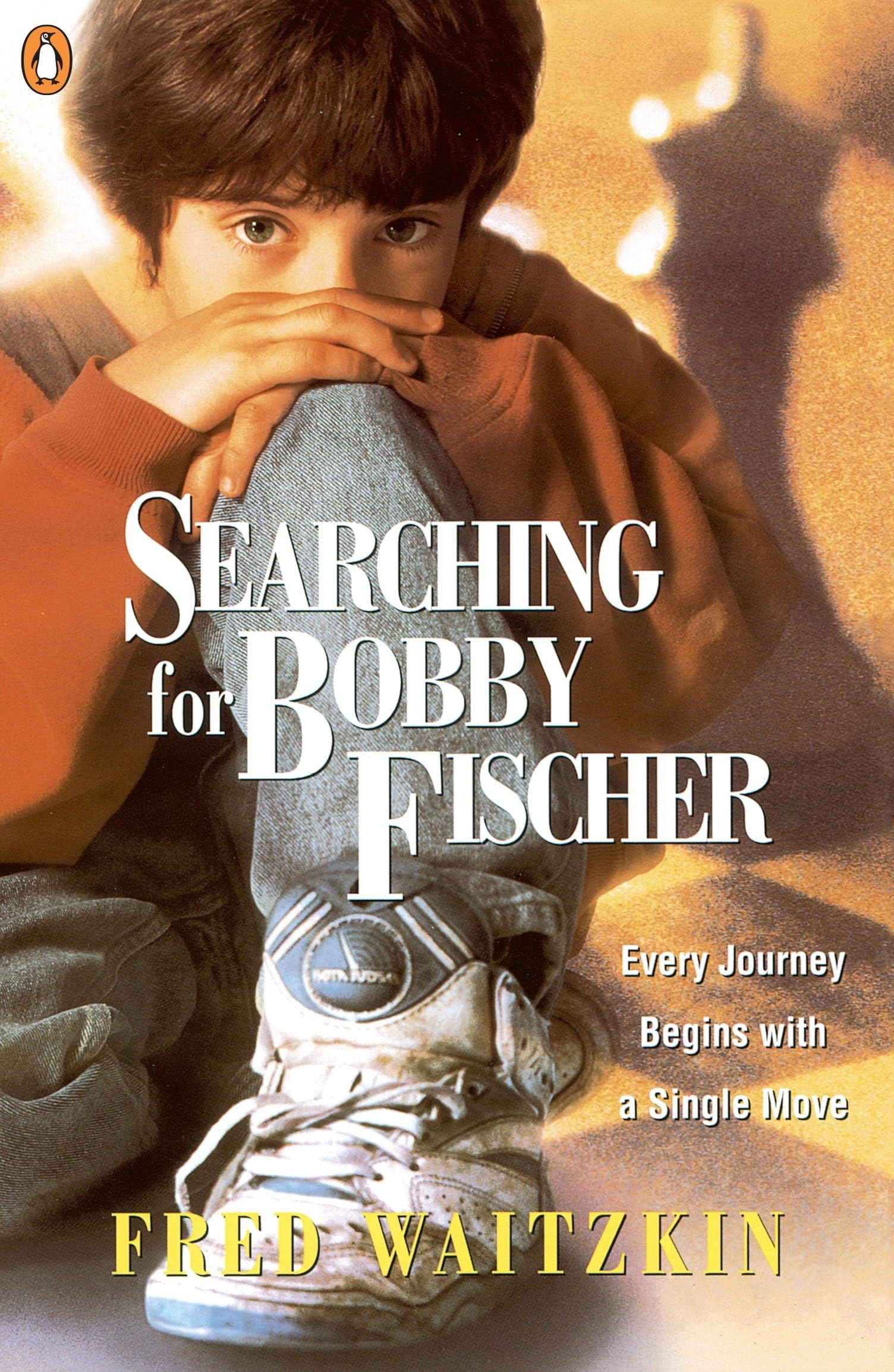
Searching for Bobby Fischer: The Father of a Prodigy Observes the World of Chess
Product ID: 20125010
Buy anything from 5,000+ international stores. One checkout price. No surprise fees. Join 2M+ shoppers on Desertcart.
Desertcart purchases this item on your behalf and handles shipping, customs, and support to EGYPT.
The father of a real american chess prodigy reflects on chess, competition, childhood, and his son's meteoric rise to the highest levels of global competition. “[A] little gem of a book.” — The New York Times Fred Waitzkin was smitten with chess during the historic Fischer-Spassky championship in 1972. When Fisher disappeared from public view, Waitzkin's interest waned—until his own son Josh emerged as a chess prodigy. Searching for Bobby Fischer is the story of Fred Waitzkin and his son, from the moment six-year-old Josh first sits down at a chessboard until he competes for the national championship. Drawn into the insular, international network of chess, they must also navigate the difficult waters of their own relationship. All the while, Waitzskin searches for the elusive Bobby Fischer, whose myth still dominates the chess world and profoundly affects Waitzkin’s dreams for his son. Review: Fantastic book to read before watching the movie.Thank you very much Adam Altman - This book was fantastic. Just like the movie I bought it for my son before I had him watch the movie. He enjoyed the book. Love the movie. It's a fantastic read, it draws you in. Thank you very much Adam Altman Review: Classic that's a Better Investment than "Bobby Fischer Teaches Chess" - I think it's fair to say this book has become a classic of sorts, as it has stood the test of time for over 30 years since it was first published. It's hard not to consider this as a companion to the movie -- which fixed some of the flaws in the book, believe it or not, while omitting some of the hardest-punching parts of it -- but I'll hold the comparison to the end of this review. As a standalone book, it still works well. The basic story is fairly well-known: a father discovers his son has both the talent and interest to become a true chess prodigy, and the two of them navigate the world of competitive scholastic chess as well as the pressures of the "chess establishment" to groom young Josh into the next Bobby Fischer. Along the way, Fred Waitzkin is fairly frank about his own misgivings and faults in the way chess takes over Josh's life, and the entire family's. Whether ultimately it's a healthy thing for the child or family or not is left up in the air; there is much to believe from the descriptions of other chess families that in many if not most cases, it is not. As such, this is as much a book about parenting as anything, especially interesting since it was published before Josh became US Junior champion -- on his ascendancy, as it were. Reading this now in conjunction with Josh's own book written as an adult, "The Art of Learning", provides interesting book ends on the experience. The latter book focuses on both Josh' youth chess career, from the player's perspective, and his later successful career in Tai Chi. There's a sort of zen center suggested by Josh that isn't entirely successful in that book, but you do come out with the feeling that in the end, for Josh, everything worked out OK for him as an adult -- but probably because he walked away from chess before he reached his theoretical peak, and tried a transposition, as it were, to a different kind of life. The book itself isn't framed around Fischer's biography quite as much as the movie's narrative voice over conceit, and the "Searching" part turns out not to be the Waitzkins' quest so much as shorthand for what the chess world -- and in some ways, America's go-it-alone, We-Are-the-Champions mindeset -- looks for when they see a talented young person. Why on earth would you want to *be* the next Bobby Fischer, though? This is a general question the chess world has to figure out. Fischer was a great talent, but in looking at Magnus and the current generation, probably not as unique a one as has been made out in the media. But he was also a horrible person and had untreated mental illness that being the perceived Greatest of All Time in an insular world probably exacerbated. He's not what I would consider a role model for anyone. What I do like about this book in re-reading it a few decades after it came out, having become a parent myself in the interim, is there's an elliptical answer: Searching for Bobby Fischer is like Waiting for Godot. When you step away from the quest unfinished, the quest is completed. Now, on to the comment I made above about the movie fixing some flaws with the book. Bear in mind any Hollywood film is going to fictionalize and stereotype things and smooth out the story, so isn't "true" the way a solid journalistic (albeit biased) account like Fred Waitzkin's book is. (Bruce Pandolfini definitely seems to have been painted in the movie quite differently from what I understand he's like in real life; in the book he appears more like the harried but endearing absent-minded professor, Ben Kingsley's portrayal and the script in the movie make him seem like a darker, frustrated genius living vicariously through his pupils.) The book is episodic, and there are times when attempting to join up the material is a bit of a stretch. In particular, the long parts where Fred and Josh go to Russia seem digressive, like Fred pasted together a couple of articles, and the movie just skipped over that entirely, to its benefit. But where the movie really gets it right is in simplifying but outlining the pressures the desire for your child to excel and reach their potential can put on living a normal family life, being an actual family and not a unit that exists to propel a child to a podium. It does this by adding in composite characters, monkeying with actual tournament outcomes, and mixing first person narration with the traditional dramatic scenes. It is a blessing to Fred's original text in that it streamlines the takeaways, if omitting the details. I do recommend the book still - as noted, I consider it a classic at this point - but just be aware it's a somewhat more meandering experience than the movie and doesn't have the neat loose ends tied up entirely. And if you have a child who's really good at something young -- it's really required reading in the parenting section, whether or not you have any interest in chess at all.
| Best Sellers Rank | #289,511 in Books ( See Top 100 in Books ) #85 in Chess (Books) #166 in Fatherhood (Books) #2,979 in Memoirs (Books) |
| Customer Reviews | 4.4 out of 5 stars 341 Reviews |
A**N
Fantastic book to read before watching the movie.Thank you very much Adam Altman
This book was fantastic. Just like the movie I bought it for my son before I had him watch the movie. He enjoyed the book. Love the movie. It's a fantastic read, it draws you in. Thank you very much Adam Altman
M**.
Classic that's a Better Investment than "Bobby Fischer Teaches Chess"
I think it's fair to say this book has become a classic of sorts, as it has stood the test of time for over 30 years since it was first published. It's hard not to consider this as a companion to the movie -- which fixed some of the flaws in the book, believe it or not, while omitting some of the hardest-punching parts of it -- but I'll hold the comparison to the end of this review. As a standalone book, it still works well. The basic story is fairly well-known: a father discovers his son has both the talent and interest to become a true chess prodigy, and the two of them navigate the world of competitive scholastic chess as well as the pressures of the "chess establishment" to groom young Josh into the next Bobby Fischer. Along the way, Fred Waitzkin is fairly frank about his own misgivings and faults in the way chess takes over Josh's life, and the entire family's. Whether ultimately it's a healthy thing for the child or family or not is left up in the air; there is much to believe from the descriptions of other chess families that in many if not most cases, it is not. As such, this is as much a book about parenting as anything, especially interesting since it was published before Josh became US Junior champion -- on his ascendancy, as it were. Reading this now in conjunction with Josh's own book written as an adult, "The Art of Learning", provides interesting book ends on the experience. The latter book focuses on both Josh' youth chess career, from the player's perspective, and his later successful career in Tai Chi. There's a sort of zen center suggested by Josh that isn't entirely successful in that book, but you do come out with the feeling that in the end, for Josh, everything worked out OK for him as an adult -- but probably because he walked away from chess before he reached his theoretical peak, and tried a transposition, as it were, to a different kind of life. The book itself isn't framed around Fischer's biography quite as much as the movie's narrative voice over conceit, and the "Searching" part turns out not to be the Waitzkins' quest so much as shorthand for what the chess world -- and in some ways, America's go-it-alone, We-Are-the-Champions mindeset -- looks for when they see a talented young person. Why on earth would you want to *be* the next Bobby Fischer, though? This is a general question the chess world has to figure out. Fischer was a great talent, but in looking at Magnus and the current generation, probably not as unique a one as has been made out in the media. But he was also a horrible person and had untreated mental illness that being the perceived Greatest of All Time in an insular world probably exacerbated. He's not what I would consider a role model for anyone. What I do like about this book in re-reading it a few decades after it came out, having become a parent myself in the interim, is there's an elliptical answer: Searching for Bobby Fischer is like Waiting for Godot. When you step away from the quest unfinished, the quest is completed. Now, on to the comment I made above about the movie fixing some flaws with the book. Bear in mind any Hollywood film is going to fictionalize and stereotype things and smooth out the story, so isn't "true" the way a solid journalistic (albeit biased) account like Fred Waitzkin's book is. (Bruce Pandolfini definitely seems to have been painted in the movie quite differently from what I understand he's like in real life; in the book he appears more like the harried but endearing absent-minded professor, Ben Kingsley's portrayal and the script in the movie make him seem like a darker, frustrated genius living vicariously through his pupils.) The book is episodic, and there are times when attempting to join up the material is a bit of a stretch. In particular, the long parts where Fred and Josh go to Russia seem digressive, like Fred pasted together a couple of articles, and the movie just skipped over that entirely, to its benefit. But where the movie really gets it right is in simplifying but outlining the pressures the desire for your child to excel and reach their potential can put on living a normal family life, being an actual family and not a unit that exists to propel a child to a podium. It does this by adding in composite characters, monkeying with actual tournament outcomes, and mixing first person narration with the traditional dramatic scenes. It is a blessing to Fred's original text in that it streamlines the takeaways, if omitting the details. I do recommend the book still - as noted, I consider it a classic at this point - but just be aware it's a somewhat more meandering experience than the movie and doesn't have the neat loose ends tied up entirely. And if you have a child who's really good at something young -- it's really required reading in the parenting section, whether or not you have any interest in chess at all.
R**Y
Story of Prodigy Josh Waitskin
If you're a chessnut like me, this is the story of Josh Waitskin in childhood who later became an International Chess Master as an adult. He actually later gave up chess and became a world champion at "Chinese Push Hands" and got a black belt in Brazilian Ju-Jitsu!!! A fascinating person.
E**E
Reigniting My Chess Obsession
This is an amazing little book, about a fathers love, and a boy's achievements in chess at a level will beyond his years. I will never play that well, but I can appreciate someone else's skills. Fred Waitzkin tells the good, the bad, and the ugly of the chess world, the minimal support in the US, the old Soviet system, and the shenanigans of chess parents. It's a more complex story than offered us by the film, but touched the great in the same way.
T**A
A humble story by a proud chess parent
This is a great and humble story by a proud and loving chess parent, Fred Waitzkin. As a captain of a local chess club and an active tournament player, I’ve seen many chess kids and parents. I have found some of my observations echoed here and though I’m not a chess parent myself, I’ll be recommending this book to the ones I know. The movie is also great but the book is so much better.
S**K
The Game Of Chess & All Its Players . . . .
Having no interest in chess, I got this book to read about how parents deal with a child considered to be a prodigy. Author Fred Waitzkin is very honest in this memoir about his relationship with his son, and how winning became incredibly important to him. (His wife was much more level-headed about the matter.) There was also some interesting information about those who play chess in parks in New York City; and about schools, tournaments and lessons for young children interested in chess. Josh Waitzkin was certainly a whiz-kid chess player, who played chess all the time, but he eventually gave it up, which I thought was good. It just seemed too strange how his father was so obsessed with chess, and how he kept pushing his young son, even when his son did not want to play. (Yes, his father had guilt about that.) A lot of the adult chess players talked about in the book were strange souls, too; the strangest being Bobby Fischer. But maybe to chess players and fans, it's not strange at all. To read this entire book, without skimming parts, you do need a very high interest in the game. If you do not have that, you can still read the parts that interest you; and learn some things about die-hard chess players; their friends, fans and families; and the games that they all play. (Note: I received a free e-copy of this book from NetGalley and the publisher.)
O**T
Great movie for chess playing grandson
Bought along with book to give to my 12-year old, chess playing grandson
J**H
Excellent
Really good read about a father grappling with his conscience regarding raising his small child using just a single focus in his life. And a backstory regarding the relationship between two world power countries at that time in history.
J**R
Perfeito.
Chegou com 7 dias de antecedência. Livro em perfeito estado e muito bem embrulhado. Perfeito!
L**Y
Fascinating
A great story and an interesting incite into the world of chess. A very enjoyable read with a thrilling ending.
R**I
A story of father and son... and chess
This was a wonderful read, though at times it did seem a bit of an anachronism, taking place in the mid-80s. The book was not nearly as much about chess or politics to me as it was about parenting. What kind of parent would allow, never mind encourage their child to enter the hugely stress-inducing world of master chess? The author discusses his struggles with this on several occasions in the book and it was the part that struck me as the core of their relationship. How do you encourage a gifted child to pursue their talent, knowing it would cause pain?
A**ー
英語版を読んでみたくて
翻訳版も持っていますが、英語版を読んでみたくなりました。英語でも非常にわかりやすいです。購入して良かったと思いました。
A**F
事実は小説より奇なり。
1972年、冷戦時代の代理戦争とも呼べるチェス世界チャンピオン決定戦。ボビー・フィッシャーが、ソ連のボリス・スパスキーを破りアメリカ中にチェス旋風を巻き起こした。物語が始まるのはその10年余のち。 フィッシャーの失踪とともにアメリカのチェス界が衰退の一途をたどる中、著者は息子のジョシュに類まれなチェスの才能を見出す――。 これはいわゆる自叙伝なのですが、小説としての体裁も整えつつ、ルポルタージュ色すら感じる作品です。息子や、息子を見守る自分に対しても常に一歩引いて、対象として淡々と描いていく筆致は当時のアメリカのチェスを取り巻く環境や、チェス大国ソ連の内情にまで及び、ただの親子のヒューマンドラマとは一味もふた味も違っています。陰謀渦巻く共産世界のあり様は一読の価値ありです。もちろん、神童の父親となってしまった著者の気持ちの変化なども興味深い。ラストシーンは実にカタルシスを感じました。 英語は難しい、というより、英語力はもちろんそれ以上に文化的背景の知識が相当要求されると感じました。著者のフレッド・ウェイツキンは雑誌のライターが本職で、ニューヨークタイムズなどで記事を書いておられるようなんですが、なるほど英語話者向けの新聞(タイムとか)読んでるようなかんじすらします。普通の日本人はまず知らないような固有名詞を使った比喩表現も多く、私はネットで調べながら読む羽目になりました。。。そのへんに自信がある方でないと気分良く読むのは難しいでしょう。とはいえ作品としてはとってもおもしろいです。上級者の方にはおすすめの一冊だと思います。
Trustpilot
1 week ago
1 month ago