We remain fully operational. Our teams are working around the clock to ensure your deliveries continue safely.

DOWNLOAD THE APP


Customer Services
Copyright © 2025 Desertcart Holdings Limited
DOWNLOAD THE APP
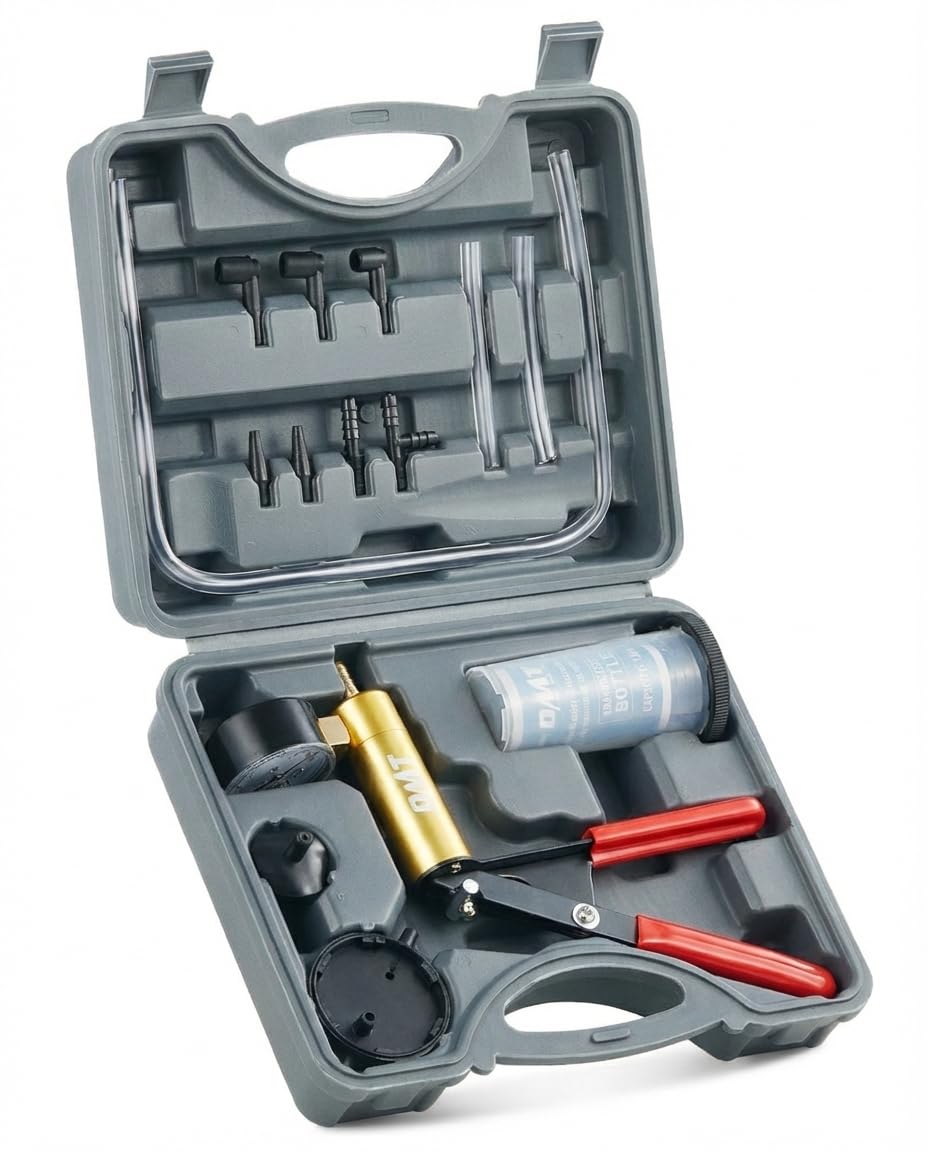
🚗 Master your ride’s hydraulics like a pro—fast, durable, and leakproof!
The Orion Motor Tech Brake Bleeder Kit features a durable anodized aluminum vacuum pump with universal adapters and premium silicone tubing, enabling fast, efficient bleeding of brakes, clutches, and other hydraulic systems. Designed for professionals and DIYers alike, it offers wide compatibility, leakproof performance, and convenient storage in a compact case.


| ASIN | B09JSJ76GT |
| Best Sellers Rank | #1,325 in Automotive ( See Top 100 in Automotive ) #2 in Brake System Bleeding Tools |
| Brand | Orion Motor Tech |
| Customer Reviews | 3.9 3.9 out of 5 stars (3,331) |
| Date First Available | October 19, 2021 |
| Item Weight | 2.05 pounds |
| Item model number | BBTA001G1 |
| Manufacturer | Orion Motor Tech |
| Manufacturer Part Number | FBA-BBTA001GY |
| Model | Vacuum Bleeder |
| Product Dimensions | 10.24 x 3.43 x 8.66 inches |
| Special Features | Durable, Efficient, Leakproof, Wide Application, Wide Compatibility |
C**W
Great simple tool
The tool works great. Easy to use and good value for money. The included valve adapters didn’t work for my application but I was able to use the hose itself on the bleed valve. Made light work of changing my motorcycle’s brake fluid.
C**C
Works wonderfully
Perfect size in the plastic box it comes in, very durable, easy to remove from the box and put together. All parts including plastic are built to last. Used to flush brake fluid from 2 vehicles and still working well.
N**N
Quality Tool, Not a Good Fit for My Vehicle
Well made kit. Pump is sturdy and will last longer than the plastic ones I have had in the past. Nice case and plenty of tubes and connections included. Problem is this kit does not work for my car. No fault of the kit. When I crack open the bleeder valves all I suck with the pump is air through the threads of the bleeder. If you have a car where the bleeders are sealed well enough for this pump to work then this is a good solution. I ended up doing what I always do, get my wife to pump the brake pedal. With the suction pump and cup this allowed me to keep everything drip free but it was not a one man operation, which is what I was hoping for. It also work very well for sucking all the old fluid out of the master cylinder reservoir and to refill it with fresh before beginning.
V**R
Poor quality
This product does not seal properly, so it constantly loses pressure. On top of that, when you use the trigger, the screw that holds it in place comes loose very frequently, which makes it unreliable and frustrating to use. The bulb technically works, but the overall build quality is very poor. It feels cheap and unsafe, and you have to keep adjusting it just to continue working. I do not recommend this product at all.
T**R
Delivers
Worked exactly as I needed. What else could you ask for?
A**E
Don’t buy this to solo brakes
If you’re buying this with the thought that you’ll be able to bleed brakes by yourself, at the corner of the vehicle, with this one amazing tool, I wouldn’t count on it. The vacuum pump functions fine for vacuuming fluid out of the reservoir. Although the capacity of the collection jar is tiny when you’re talking about removing fluid from most vehicles, it does a good job actually creating vacuum and removing the fluid. When it comes to attaching to a bleeder screw and maintaining a vacuum to bleed your lines and calipers, it is not so simple. The plastic bleeder attachments are cheap and flimsy, designed to fit a multitude of vehicles, so the chances that the fit will be snug on your particular bleeder are slim. Some grease or some teflon might help you make a better seal, but by the time you have made that mess, you’re better off using the old school method of submerging a piece of tubing into a Gatorade bottle 1/4 full of clean break fluid and creating your own brake bleeder. Even with some teflon and grease, and using the including wire clamps, I wasn’t able to make a tight enough seal around my bleeder to make any meaningful progress. Keep in mind, I’m bleeding brakes on a Suburban, so large calipers, lots of brake line, a large amount of fluid. It took 10 minutes of pumping and cracking the bleeder to get about an ounce of fluid out of the first caliper, meaning it isn’t worth the time or effort. I wound up aborting, and using the included tubing and a clean 1/2 full bottle of brake fluid to make a poor man’s brake bleeder, and finished the corner I was working on and the other 3 corners in about the same amount of time that I wasted playing with the vacuum pump. Keeping it around, because I can see other uses for it in the future around the garage, like changing power steering fluid or pumping fluid out of a differential or transmission pan without having to remove the entire pan (although I’m going to have to fabricate a much larger catch can for that job, because 6 oz at a time will take all day) but it wasn’t the end all be at all brake bleeder that it is advertised to be.
R**.
Patience.
Very useful tool. Had to replace my primary and secondary clutch cylinder(saved $2,300). With patience and enough youtube videos it's not so difficult. Ps: be careful when you remove the clutch. It bites.
M**.
Works
Good tool for the money
Y**S
Je suis contant fait très bien la job. C sur qu’il y a d’autre plus rapide. Mais pour le prix et si on est patient ça donne une job de même qualité et à un budget plus raisonnable.
C**P
Worked well. Good value
S**A
Esta herramienta cumple con su propósito es muy buena. llego antes del tiempo prometido.
D**L
I was on the fence about purchasing this tool as I had only heard bad things about this style of bleeder. That all changed when I used it. Worked flawlessly, flushed the brake fluid in both my vehicles without having to get my wife to pump the brake pedal. I would highly recommend this for the quality and price.
J**A
Lo recomiendo 👍
Trustpilot
5 days ago
3 weeks ago