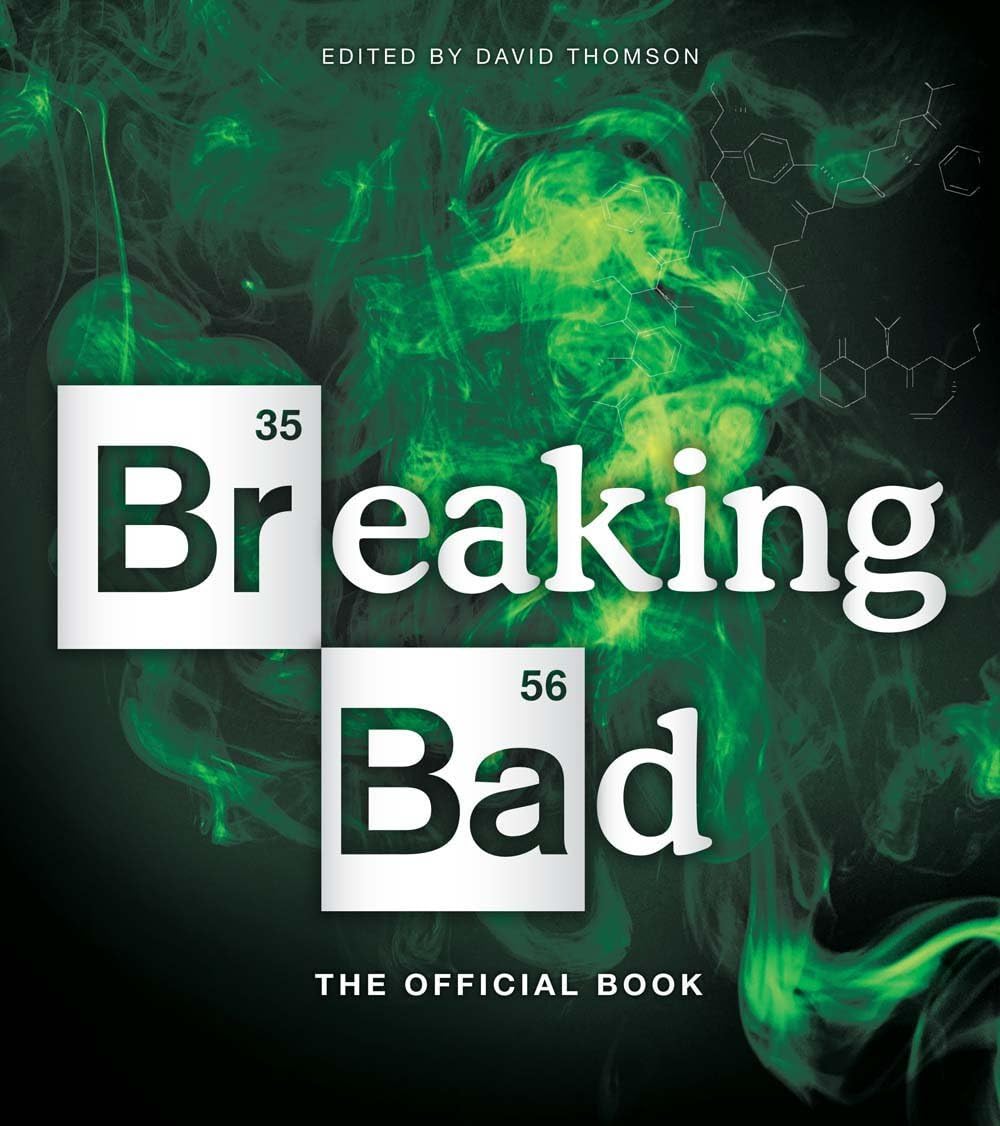

One of the most critically acclaimed series ever produced, Breaking Bad won legions of avid viewers who debated its every nuance as they followed the story of how terminally ill high-school teacher Walter White becomes a criminal-mastermind drug kingpin. This one-of-a-kind volume-adapted and expanded from the interactive e-book Breaking Bad: Alchemy-is the only official guide to the show. It covers the evolution of Breaking Bad from the pilot to the final episode and beyond, and highlights the unique elements that made the series so magnetic. It's filled with insider secrets about the making of the show and the meanings behind its iconography, as well a complete series timeline, exclusive interviews with creator Vince Gilligan, and a new introduction from noted film critic David Thomson. In addition to exploring how this epic came to be, Thomson sets Breaking Bad in the context of both crime literature and long-form television. Illustrated with more than 300 images and insightful captions by Thomson, this must-have volume offers the most thorough look at Breaking Bad, which Thompson believes is not only a great TV show (winning 108 industry awards and nominated for 260) but one of the most significant works of fiction in the new century. Review: The Godfather - Part IV - At this point, nearing the end of my fourth complete run through of this superb 49-hour long movie (this time, at last, on a big projection screen in my own home "microplex") I felt more strongly than ever the need for a companion book to fill in any and all of the tiny details I may have missed, and also to extend the BB cocoon when it's all over (again.) By the way, on the fourth time round the "bottle episode" titled Fly has moved from my initial impression of "rather dull and slows down the action" to "Shakespearean intensity - tense and inexpressibly moving". This book is that companion, and more. I hadn't fully recognised when I bought it that it's edited by David Thompson, the British born but US based film critic, who contributes a wonderful (eye-)opening essay, and the frequent Q&A discussions with Vince Gilligan scattered throughout the book. David is one serious and venerated critic with a penetrating eye and a gift for language: perhaps the equal of the greatly missed Philip French. He writes "As a movie critic, I feel that no American film of the twenty-first century has matched the achievement of Breaking Bad. Nothing on the 'big' screen has had its range and grandeur, or found a beauty that comes so organically from its subject. This is a single story made up of innumerable lives. It is a matter of life and death, of comedy and tragedy, disaster and accomplishment. No theatrical movie has a fraction of its inventiveness, maintains such a high level of dialogue, or goes so deeply into character and acting. Imagine the thrill it would be to see this entire movie on a large screen..." (Lucky old me!) It's also nice to see, in a New York published book, that Mr Thompson is allowed to speak English English, 'dialogue' rather than 'dialog'. Surprisingly, perhaps, the book's structure doesn't follow the obvious episode by episode format, apart from one small section in the chapter Breaking Down Breaking Bad, where we find a paragraph or so explaining each episode's title and some of the playful hidden meanings. We probably all know by now the hidden message in season 2's titles for episodes 201, 204, 210 and 213, the ones with the teaser openings with the burnt pink teddy, the missing eye and the pool, spelling out in plain sight the season's climax long before we reach it: "Seven Thirty Seven Down Over ABQ". But what about Abiquiu, Gliding Over All, To'Hajilee, and Felina, and for those that didn't get the reference to Shelley's poem the wonderful, inevitable Ozymandias. I'm a fool that I didn't get the now glaringly obvious "I.F.T." (Hint: Skyler is talking about what she did to Ted.) But the lack of that obvious structure isn't a problem at all. Instead we get David Thompson's introductory essay, followed by a conversation between Thompson and Gilligan where interesting questions that neither you nor I, nor even Gilligan might have thought of get thoughtful and honest answers from the man himself, providing merely the first of several shorter Q&A sessions that reveal a great deal about the thinking behind this roller-coaster. That's followed by the seven main chapters: Timeline, Breaking Down BB, Tweak of Chemistry, Visualize This Bitches, Crystal Clear (cinematography), Amplitude (sound and sound tracks etc.), and Composition Cartel (design, props, wardrobe, vehicles - shame they missed out Marie's blue Beetle!) But it's not remotely dry and analytical, there are many many photos from the series and between takes on set, the layout is wonderful, and of course, because this is the "official" book you get the iconic title image on the cover, echoed in the periodic table "tiles" throughout the book that help to make the book feel very much like a paper-based extension of the real thing. It's also packed full of thoughts and insights from Gilligan and many others on the crew. For example, just as every character has a vehicle that was carefully chosen to exemplify some key aspect of their role (I mean, Walt's 2004 Pontiac Aztec paired with Jesse's 1982 Monte Carlo... and the masterful "safe" choice of a V70 Volvo for Gus Fring) so each main character has a colour palette that's often so subtle that you only realise it's having an effect when its pointed out (Marie's over-the-top addiction to purple is a gloriously unsubtle exception to the rule - purple kettle - never noticed that before!) It's a celebration of Breaking Bad, but also a warning, as is the TV series itself. David Thompson's writing reminds me so much of Raymond Chandler (another London-born film writer transplanted to Tinseltown who also had a bitter take on the hand that feeds him.) Chandler wrote about The Simple Art of Murder in his 1950 essay that coined the phrase, "Down these mean streets a man must go who is not himself mean." Thompson writes a searing passage kicked off by musing why Walt refuses Gretchen and Elliott's offer of a job and medical insurance: "Walter is resistant, and that leads to the question of why he is a failure and what we are to make of that, knowing that most of us watching American television are failures in our hearts and in the scheme of the economy. We are the slaves in the land of the free who sustain the 1 per cent who've made it. That's what happens if you build a society on desire and advertising, fear and loathing, and unregulated banking." If you loved Breaking Bad, loved its complexity, its humanity and its horrors, I guarantee you will love and value this book too. Review: "Read Bad!" - I came very late in the day to the stunningly original and landmark series Breaking Bad and I do admit to being a little obsessed at the moment. I bought this book largely on the strength of that obsession but was attracted by it being the only "official" guide to the series. I was very pleased to find that it is a superb companion to the series. It is full of lavish production photos and background information. David Thomson presents personal insights into the series as well as interviews from creator Vince Gilligan. He breaks down the series and examines some unusual aspects such as looking at the real science (Yo Science!!) behind the chemistry of Breaking Bad, colour palettes and camera angles and some of the artwork it inspired. It does read a little like a series of short essays in places but this does not detract from the enjoyment of a comprehensive study of a TV classic. Did I mention I was obsessed?
| Best Sellers Rank | 641,460 in Books ( See Top 100 in Books ) 997 in Address Books |
| Customer Reviews | 4.7 out of 5 stars 354 Reviews |
Trustpilot
1 week ago
2 weeks ago