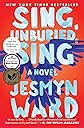
Sing, Unburied, Sing: A Novel
Product ID: 63401471
Desertcart purchases this item on your behalf and handles shipping, customs, and support to EGYPT.
*Selected as One of the Best Books of the 21st Century by The New York Times * WINNER of the NATIONAL BOOK AWARD and A NEW YORK TIMES TOP 10 BEST BOOK OF THE YEAR A finalist for the Kirkus Prize, Andrew Carnegie Medal, Aspen Words Literary Prize, and a New York Times bestseller, this majestic, stirring, and widely praised novel from two-time National Book Award winner Jesmyn Ward, the story of a family on a journey through rural Mississippi, is a “tour de force” ( Oprah Daily ) and a timeless work of fiction that is destined to become a classic. Jesmyn Ward’s historic second National Book Award–winner is “perfectly poised for the moment” ( The New York Times ), an intimate portrait of three generations of a family and an epic tale of hope and struggle. “Ward’s writing throbs with life, grief, and love… this book is the kind that makes you ache to return to it” ( Buzzfeed ). Jojo is thirteen years old and trying to understand what it means to be a man. He doesn’t lack in fathers to study, chief among them his Black grandfather, Pop. But there are other men who complicate his understanding: his absent White father, Michael, who is being released from prison; his absent White grandfather, Big Joseph, who won’t acknowledge his existence; and the memories of his dead uncle, Given, who died as a teenager. His mother, Leonie, is an inconsistent presence in his and his toddler sister’s lives. She is an imperfect mother in constant conflict with herself and those around her. She is Black and her children’s father is White. She wants to be a better mother but can’t put her children above her own needs, especially her drug use. Simultaneously tormented and comforted by visions of her dead brother, which only come to her when she’s high, Leonie is embattled in ways that reflect the brutal reality of her circumstances. When the children’s father is released from prison, Leonie packs her kids and a friend into her car and drives north to the heart of Mississippi and Parchman Farm, the State Penitentiary. At Parchman, there is another thirteen-year-old boy, the ghost of a dead inmate who carries all of the ugly history of the South with him in his wandering. He too has something to teach Jojo about fathers and sons, about legacies, about violence, about love. Rich with Ward’s distinctive, lyrical language, Sing, Unburied, Sing is a majestic and unforgettable family story and “an odyssey through rural Mississippi’s past and present” ( The Philadelphia Inquirer ). Review: Sing, Unburied, Sing - The United States has been blessed with many outstanding writers from the South, particularly writers from the State of Mississippi. Among the most recent of these writers is Jesmyn Ward (b. 1977), the recipient of a MacArthur genius grant together with National Book Awards in 2011 and 2017. I enjoyed Ward's 2011 National Book Award winner "Salvage the Bones" and I enjoyed this 2017 book, "Sing, Unburied, Sing" even more. "Sing, Buried Sing" is beautifully written, poetic, with many characters and multiple layers of meaning from the gritty and realistic to the metaphysical. Without minimizing the disappointments of life and the long effect of slavery and racial discrimination in Mississippi, the novel shows great understanding of people and a sense of hope. It celebrates song, time, and place. Set in rural Mississippi on the Gulf and on a lengthy ride north to Mississippi's notorious Parchman Prison, the novel tells the story of a poor inter-racial family recounted in the first person by three alternating characters. The first narrator, Jojo, 13, is the son of Leonie, an African American woman and Michael, her long term boyfriend, white with racist parents. The second narrator is Leonie, 29. She and Michael have had two children, Jojo and Kayla, 3. Both Leonie and Michael are heavy drug users, and Michael has spent the three years before the novel begins at Parchman Prison for manufacturing and selling. Leonie loves but pays little attention to her children, with the burden of raising Kayla falling on Jojo. Leonie's parents are Pop, who did time at Parchman when young, and Mam, the "saltwater woman", dying of cancer and a healer who is able to communicate with the dead. The third narrator is a ghost, Richie, who did time at Parchman with Pop and who begins haunting Jojo as he accompanies Leonie and her white friend, Misty, to Parchman to bring Michael home from prison. Ghosts and spirits and the dead play a large role in the novel. In addition to Richie, the ghost of Leonie's beloved older brother, Given, who had been murdered 15 years earlier, appears to play a prominent role in the book. Spirits and ghosts appear in this novel when their lives have been troubled and have come to bad and premature ends. They wander and haunt others in search of closure and peace. The novel begins with a heavily gritty scene with Pop and Jojo slaughtering a goat to cook for Jojo's 13th birthday. Ward has a sharp eye for the details of rural Mississippi life. Much of the story involves the brutality of Parchman Prison, described in part through Michael's experiences but much more fully through the earlier experience of Pop. When he was committed to Parchman at 15 Pop, (whose name is River) befriended the 12-year old inmate Richie and tried to comfort him after a terrible whipping. Richie's ghost comes to Jojo because it wants to learn the fate that cost him his life and to be able to sing a song of peace and to rest. In addition to the terrors of Parchman, the history of racial relations in Mississippi plays a large role in part through Michael's father, big Joseph, an unrepentant and virulent racist. And the book has many graphic scenes of lynchings, burnings, and police with an itchy trigger finger. Drug use plays a large role in the book as well through Michael, Misty, Leonie, and several other characters. The religious, metaphysical aspects of the novel come to the forefront in Richie's story, and in Richie's poetic speech and in the story of the dying Mam, with her clairvoyance and with the haunting by Given. In part, this novel is a coming of age story for Jojo and a road novel, with the lengthy treatment of the drive to Parchman and back, but it is much more. The book is rooted in place and character. Ward loves the places she describes and the people, with all their difficulties. She develops the brutal aspects of her story, in terms of the racism from Mississippi's past in a way that comes out from her characters and their lives. The " ghosts" from the racist past and present come through without destroying the people, and the search for hope and a better life. A spirit of love, forgiveness and mystical religion underlie this book more than a sense of condemnation. Many parts of this story suggest the spiritual aspects of life, intertwined with some dreadfulness, particularly in the voice of Richie. The ghost observes, when he comes to haunt Jojo, of the difficulty of understanding the nature of time and evil particularly growing out of Richie's experience when alive at Parchman. "I didn't understand time, either, when I was young. How could I know that after I died, Parchman would pull me from the sky? How could I imagine Parchman would pull me to it and refuse to let go? And how could I conceive that Parchman was past, present, and future all at once? That the history and sentiment that carved the place out of the wilderness would show me that time is a vast ocean, and that everything is happening at once?" Then again, late in the novel Richie's ghost speaks of returning to his spiritual home at peace with himself at last and aware of the physical beauty and variety of the world and its people: "There are yurts and adobe dwellings and teepees and longhouses and villas. Some of the homes are clustered together in small villages, graceful gatherings of round, steady huts with doomed roofs. And there are cities, cities that harbor plazas and canals and buildings bearing minarets and hip and gable roofs and crouching beasts and massive skyscrapers that look as if they should collapse, so weirdly they flower into the sky. Yet they do not." Ward's story begins with roots in a particular place. expands to uncover the place's ghosts and tragic events, and expands still further and transcendentally to a vision of hope. Early in the novel, Pap passes on to Jojo a teaching from his own great-grandfather about the spirituality and unity of all life that Ward's entire novel works to expand: "there's spirit in everything. In the trees, in the moon, in the sun, in the animals, Said the sun is most important, gave it a name, Aba. But you need all of them, all of that spirit in everything to have balance. So the crops will grow, the animals breed and get fat for food." The book encourages careful reading and extensive reflection. "Sing, Unburied, Sing" is an extraordinary novel. Robin Friedman Review: Book Review - This is a wonderful realistic fiction story about a boy named Jojo who takes on responsibilities like no other. This story gives many life lessons like how your family’s history can affect you, and also how drug addiction can break a family. I would rate this story a 4 out of 5 because it taught so many lessons, and also made me feel very emphatic towards the character. When stories make you really feel, it helps me understand the story to a deeper level, this story made me do that. This book changes my perspective on life because it shows how sometimes kids have to take on parent/adult responsibilities at such a young age. I can’t believe all of the things Jojo experience their childhood, his maturity is shown by how much he’s done for his brother, how he cares for his grandfather. Poor JoJo and Kayla don’t have good parents that actually care for them, they have their grandparents, but they should still have a parent figure. It’s unfortunate that we didn’t get to see Leonie and Micheal turn their life around, they still use drugs, and it keeps hurting their family. Another major point in this story is that your family’s past can affect you. An example is that Pop killed Richie, Richie’s ghost was hunting Jojo, therefore Pop’s history is affecting Jojo. Even though Pop did kill Richie he did it for the reason to help him. Pop still feels so guilty, that he was ashamed to tell Jojo, but he did it anyway. Not only did the book make you feel empathetic, it actually taught you moral answerness, and helped you understand the character’s morals. For example Jojo had moral answerness he knew what good behaviors are, but at a deeper level he knew that morals aren’t just about right and wrong, they are about patience and strength. Jojo had the morals in words he just needed the confidence to do it, he would always say he was trying to be like Pop. I would say he wasn’t always trying because he never could change it. She knew she was a bad mother, and knew that her drug addiction was hurting her family. After knowing all of this she still didn’t change her actions. In conclusion, I really enjoyed the book and recommend it to other readers.

| Best Sellers Rank | #19,743 in Books ( See Top 100 in Books ) #21 in Black & African American Fantasy Fiction (Books) #117 in Censorship & Politics #169 in Magical Realism |
| Customer Reviews | 4.2 out of 5 stars 14,528 Reviews |
R**N
Sing, Unburied, Sing
The United States has been blessed with many outstanding writers from the South, particularly writers from the State of Mississippi. Among the most recent of these writers is Jesmyn Ward (b. 1977), the recipient of a MacArthur genius grant together with National Book Awards in 2011 and 2017. I enjoyed Ward's 2011 National Book Award winner "Salvage the Bones" and I enjoyed this 2017 book, "Sing, Unburied, Sing" even more. "Sing, Buried Sing" is beautifully written, poetic, with many characters and multiple layers of meaning from the gritty and realistic to the metaphysical. Without minimizing the disappointments of life and the long effect of slavery and racial discrimination in Mississippi, the novel shows great understanding of people and a sense of hope. It celebrates song, time, and place. Set in rural Mississippi on the Gulf and on a lengthy ride north to Mississippi's notorious Parchman Prison, the novel tells the story of a poor inter-racial family recounted in the first person by three alternating characters. The first narrator, Jojo, 13, is the son of Leonie, an African American woman and Michael, her long term boyfriend, white with racist parents. The second narrator is Leonie, 29. She and Michael have had two children, Jojo and Kayla, 3. Both Leonie and Michael are heavy drug users, and Michael has spent the three years before the novel begins at Parchman Prison for manufacturing and selling. Leonie loves but pays little attention to her children, with the burden of raising Kayla falling on Jojo. Leonie's parents are Pop, who did time at Parchman when young, and Mam, the "saltwater woman", dying of cancer and a healer who is able to communicate with the dead. The third narrator is a ghost, Richie, who did time at Parchman with Pop and who begins haunting Jojo as he accompanies Leonie and her white friend, Misty, to Parchman to bring Michael home from prison. Ghosts and spirits and the dead play a large role in the novel. In addition to Richie, the ghost of Leonie's beloved older brother, Given, who had been murdered 15 years earlier, appears to play a prominent role in the book. Spirits and ghosts appear in this novel when their lives have been troubled and have come to bad and premature ends. They wander and haunt others in search of closure and peace. The novel begins with a heavily gritty scene with Pop and Jojo slaughtering a goat to cook for Jojo's 13th birthday. Ward has a sharp eye for the details of rural Mississippi life. Much of the story involves the brutality of Parchman Prison, described in part through Michael's experiences but much more fully through the earlier experience of Pop. When he was committed to Parchman at 15 Pop, (whose name is River) befriended the 12-year old inmate Richie and tried to comfort him after a terrible whipping. Richie's ghost comes to Jojo because it wants to learn the fate that cost him his life and to be able to sing a song of peace and to rest. In addition to the terrors of Parchman, the history of racial relations in Mississippi plays a large role in part through Michael's father, big Joseph, an unrepentant and virulent racist. And the book has many graphic scenes of lynchings, burnings, and police with an itchy trigger finger. Drug use plays a large role in the book as well through Michael, Misty, Leonie, and several other characters. The religious, metaphysical aspects of the novel come to the forefront in Richie's story, and in Richie's poetic speech and in the story of the dying Mam, with her clairvoyance and with the haunting by Given. In part, this novel is a coming of age story for Jojo and a road novel, with the lengthy treatment of the drive to Parchman and back, but it is much more. The book is rooted in place and character. Ward loves the places she describes and the people, with all their difficulties. She develops the brutal aspects of her story, in terms of the racism from Mississippi's past in a way that comes out from her characters and their lives. The " ghosts" from the racist past and present come through without destroying the people, and the search for hope and a better life. A spirit of love, forgiveness and mystical religion underlie this book more than a sense of condemnation. Many parts of this story suggest the spiritual aspects of life, intertwined with some dreadfulness, particularly in the voice of Richie. The ghost observes, when he comes to haunt Jojo, of the difficulty of understanding the nature of time and evil particularly growing out of Richie's experience when alive at Parchman. "I didn't understand time, either, when I was young. How could I know that after I died, Parchman would pull me from the sky? How could I imagine Parchman would pull me to it and refuse to let go? And how could I conceive that Parchman was past, present, and future all at once? That the history and sentiment that carved the place out of the wilderness would show me that time is a vast ocean, and that everything is happening at once?" Then again, late in the novel Richie's ghost speaks of returning to his spiritual home at peace with himself at last and aware of the physical beauty and variety of the world and its people: "There are yurts and adobe dwellings and teepees and longhouses and villas. Some of the homes are clustered together in small villages, graceful gatherings of round, steady huts with doomed roofs. And there are cities, cities that harbor plazas and canals and buildings bearing minarets and hip and gable roofs and crouching beasts and massive skyscrapers that look as if they should collapse, so weirdly they flower into the sky. Yet they do not." Ward's story begins with roots in a particular place. expands to uncover the place's ghosts and tragic events, and expands still further and transcendentally to a vision of hope. Early in the novel, Pap passes on to Jojo a teaching from his own great-grandfather about the spirituality and unity of all life that Ward's entire novel works to expand: "there's spirit in everything. In the trees, in the moon, in the sun, in the animals, Said the sun is most important, gave it a name, Aba. But you need all of them, all of that spirit in everything to have balance. So the crops will grow, the animals breed and get fat for food." The book encourages careful reading and extensive reflection. "Sing, Unburied, Sing" is an extraordinary novel. Robin Friedman
D**C
Book Review
This is a wonderful realistic fiction story about a boy named Jojo who takes on responsibilities like no other. This story gives many life lessons like how your family’s history can affect you, and also how drug addiction can break a family. I would rate this story a 4 out of 5 because it taught so many lessons, and also made me feel very emphatic towards the character. When stories make you really feel, it helps me understand the story to a deeper level, this story made me do that. This book changes my perspective on life because it shows how sometimes kids have to take on parent/adult responsibilities at such a young age. I can’t believe all of the things Jojo experience their childhood, his maturity is shown by how much he’s done for his brother, how he cares for his grandfather. Poor JoJo and Kayla don’t have good parents that actually care for them, they have their grandparents, but they should still have a parent figure. It’s unfortunate that we didn’t get to see Leonie and Micheal turn their life around, they still use drugs, and it keeps hurting their family. Another major point in this story is that your family’s past can affect you. An example is that Pop killed Richie, Richie’s ghost was hunting Jojo, therefore Pop’s history is affecting Jojo. Even though Pop did kill Richie he did it for the reason to help him. Pop still feels so guilty, that he was ashamed to tell Jojo, but he did it anyway. Not only did the book make you feel empathetic, it actually taught you moral answerness, and helped you understand the character’s morals. For example Jojo had moral answerness he knew what good behaviors are, but at a deeper level he knew that morals aren’t just about right and wrong, they are about patience and strength. Jojo had the morals in words he just needed the confidence to do it, he would always say he was trying to be like Pop. I would say he wasn’t always trying because he never could change it. She knew she was a bad mother, and knew that her drug addiction was hurting her family. After knowing all of this she still didn’t change her actions. In conclusion, I really enjoyed the book and recommend it to other readers.
R**T
Stunningly Rendered!
Stunningly rendered. At the risk of being oxymoronic, sad tale but beautifully written is the most apt description I can give of this novel. Your heart will absolutely ache for Jojo, i.e. Joseph. Jesmyn is certainly at the top of her game with Sing, Unburied, Sing. She sets this novel in the Mississippi Delta, and we have two main narrators Leonie, the young mother and Jojo her thirteen year old son, and a third narrator who leads three chapters and his presence gives explanation to the book’s title, Richie. Jojo and his little sister Kayla are children of Leonie, who is a drug abusing mother with zero mothering instincts. The three of them live with Mam and Pop, Leonie's parents and the children's grandparents. Jojo is like the surrogate father, as Leonie is often gone and the father, Michael is locked up in the notorious Parchman prison. Kayla reaches to Jojo for succor and nurture much to Leonie's dismay. Jesmyn is great at writing viscerally, and the reader will feel the simmering emotion of Jojo. Jesmyn subtly takes on poverty, racism and drug abuse. We get to experience the drug use along with Leonie. Leonie has hooked up with Michael since high school and he is the white father of her two kids. It was a sense of two broken souls recognizing each other that brought them together. "Because I wanted Michael’s mouth on me, because from the first moment I saw him walking across the grass to where I sat in the shadow of the school sign, he saw me. Saw past skin the color of unmilked coffee, eyes black, lips the color of plums, and saw me. Saw the walking wound I was, and came to be my balm." Michael's parents never approved of the union and didn't meet their grandchildren until JoJo was a teenager and Kayla a toddler as they stopped by their house on the way back from picking up Michael after a three year stint in the prison. Jesmyn brilliantly uses that actual road trip to take readers on a virtual trip thru the lives of Leonie, Pop and Man, and also Given. Given is the older brother of Leonie who lost his life to one of Michael's cousin's. Leonie often can see and hear Given, she finds these visions comforting especially when she is high. Jesmyn has layered the book on different levels, weaving past present and future in a haunting magnificence. Pop often regales young Jojo with stories about his life and his own stay at Parchman. Pop is struggling in dealing with Mam who is dying of cancer and Jesmyn 's writing around the decay and devastation of cancer and Mam's way of dealing and exiting this life is the phenomenal highlight of a book that has many. The novel moves back and forth in time, eventually coming full circle, and it is mostly through Pop and Jojo's interactions and conversations that this five star tale gets flushed out. Pop has some psychological scars from his time at Parchman and shares with Jojo bits at a time. This adds a bit of suspense to the novel, because readers will want the complete story of what happened. It seems he tells Jojo the same beginning and middle parts of his Parchman stay, but never the ending, well the ending of Pop's story coincides with the denouement of the novel and the book title will be clearly and fully brought to light. An excellent undertaking by Jesmyn Ward. I received an advanced reading copy from Netgalley in exchange for a review. The book will publish Sept. 5, 2017.
A**.
Lyrical prose, Dull plot
Here’s what I liked about this, my first book written by Ward: • She revealed a part of the world I’m not at all familiar with • She took risks with form What I didn’t like: • Nothing much happens. All those pages for what’s a two-day plot? • Despite switching narrators every chapter, the voice never changes. Every character thinks and describes the world in the same way. • Magical realism has never been my bag, but this attempt at it is especially irritating. There are two ghosts. Like actual ghosts. And they just show up (speaking in the same voice as everyone else) and people can, like, actually see them. Not to mention the seemingly random sprinkling of other magical images: dead animals who fly, body contortions, spells and incantations. • For me, this magical approach is the refuge of poetic-novelists instead of hardcore storytellers. The prose is sometimes lovely, and now and then a metaphor really landed for me. But more often than not, the formula was “mention a character, use a short simile to describe what they look like” over and over. And over. Exhausting. The finest novelists are BOTH storytellers and lyricists, combining a PLOT with heart-stopping prose. There’s an exception: A book can have very little plot and still be great if it has a single great narrator or explore a deep philosophy. Think “Catcher in the Rye.” But Ward offers us none of that. There are about four narrators and there’s no deep theme being espoused. This book was just one big and well-executed writing exercise. But let me assure you: I’m gonna read another of her novels.
C**G
Plain, Complex, Beautiful - Art
Jesmyn Ward is an extraordinary writer with a voice that hits like a sledge hammer. The prose is that simple, direct language that evolves when one leaves behind the question of style and allows characters to speak. Surely, one will never again become so acquainted with the scent of a goat’s innards in such a visceral manner. In this, particularly, the Faulkner comparisons are apt. It seems a novel from another time—a rare wonderful thing, not unlike Marilynne Robinson’s “Gilead,” and “Lila.” (I loathed “Home.”) After a clunky start, Faulkner effortlessly outpaced his contemporaries, Fitzgerald and Hemingway. Like Faulkner, Ms. Ward breathes life into the strange brew that is the south with its complex legacy, its tangible connection to the land, and Welty's "place," and its turbulent weather. There is something feral about this land. Ms. Ward, who lived with a white family as Katrina ravaged the New Orleans, where she briefly taught, knows the territory. She reminds me of my own experience as a first-generation college student, happy to have escaped poverty, but nonetheless going around and anonymously collecting degrees: (for Ms. Ward: a Stanford BA and MA (the latter in communications—note how she circles writing) prior to her Fiction MFA, and Stegner Fellowship. Post-Katrina, she undergoes a complete break from fiction and even begins a Nursing program: that most practical of majors. Her displaced nature allows her to sing of an experience so few upper middle class suburban MFAs with their tiresome tales of infidelity cannot break into. And that is not meant as any mean slam on MFAs - I hold one (Screenwriting…does that count?). MFAs are the norm for the interested, engaged writer. I recognize that this comes off as less than a review and somewhat more of a discussion of the author’s background, but her life indeed informs this book—rather saturates this book. Besides, so many others here will review this book in a thoroughgoing manner. I’d like this effort to provide some alternative value by perhaps stoking interest to pick up this highly praised book by considering how lived experience plays an immense role in art that truly shines. Her character, JoJo, is a creation brought to vivid life by her experience—her education allows her to render him in concrete, beautiful language, invisible in the sense that the prose is so much a projection of character and place. Her life experience then animates him and his world with its complex family dynamic; JoJo wouldn’t exist without Ms. Ward knowing this territory intimately. Mixed race, JoJo lives with his black grandparents, Mam and Pop, as Mam dies from cancer, and Pop is the sole glue somehow binding the family together while providing the boy’s only true constant. At thirteen, JoJo has only met his white grandparents twice—even though they live across town. Soon to be released from Parchman, a notorious Mississippi prison, JoJo’s white father, Michael, is quite the mess, while JoJo’s mother, Leonie, who glides in and out of the boy’s life, lost in her addictions and ethereal concerns based in grief and loss, even as she makes some efforts at trying to make her son feel loved, all while JoJo must safeguard and look out for Kayla, his sister, a toddler at sea in this tough home. All in all, this is the sort of novel that makes other books look meretricious and reaching, and still it does what it does plainly and directly.
L**Y
Unique Story
I liked the uniqueness of this story, but I guess I disliked the ending. I'd still recommend others read it.
W**D
Haunting and painful
This novel is a masterpiece, its multiple points of view well-knit and well-balanced. At times, the novel is, indeed, reminiscent of William Faulkner: the almost mythical lay of the land; the heat and dust; characters whose thoughts are often more eloquent than their speech; violence that is sudden and quick. At times, the novel is reminiscent of Toni Morrison's Beloved: Parchman Farm might be likened to Sweet Home (it wasn't sweet and it wasn't home); the author's bitter assault on slavery; the dead lingering among the living with favors to ask, sleeping in trees, hiding in the shadows of doorways, unable to go home; not a story to pass on---but a story that must be told and retold and never forgotten. Jesmyn Ward is a writer for our time, yet one who most poetically retells the old story of our nation's collective failings and our faint hope of ascension. She creates memorable characters, especially JoJo and Pop and Mam and Richie. Long after you've finished reading this book, the characters will continue speaking to you through the wind and water, through the trees, through their aching longing to be free of the past and their longing to be loved.
J**N
Astoundingly powerful
The last book I read by Jesmyn Ward, Salvage the Bones, seared itself into my consciousness and humbled me with its brutal reality. I didn’t think Ms. Ward could soar to the heights she achieved in her debut, but she has. This is an incredible novel, packed with power, ferocity, and majesty. Often, I found myself reading phrases over and over again because of the sheer beauty of the prose. Interestingly, I sensed thematic similarities in this and my other favorite book of 2017 — Lincoln in the Bardo by George Saunders. Both integrate the presence of ghosts that are able to haunt us and heal us and who demand attention. But although there is a touch of magical realism in this book, it is grounded in a brutal reality. The focus is a broken family — Leonie, a failed black mother, her white-trash husband Michael whose cousin killed her brother Given and who is about to be released from jail himself, JoJo, her sensitive and paternal thirteen year old son, and the toddler, Michaela, who adores her older brother. There is pain here, lots of pain. Leonie’s father Pop was incarcerated in a brutal prison and there is an unfinished story here that still keeps his soul prisoner. Leonie and Michael need each other with a drug-fueled unhealthy desperation that obliterates their ability to care for their vulnerable kids. JoJo and Kayla cope with ravenous hunger – not only for food but for love – and horrific nausea. The torments of imprisonment, racism, black trauma, and innate hatred are weaved throughout the narrative. How can these ugly elements possess sheer beauty? I wondered that when I read Salvage the Bones and I wondered again here. I think it’s because the sheer lyrical power of an excellent writer weaving her craft reveals that art will always triumph over the evils of the world. Despite the book’s darkness, that message is inspirational.
徒**人
活字が大きく見易い
Fontが大きく、高齢者にも見易い。未読ながら楽しみです。
J**U
Histoire originale, émouvante, livre magique...
Ha ça faisait longtemps que je n’avais pas autant aimé un livre. C’est touchant, c’est beau, c’est simple, et ça change aussi beaucoup des histoires de racisme dans le sud des usa qu’on connait.. magnifique.
S**E
Literary Masterpeice
Jesmyn Ward's "Sing, Unburied, Sing", winner of National Book Award for Fiction 2017, is simply a literary masterpiece. Set in the American South, it depicts the past and present of Mississipi with a contemporary African-American family. Jesmyn Ward's writing style is stunning with lyrical beauty of words. The story revolves around the voices of three narrators: Jojo, Leonie and Richie. Jojo is a thirteen-year old innocent boy, lives with his maternal grandparents, whom he calls Mam and Pop. Mam is dying of cancer, and Pop tries to run the household and teach Jojo how to be a man. Jojo has a younger sister, three year old, Kayla, to whom he is more of a parent than their mother, Leonie has ever been. He cares her sister a lot, and Kayla is more attached to Jojo. The kids mother Leonie, who is a Black lady, is a drug addict. She is lacking parenting skills and lives in her own way. Mam says Jojo about Leonie: “She ain’t got the mothering instinct. I knew when you were little and we were about shopping, and she bought herself to something to eat and ate it right in front of you, and you were sitting there crying hungry. I knew then” Leonie is waiting for Michael - a White, her children’s father, to finish a prison sentence from Parchman jail. When Michael is released from prison, she travels with her kids and a friend into the prison, Parchman farm, the Mississippi State Penitentiary. During their travel to Parchman and in the return journey, the novel chronicles the various stories and incidents through the narration of its central characters, which brings an ocean of emotions into the your mind. “I washed my hands every day, Jojo. But that damn blood ain’t never come out. Hold my hands up to my face, I can smell it under my skin”, a character says to Jojo. Sing, Unburied, Sing is a brilliant tale on not-buried heart of the communities. Jesmyn Ward depicts the issues of race, injustice, and messy family set up with lack of parenting skills. The novel also depicts two ghosts: Richie and Given, to tell the story of injustice. Ghosts are representatives of injustice happened in the past, and it haunt the present. This book would be a great read to everyone who loves great literary books. With this book, Jesmy Ward, two-time award winner of National Book Award for Fiction, proves that she is one of the best authors in the world among the contemporary novelists.
E**A
This book defies description
Powerfully moving novel delves into the very roots of inequity by way of fictional Bois Savage, Mississippi, a place witness to generations of mistreatment of native Americans and blacks alike: terrorized, violated, and forsaken. This is where 13-yr old Jojo and toddler Kayla (Michaela) are being raised by their elderly grandparents Pop (Riv) and Mam (Philomèna). Although their black mother Leonie longs to connect with the children on some level, she's unable to owing to her personality, personal demons including grief, guilt and drug addiction, and her over-riding preoccupation with Michael, the white father of her children. This story is embedded in history, is partially narrated by a ghost child named Richie, and takes place over the course of just one week. One incredibly harrowing week, involving a death-defyingly vomitous road trip to Parchman Penitentiary, to pick up the dad. Jesmyn Ward is a creative genius, this book simply must be read.
O**N
Wonderful
One of the best novels I have read in years. Characters you will know and care about, all with a touch of magic realism southern USA style. Highly recommended.
Trustpilot
2 months ago
1 month ago